- Plants
- ›Vascular Plants
- ›flowering plants
- ›Dicots
- ›sandalwoods, mistletoes, and allies
- ›balanophora family
- ›Langsdorffia
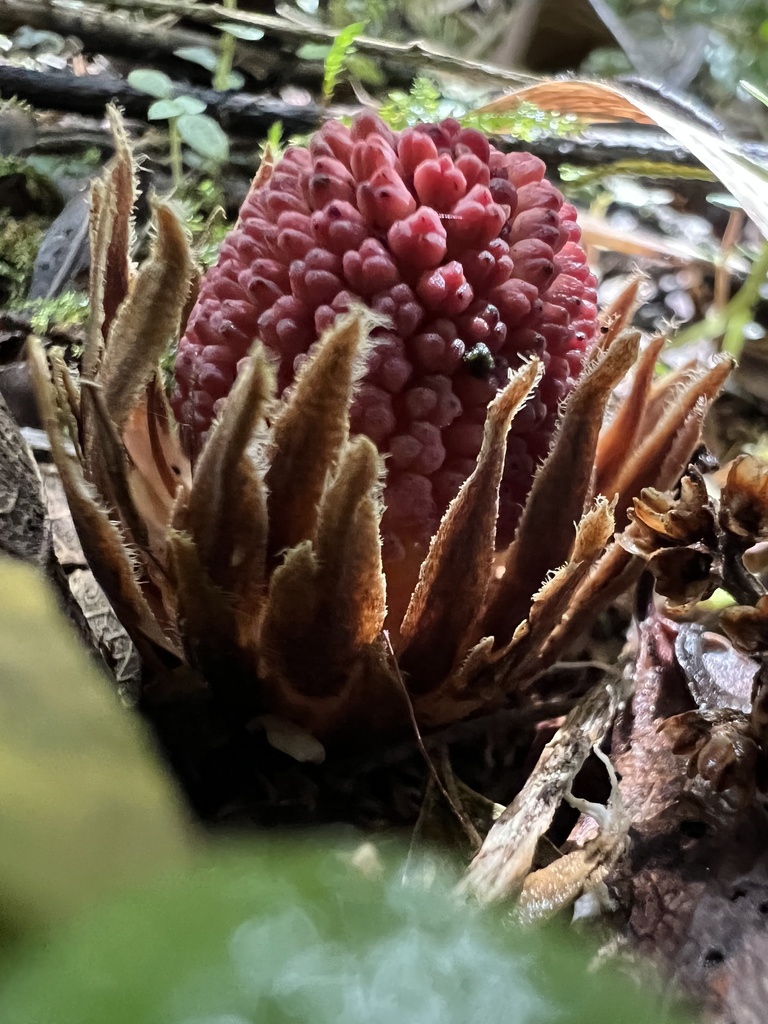
Langsdorffia hypogaea
Langsdorffia hypogaea is a parasitic plant in the family Balanophoraceae which parasitizes Quercus spp. (oaks) among others. It is native from southern Mexico through Central America to northern South America. It forms a pseudotuber composed of tissue of the host integrated with its own tissue that can be up to 1 m2 (1.2 yd2) in size. The Langsdorffia flower clusters (which are capitula composed of myriads of tiny florets) emerge from the soil out of these "tubers".
== References ==
Where it lives
Recorded sightings
—
geo-referenced records in GBIF, from museums, herbaria and field observers.
Drag the globe to turn it. Dots are where records exist, not a range map; darker means more records.
In the stacks
Searching the stacks…
Every page naming Langsdorffia hypogaea in the Biodiversity Heritage Library →
This page is assembled live from iNaturalist, GBIF, Wikipedia, the Source Library and the Internet Archive. It is not yet part of the hand-edited codex. iNaturalist taxon 210458.