- Plants
- ›Vascular Plants
- ›flowering plants
- ›Dicots
- ›pinks, cactuses, and allies
- ›pink family
- ›Paronychieae
- ›Paronychia
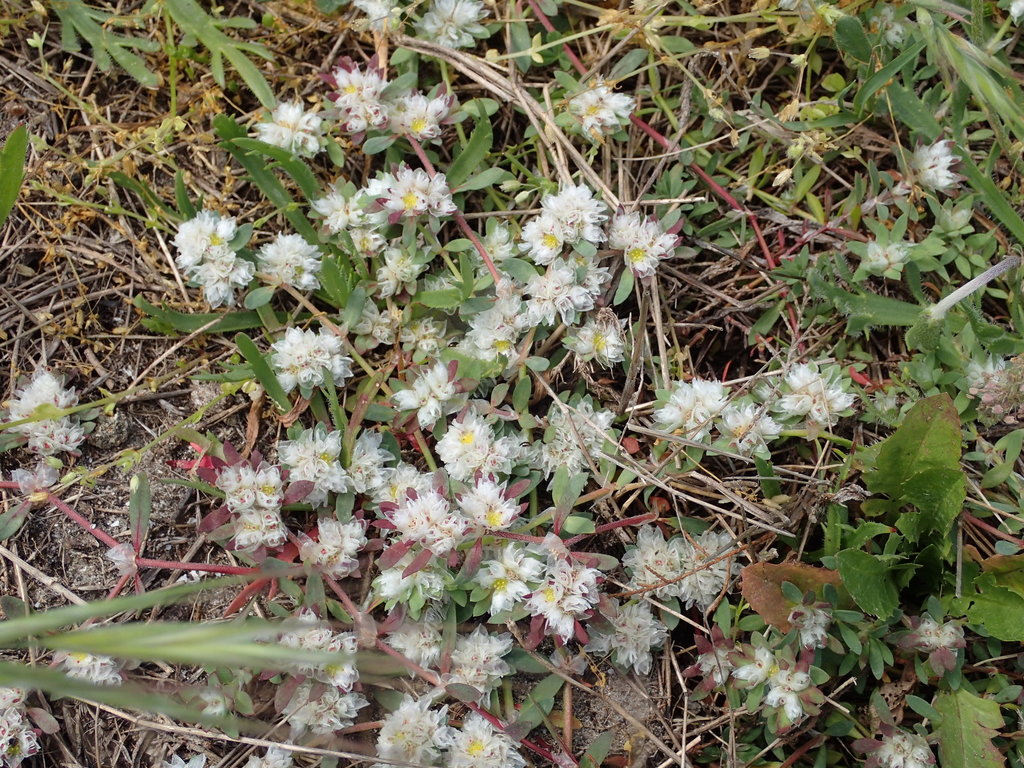
Algerian Tea
Paronychia argentea
Paronychia argentea, commonly known as Algerian tea, is an herbaceous plant from the family Caryophyllaceae that grows in sandy areas, ways, abandoned fields and dry terrains.
From the article Paronychia argentea on Wikipedia (CC BY-SA), quoted section by section
Description
It is an annual species with procumbent habits, which reaches 30 cm height. Similar to Paronychia capitata but with almost all glabrous leaves, a rigid and prominent sow, and calyx lobules with transparent margins. The stem is glabrous or pubescent, with opposite, elliptical and mucronate leaves. The flowers grow in lateral and terminal glomerulus. They are hermaphrodite, pentamerous and actinomorphic, accompanied with scaly silver bracts bigger that themselves. The fruit is an achene.
Range & habitat
They can be encountered all around the Mediterranean Sea. It grows in abandoned or dry terrains, dunes and ditches, and flourishes from winter to summer.
Wikipedia: “Habitat and distribution”
At the table
It is used stewed, as a diuretic and blood purifier, and as a plaster to cure wounds.
Wikipedia: “Uses”
Where it lives
Recorded sightings
—
geo-referenced records in GBIF, from museums, herbaria and field observers.
Drag the globe to turn it. Dots are where records exist, not a range map; darker means more records.
In the stacks
Searching the stacks…
Every page naming Paronychia argentea in the Biodiversity Heritage Library →
This page is assembled live from iNaturalist, GBIF, Wikipedia, the Source Library and the Internet Archive. It is not yet part of the hand-edited codex. iNaturalist taxon 208322.