On eBird ↗
Western Yellow Wagtail
Live sightings near you, the range map, bar charts of when it is seen, and Macaulay Library photos and recordings.
Western Yellow Wagtail
Motacilla flava
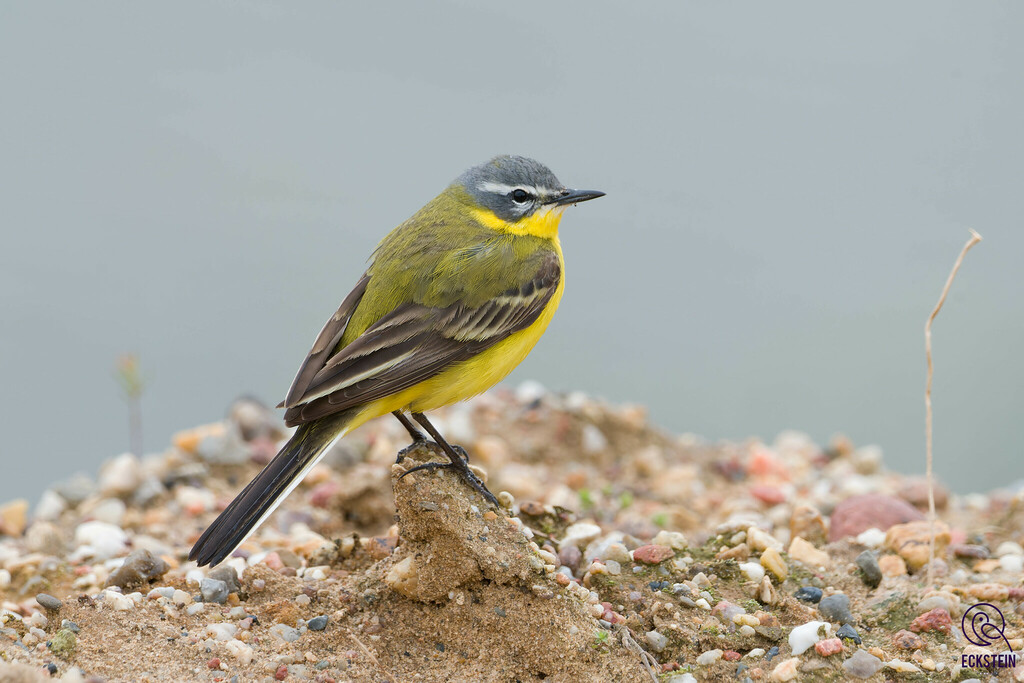
The western yellow wagtail (Motacilla flava) is a small passerine bird in the wagtail family Motacillidae, which also includes the pipits and longclaws. This species breeds in much of temperate Europe and Asia. Most populations are migratory, moving south to tropical Africa and southern Asia for the winter; the small population breeding in Egypt is however resident there.
It is a slender 15–16 cm long bird, with the characteristic long, constantly wagging tail of its genus. It is the shortest tailed of the European wagtails. The breeding adult male is basically olive above and yellow below. In other plumages, particularly in juveniles, the yellow may be diluted to whitish. The heads of breeding males come in a variety of colours and patterns depending on subspecies. The call is a high-pitched jeet. This insectivorous bird inhabits open country near water, such as wet meadows. It nests in tussocks, laying 4–8 speckled eggs.
From the article Western yellow wagtail on Wikipedia (CC BY-SA), quoted section by section
In human culture
In the Pyramid Texts of Old Kingdom Egypt, the yellow wagtail was considered a representation of Atum himself and might have been the first inspiration for the Bennu bird, which, in turn, is the supposed inspiration for the phoenix of Greek mythology. The yellow wagtail is the subject of a poem, Motacilla flava flavissima, in Polly Atkin's 2021 poetry collection, Much With Body.
Wikipedia: “In culture”
Listen
Looking for field recordings…
Where it lives
Recorded sightings
—
geo-referenced records in GBIF, from museums, herbaria and field observers.
Drag the globe to turn it. Dots are where records exist, not a range map; darker means more records.
In the old herbals & bestiaries


In the stacks
Searching the stacks…
Every page naming Motacilla flava in the Biodiversity Heritage Library →
This page is assembled live from iNaturalist, GBIF, Wikipedia, the Source Library and the Internet Archive. It is not yet part of the hand-edited codex. iNaturalist taxon 204545.