- Plants
- ›Vascular Plants
- ›flowering plants
- ›Dicots
- ›nightshades, bindweeds, gooseweeds, and allies
- ›nightshade family
- ›nightshades and allies
- ›boxthorns and allies
- ›Lycium
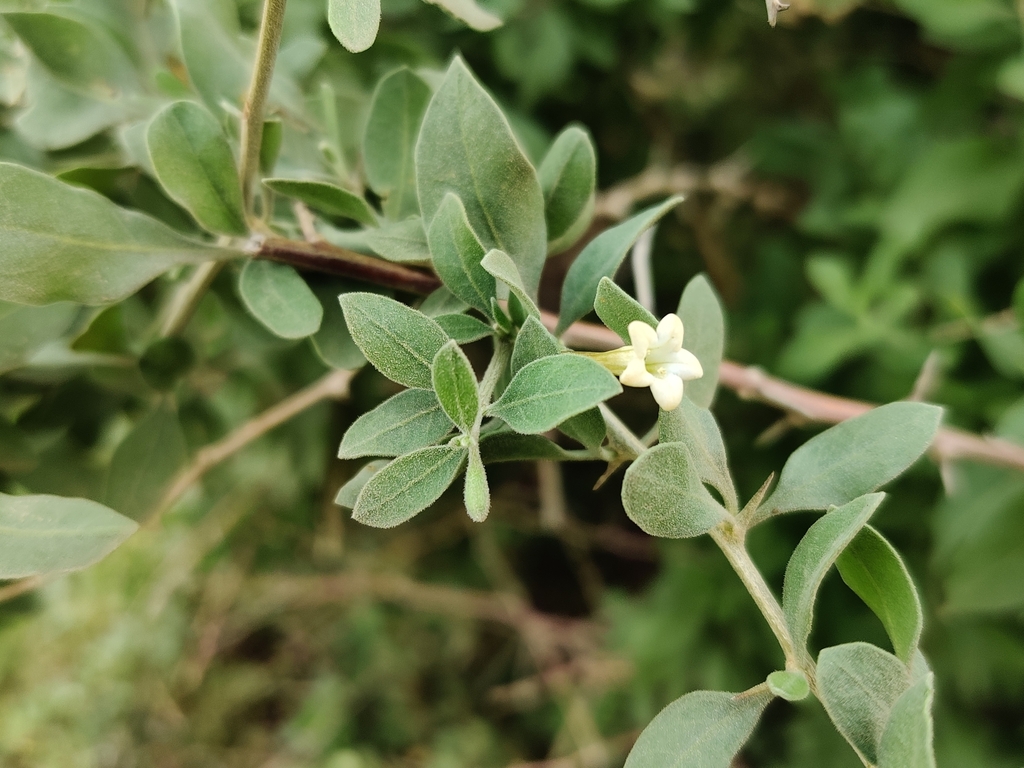
Arabian boxthorn
Lycium shawii
Lycium shawii, desert thorn or Arabian boxthorn is a species of thorny shrub adapted to desert environments, and can be found throughout the Arabian Peninsula, and some places in Africa. The thin leaved, rigid bush grows up to 3 metres (9.8 feet) high, with a lot of branches and alternating spines that vary in size, and grow along the branches and on their tips. The leaves narrow towards their base. It produces small whitish-pink or purple flowers from September until April, and red pea-sized seedy berries that are edible. Habitats include gravel plains and foothills up to 4,000 ft (1,200 m), as well as wadis. Plants often growing nearby include Acacia tortilis and Prosopis cineraria. In the past specimens have been included in the taxon Lycium europaeum.
From the article Lycium shawii on Wikipedia (CC BY-SA), quoted section by section
At the table
The stems, leaves and berries are used in traditional medicine. In Yemen, the pounded leaves of this shrub have been used as a cure for eye ailments. The berries have a laxative effect and were used in traditional medicine to relieve constipation and as a diuretic. Livestock eat new growth on the plant.
Wikipedia: “Uses”
Where it lives
Recorded sightings
—
geo-referenced records in GBIF, from museums, herbaria and field observers.
Drag the globe to turn it. Dots are where records exist, not a range map; darker means more records.
In the stacks
Searching the stacks…
Every page naming Lycium shawii in the Biodiversity Heritage Library →
This page is assembled live from iNaturalist, GBIF, Wikipedia, the Source Library and the Internet Archive. It is not yet part of the hand-edited codex. iNaturalist taxon 199609.