- Animals
- ›Arthropods
- ›Hexapods
- ›Insects
- ›Winged and Once-winged Insects
- ›True Bugs, Hoppers, Aphids, and allies
- ›Plant-parasitic Hemipterans
- ›Scale Insects
- ›Mealybugs
- ›Maconellicoccus
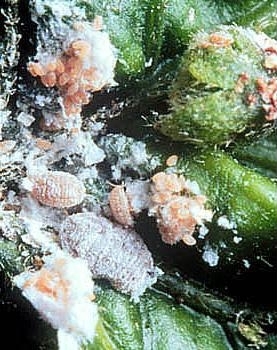
Pink Hibiscus Mealybug
Maconellicoccus hirsutus
Maconellicoccus hirsutus, (also known as the pink, grape or hibiscus mealybug) is a pest of many plants, trees, and shrubs. It infests hibiscus, citrus, coffee, sugar cane, annonas, plums, guava, mango (although, mango mealybug is more problematic), okra, sorrel, teak, mora, pigeon pea, peanut, grapevine, maize, asparagus, chrysanthemum, beans, cotton, soybean, cocoa, and many other plants. The pest forms colonies on the host plant, and if left undisturbed, the colonies will grow into large masses of white waxy coverings on branches, fruiting structures, leaves, and even whole plants, including large trees.
From the article Maconellicoccus hirsutus on Wikipedia (CC BY-SA), quoted section by section
Range & habitat
As it feeds, the hibiscus mealybug injects into the plant a toxic saliva that results in malformed leaf and shoot growth, stunting, and occasional death. Leaves show a characteristic curling, similar to damage caused by viruses. Heavily infested plants have shortened internodes leading to resetting or a "bunchy top" appearance. A heavy, black, sooty mold may develop on an infested plant's leaves and stems as a result of the mealybug's heavy honey-dew secretions. When fruits are infested, they can be entirely covered with the white waxy coating of the mealybug. Infestation can lead to fruit drop, or fruit may remain on the host in a dried and shriveled condition. If flower blossoms are attacked, the fruit sets poorly. In plants such as peanuts, potatoes, and some grasses, the pest has been reported to attack the root systems.
This pest occurs in most tropical areas of the world, including Asia, the Middle East, Africa, Australia, and Oceania. The hibiscus mealybug arrived in Egypt from India in 1912 and in Hawaii in 1984. It appeared in Grenada, Trinidad, and St. Kitts in the 1990s. It is a very serious pest in the Caribbean where it attacks many hosts of economic importance and disrupts Caribbean agricultural trade and commerce. Wingless crawlers, nymphs, and females have been known to travel short distances over the ground to get to other host plants in adjoining fields. …
Wikipedia: “Effects and distribution”
Listen
Looking for field recordings…
Where it lives
Recorded sightings
—
geo-referenced records in GBIF, from museums, herbaria and field observers.
Drag the globe to turn it. Dots are where records exist, not a range map; darker means more records.
In the stacks
Searching the stacks…
Every page naming Maconellicoccus hirsutus in the Biodiversity Heritage Library →
This page is assembled live from iNaturalist, GBIF, Wikipedia, the Source Library and the Internet Archive. It is not yet part of the hand-edited codex. iNaturalist taxon 199372.