- Animals
- ›Arthropods
- ›Hexapods
- ›Insects
- ›Winged and Once-winged Insects
- ›Butterflies and Moths
- ›Butterflies
- ›Brush-footed Butterflies
- ›Checkerspots, Anglewings, Peacocks, and Allies
- ›Checkerspots
- ›Anthanassa
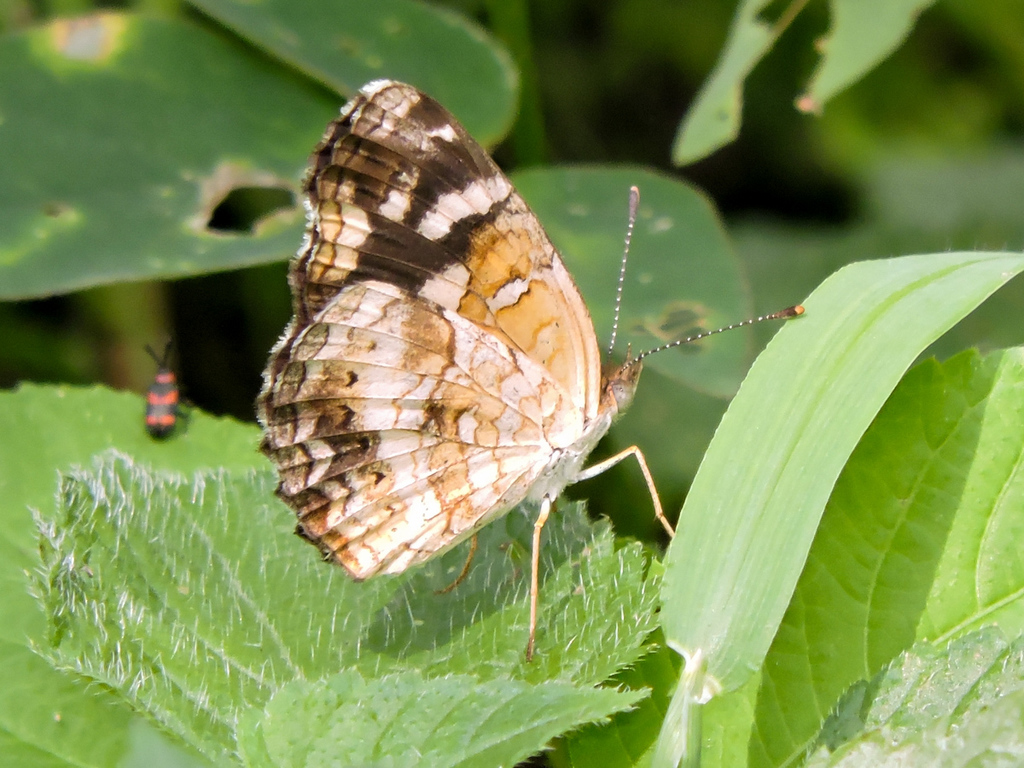
Pale-banded Crescent
Anthanassa tulcis
Anthanassa frisia, the Cuban crescentspot, Cuban checkerspot or Cuban crescent, is a butterfly of the Nymphalidae family. Subspecies tulcis is known by the common names pale-banded crescent or Tulcis crescent; it is treated as a species by some authors. The nominate subspecies is found in the West Indies and southern Florida, with strays to northern Florida. Subspecies tulcis is found from Argentina north through Central America and Mexico to southern Texas, strays to west Texas and...
From the article Anthanassa frisia on Wikipedia (CC BY-SA), quoted section by section
Description
The wingspan of subspecies frisia is 32–45 mm. Adults are on wing most of the year in southern Florida and throughout the year in the tropics. Subspecies tulcis has a wingspan of 32–35 mm. Adults are on wing from May to November in southern Texas.
Range & habitat
The nominate subspecies is found in the West Indies and southern Florida, with strays to northern Florida. Subspecies tulcis is found from Argentina north through Central America and Mexico to southern Texas, strays to west Texas and southern Arizona. Other subspecies are resident to South America.
Wikipedia: “Distribution”
What it does
Larvae of subspecies frisia feed on Beloperone guttata, while tulcis larvae have been recorded on Dicliptera species. Other recorded food plants include Ruellia species. Adults feed on flower nectar.
Wikipedia: “Ecology”
Listen
Looking for field recordings…
Where it lives
Recorded sightings
—
geo-referenced records in GBIF, from museums, herbaria and field observers.
Drag the globe to turn it. Dots are where records exist, not a range map; darker means more records.
In the stacks
Searching the stacks…
Every page naming Anthanassa tulcis in the Biodiversity Heritage Library →
This page is assembled live from iNaturalist, GBIF, Wikipedia, the Source Library and the Internet Archive. It is not yet part of the hand-edited codex. iNaturalist taxon 194134.