 NL·0164
Herbarium of the Nature Library
- Name
- Withania somnifera
- Family
- Solanaceae
- Native to
- Dry regions from the Mediterranean and North & East Africa through the Middle East to India and Sri Lanka
- Habitat
- Arid scrub, Dry tropical savanna, Disturbed ground
Ashwagandha
Withania somnifera
Also calledAshwagandha (Sanskrit, 'smell of horse') · Asgandh (Hindi/Urdu, Unani) · Indian ginseng (English) · Winter cherry (English) · Oroval (Spanish)
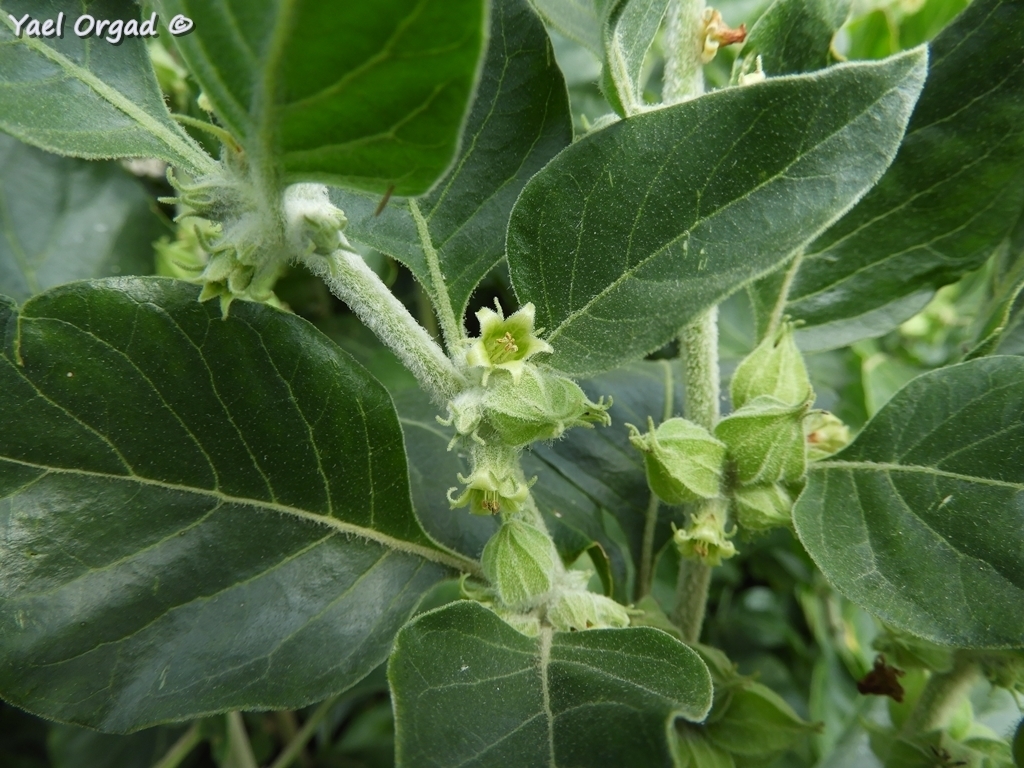
A grey-velvety nightshade-family shrub of dry country, whose horse-scented roots are Ayurveda's best-known rasayana (rejuvenating tonic). Its small orange-red berries hide inside papery lanterns, like those of its cousin the Chinese lantern.
Withania somnifera, known commonly as ashwagandha, is an evergreen shrub in the Solanaceae family that is native to the Middle East and North Africa, other African regions, southern Europe, Indian subcontinent, and Southeast Asia. Several other species in the genus Withania are morphologically similar. Other common names include Indian ginseng and winter cherry. Wikipedia
What it can do
- iMakes withanolides, steroidal lactones such as withaferin A that are studied for anti-inflammatory and anti-stress activity
- iiTolerates drought, heat and poor alkaline soils, needing very little water
- iiiEncloses its berries in an inflated papery calyx that protects them as they ripen
At the table
Roots are taken as a powder or extract, not eaten as food. Like many Solanaceae, leaves and unripe berries contain potentially toxic compounds.
In the medicine cabinet
| Tradition | Use |
|---|---|
| Ayurveda | Rasayana tonic for debility, ageing, insomnia, stress and low libido; given in milk (ashwagandha ksheerapaka) |
| Unani | Asgandh used as a nervine and aphrodisiac tonic and applied to painful swellings |
| African traditional medicine | Leaves and roots used in parts of East and Southern Africa as poultices for wounds and for fever |
| Modern phytotherapy | Root extracts trialled for stress, anxiety and sleep, with small positive studies |
Weight of evidence
Moderate. Some clinical trials with promising but limited or mixed results.
Active compounds
withaferin A, withanolide D, withanolide A, withanosides, tropine-type alkaloids
Fruit & seed


Fruit
Berry in an inflated calyx
Ripens: Autumn–winter
Orange-red berry about 6 mm wide, enclosed in a papery husk; not eaten.
Seed
~2 mm
Flat, kidney-shaped, yellowish seeds
- Dispersal
- Birds eat the berries
- Germination
- 8–14 days at 20–30 °C; sow shallowly
Photographs from Wikimedia Commons under open licences; hover for the photographer, click for the file.
How to grow it
Hardiness (USDA zones)
USDA 8–11 (annual elsewhere). Survives winters down to about -12 °C.
- Light
- Full sun
- Water
- Low
- Soil
- Sandy or stony, well-drained, slightly alkaline
- Propagation
- Seed
- To harvest
- Roots at 150–180 days
- Climates
- Arid, Semi-arid, Subtropical
- 1Sow seed shallowly in warm soil in late spring or at the start of the rains
- 2Thin seedlings to 30–60 cm and water sparingly
- 3Harvest roots when the berries ripen and the leaves begin to dry
- 4Wash, cut and sun-dry the roots
Can it grow where you are?
Where it lives
Recorded sightings
—
geo-referenced records in GBIF, from museums, herbaria and field observers.
Native range
Dry regions from the Mediterranean and North & East Africa through the Middle East to India and Sri Lanka
Drag the globe to turn it. Dots are where records exist, not a range map; darker means more records.
In the old herbals & bestiaries
Woodcuts and engravings matched from the Source Library’s scanned books by name. Plates marked “relative” show a close kin rather than this exact species. Click a plate to read the page it came from, with translation.

Discourses on the Six Books of Dioscorides
Dioscorides; Pietro Andrea Mattioli (comm.) · 1568 · p.1309

Notable Commentaries on the History of Plants
Leonhart Fuchs · 1549 · p.721

Commentaries on the Six Books of Pedanius Dioscorides on Medical Matter
Pietro Andrea Mattioli · 1565 · p.1244

Rariorum Plantarum Historia (with Fungorum Historia)
Carolus Clusius · 1601 · p.467

Herbarium Portatile, Oder Behendes Kräuter- und Gewächs-Buch: Darinn nicht allein 1363. so wol Einheimische als Außländndische Kräuter mit Lateinisch und Deutscher Benennung abgebildet, sondern auch die meisten, so in der Medicin gebräuchlich, kürtzlich erkläret werden
Panckow, Thomas · 1656 · p.163
In the stacks
Searching the stacks…
Every page naming Withania somnifera in the Biodiversity Heritage Library →
Marginalia
The Charaka Samhita (c. 1st–2nd century CE) lists ashwagandha among the strengthening herbs. Its Sanskrit name, 'smell of horse', is said to describe both the root's odour and the strength it was believed to give.
Curiosity
Linnaeus first placed the plant in the genus Physalis, alongside tomatillos and Cape gooseberries, because of the lantern-like husk around its berry.
Kinship
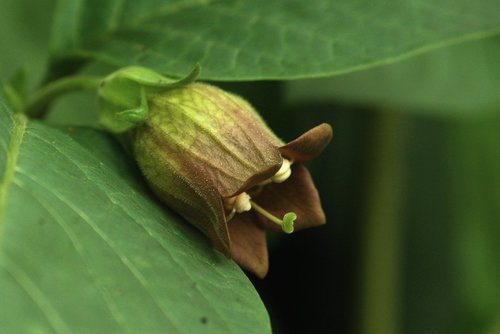
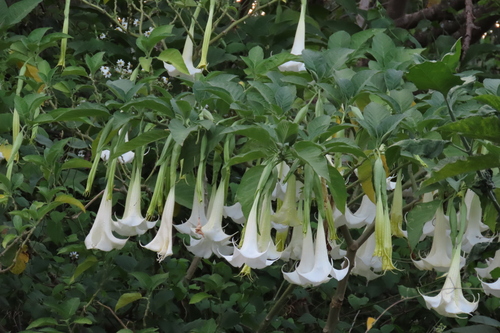
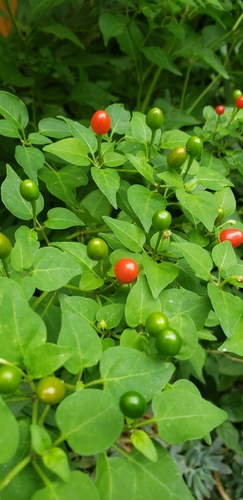

Photographs: iNaturalist contributors under the licences shown. Records: GBIF.org. Historical plates: Source Library (CC BY-SA 4.0; originals public domain). Summary text: Nature Library editors and Wikipedia (CC BY-SA). Medicinal and edibility notes are historical and educational, not advice. iNaturalist taxon 182191.