- Plants
- ›Vascular Plants
- ›flowering plants
- ›monocots
- ›grasses, sedges, cattails, and allies
- ›Bromeliads
- ›Tillandsioids
- ›Tillandsia
- ›Tillandsia
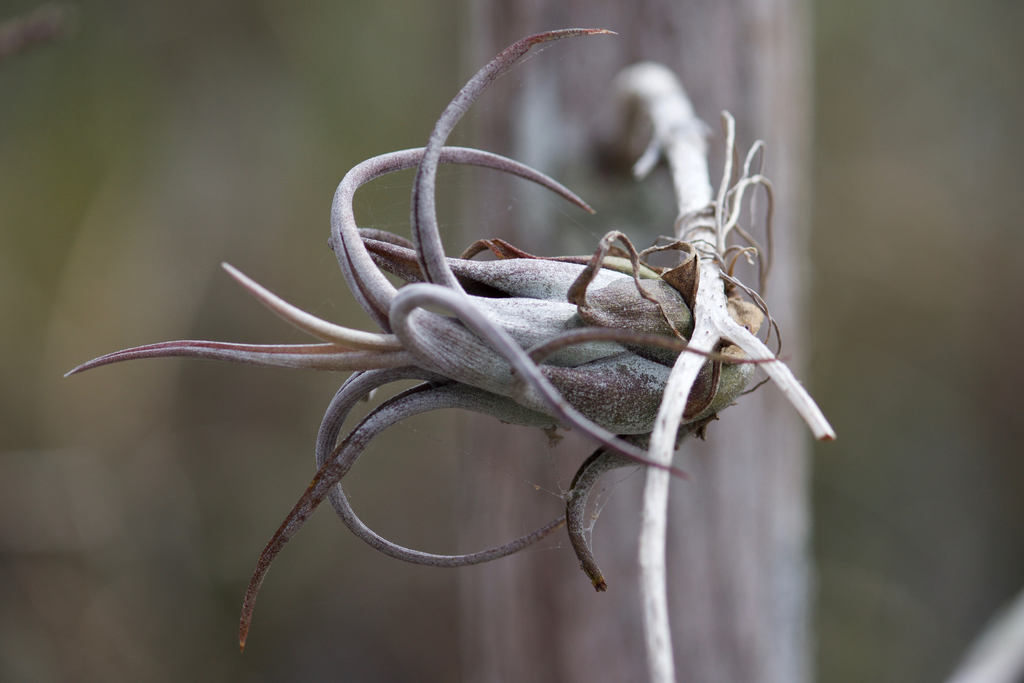
Potbelly Airplant
Tillandsia paucifolia
Tillandsia paucifolia, the potbelly airplant, is a species of bromeliad in the genus Tillandsia. This species is native to Central America, central and southern Mexico, Venezuela, Colombia, the West Indies, and Florida.
Tillandsia paucifolia can either grow singularly or in clusters and typically have five to ten leaves. The leaves of this species of Tillandsia are light green and silver-gray in color and are short with tapered ends. T. paucifolia have a large bulbous base which distinguishes them from other Tillandsias. The leaves of T. paucifolia are covered in trichomes, which are hair-like structures that increase the surface area on the leaves to maximize nutrient and water absorption from the air. The particular trichomes of the Tillandsia paucifolia are exceptionally sizable and copious.
From the article Tillandsia paucifolia on Wikipedia (CC BY-SA), quoted section by section
What it does
Tillandsia paucifolia are angiosperms with flowers that range from a pale pink to a lavender-blue color. Flowers of these epiphytes can be animal-pollinated. Animals such as bees, beetles, and hummingbirds are known to pollinate T. paucifolia diurnally (during the day) while there have been reports of moths and bats that pollinate nocturnally. As a reward to the animals that facilitate the pollination, these angiosperms will sometimes produce nectar. With increased visitation from animal pollinators, these epiphytes are more likely to receive more genetically varying pollen, leading to better quality seeds.
Wikipedia: “Reproduction”
Where it lives
Recorded sightings
—
geo-referenced records in GBIF, from museums, herbaria and field observers.
Drag the globe to turn it. Dots are where records exist, not a range map; darker means more records.
In the stacks
Searching the stacks…
Every page naming Tillandsia paucifolia in the Biodiversity Heritage Library →
This page is assembled live from iNaturalist, GBIF, Wikipedia, the Source Library and the Internet Archive. It is not yet part of the hand-edited codex. iNaturalist taxon 169766.