- Plants
- ›Vascular Plants
- ›flowering plants
- ›Dicots
- ›Sunflowers, Bellflowers, Fanflowers, and Allies
- ›Sunflowers, Daisies, Asters, and Allies
- ›chicories, dandelions, and allies
- ›Lettuce, Chicory, Dandelion and Salsify Tribe
- ›Hyoseridinae
- ›Reichardia
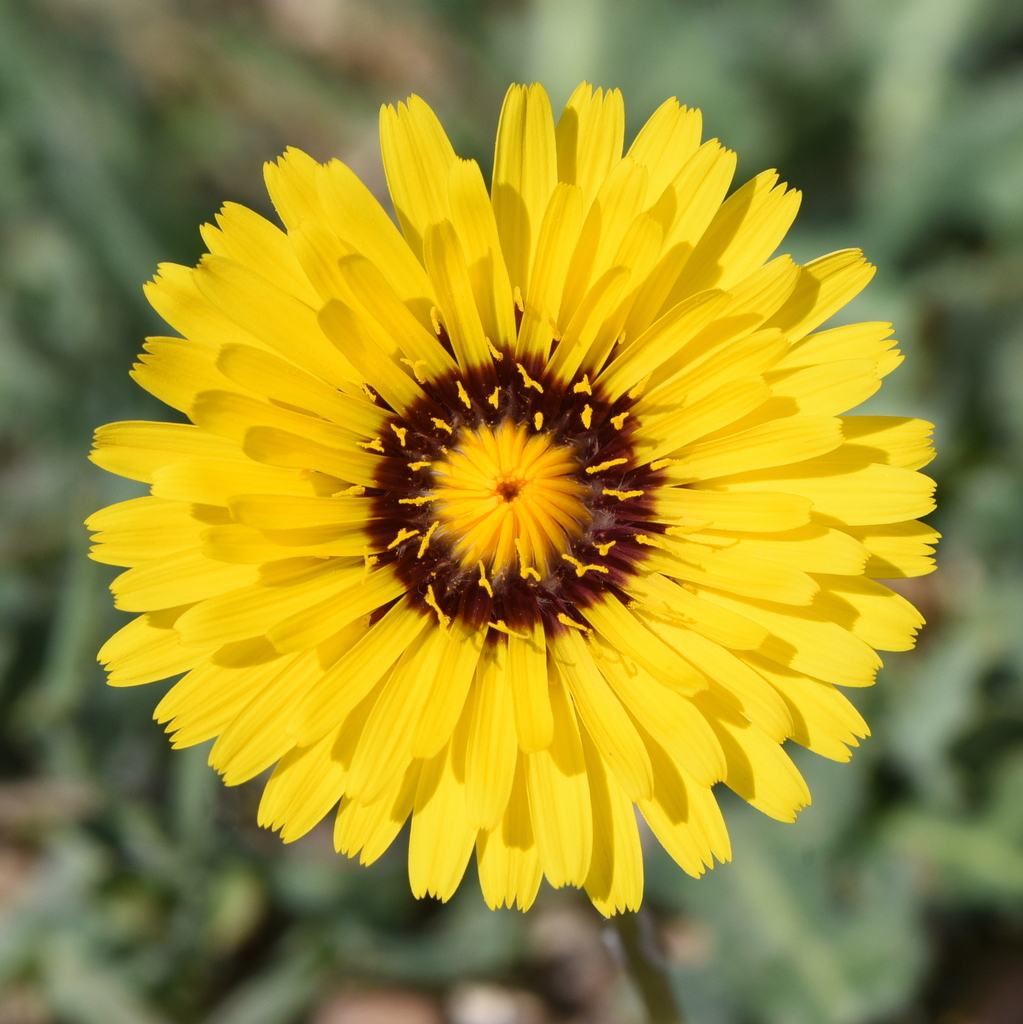
False Sow-thistle
Reichardia tingitana
Reichardia tingitana is a species of plant in the family Asteraceae that is distributed primarily throughout Mediterranean and West Asia. It is known by the common name false sowthistle.
From the article Reichardia tingitana on Wikipedia (CC BY-SA), quoted section by section
Description
The leaves have an alternate arrangement and are entire with serrated margins. No stipule is present on the petiole. An annual plant, its flowering period is from March to May. Like most angiosperms, its flowers are hermaphroditic. The petals are of a yellow color.
Range & habitat
As a glycophyte, it is accustomed to growing in saline soils. Arid deserts and shrub-steppes are its most common habitats. It also grows well in sandy depressions in the Middle East. In France, it is a naturalized species. Another country it has been introduced to is Australia, where it is commonly recognized as a minor weed. There its main habitats are urban sites, coastal dunes and alluvial plains. It has been recorded in Bahrain, Kuwait, Qatar, the United Arab Emirates and eastern Saudi Arabia. Common names for it in Arabia are huzan, mureer, and murar. Uses in folk medicine have been recorded in the Middle East, its leaves being used to treat ailments such as constipation, colic and inflamed eyes.
Wikipedia: “Main habitat”
Where it lives
Recorded sightings
—
geo-referenced records in GBIF, from museums, herbaria and field observers.
Drag the globe to turn it. Dots are where records exist, not a range map; darker means more records.
In the stacks
Searching the stacks…
Every page naming Reichardia tingitana in the Biodiversity Heritage Library →
This page is assembled live from iNaturalist, GBIF, Wikipedia, the Source Library and the Internet Archive. It is not yet part of the hand-edited codex. iNaturalist taxon 167774.