- Plants
- ›Vascular Plants
- ›flowering plants
- ›Dicots
- ›Heathers, Balsams, Primroses, and Allies
- ›balsam family
- ›Impatiens
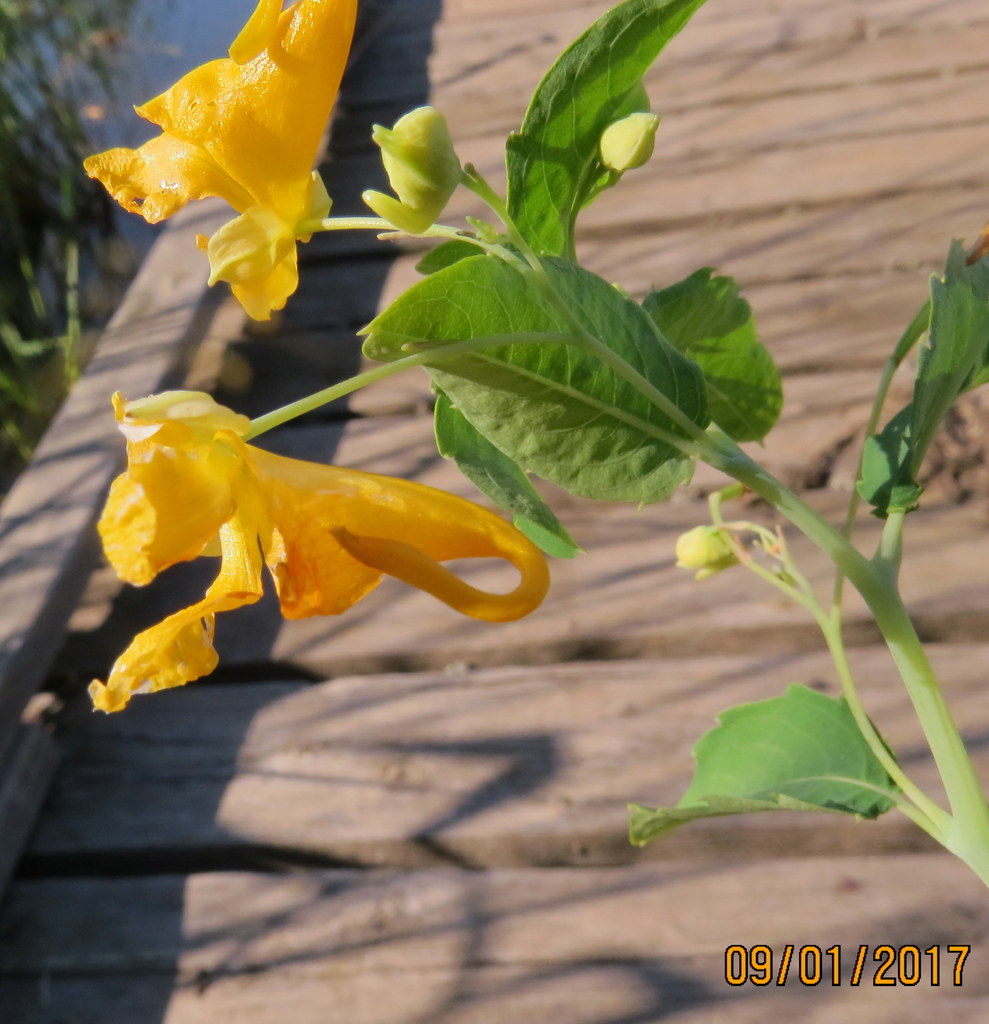
Idaho Jewelweed
Impatiens aurella
Impatiens aurella, also known as the Idaho jewelweed, mountain jewelweed, varied jewelweed, or pale yellow touch-me-not, is a species of flowering plant in the family Balsaminaceae. It is found in northwest North America up through British Columbia, Canada. It produces a yellow-orange flower during the blooming months of late June/early July through September. The plant is an annual herb that grows to just over 1 m (3 ft 3 in) tall. As a member of the genus Impatiens it is also a touch-me-not, a herbaceous plant that has a ripe seed capsule that will explode. The flowers are considered toxic, and should not be ingested. Once cultivated, the plant has medicinal properties to help in the treatment of warts, ringworm, nettle stings, and poison ivy rash. Additional research suggests yellow dye and shampoo for itchy scalps may be possible from this species.
From the article Impatiens aurella on Wikipedia (CC BY-SA), quoted section by section
Description
Impatiens aurella grows up to approximately 460 mm (18 in) tall. The leaves grow to be 3–12 cm (1.2–4.7 in) long and the petioles are 2–4 cm (0.79–1.57 in) long. The yellow blooms (often have orange spots) are saccate sepal and approximately 1 cm (0.39 in) in length. The lateral sepals are smaller and bloom with five petals that are approximately 5–8 mm (0.20–0.31 in) in length. The flowers bloom in sets of two. Typical of all impatiens, I. aurella has a small fruit capsule that contains up to six seeds. This fruit capsule will explode and disperse seeds around the plant, which is where the genus Impatiens gets its name.
Range & habitat
This species of Impatiens is found in North America in the northwest United States from central Alaska to Washington, Idaho, Montana, and British Columbia, Canada. Impatiens aurella is known to grow in tall vegetation and cattails. It is typically surrounded by wetland habitats such as marshes, drainage ditches, and lakeshores in the interior cedar hemlock. It prefers organic soil, and will grow in both disturbed and undisturbed locations. Interestingly, the species rarely appears in abundance.
Wikipedia: “Habitat”
Where it lives
Recorded sightings
—
geo-referenced records in GBIF, from museums, herbaria and field observers.
Drag the globe to turn it. Dots are where records exist, not a range map; darker means more records.
In the stacks
Searching the stacks…
Every page naming Impatiens aurella in the Biodiversity Heritage Library →
This page is assembled live from iNaturalist, GBIF, Wikipedia, the Source Library and the Internet Archive. It is not yet part of the hand-edited codex. iNaturalist taxon 164052.