- Plants
- ›Vascular Plants
- ›flowering plants
- ›Dicots
- ›Sunflowers, Bellflowers, Fanflowers, and Allies
- ›Sunflowers, Daisies, Asters, and Allies
- ›Asteroideae
- ›Sunflowers and Allies
- ›Helianthinae
- ›Helianthus
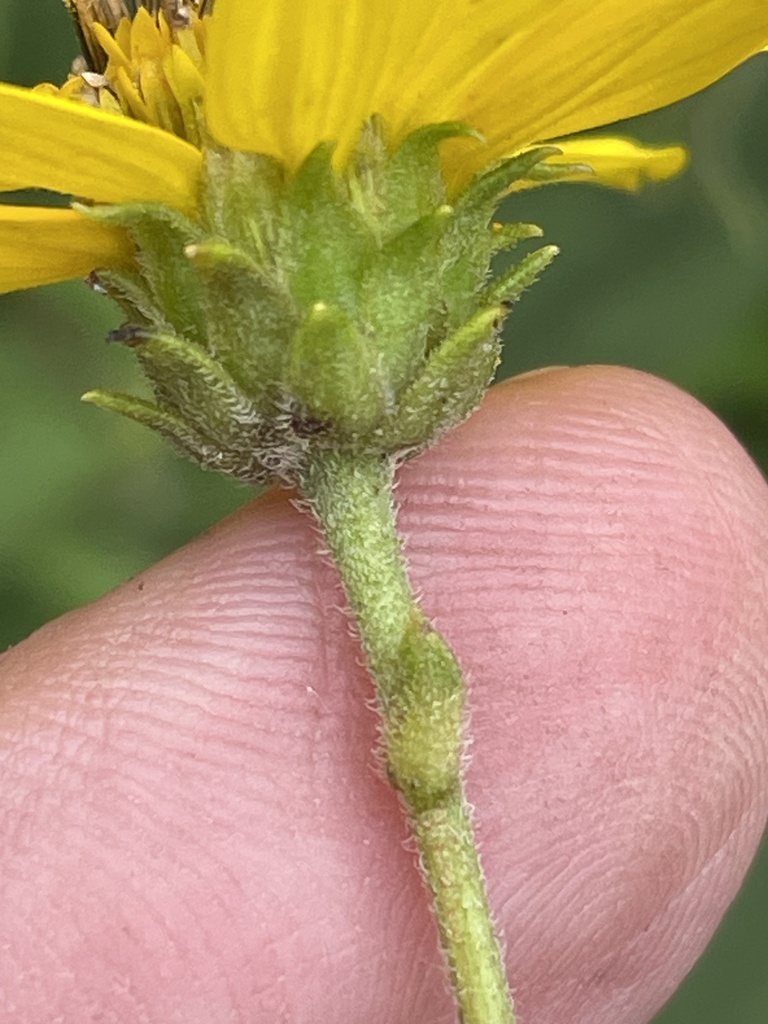
Schweinitz's Sunflower
Helianthus schweinitzii
Helianthus schweinitzii, commonly known as Schweinitz's sunflower, is a rare, federally endangered perennial wildflower native to the Piedmont physiographic province of North Carolina and South Carolina. It is a member of the sunflower family (Asteraceae). Typically growing between 1 and 2 meters (3 to 7 feet) tall, the plant is distinguished by its yellow ray flowers, narrow leaves, and unique ecological and genetic traits. It is primarily found in specialized open habitats such as prairies, roadsides, and utility and highway rights-of-way in the Carolinas. It is one of the rarest species of sunflower in the United States, with only about 90 known populations, many containing fewer than 40 plants each. The U.S. Fish and Wildlife Service listed Schweinitz's sunflower as an endangered species on May 7, 1991.
From the article Helianthus schweinitzii on Wikipedia (CC BY-SA), quoted section by section
Description
Schweinitz's sunflower typically grows from 1 to 4 meters (3 to 13 feet) tall. It usually reaches about 2 meters (6.5 feet) and occasionally reaches up to 4 to 5 meters (16 feet). The sunflower produces underground tubers and rhizomes. Its stems are purple and usually solitary, branching only at or above mid-stem. Its leaves are thick and stiff, tending to droop towards the end. The sunflower is perennial and flowers for about 2 to 3 weeks in early October. One plant generally produces 3 to 6 yellow flower heads. Each head has 8 to 15 disc florets surrounding 40 or more disc florets. The Schweinitz's sunflower spreads through seed dispersion and has no dormant period.
Range & habitat
While Helianthus schweinitzi is frequently documented surviving along managed utility rights-of-way, power lines, and roadsides, field studies of existing Piedmont Prairie sites within North and South Carolina have revealed more about the species' historical ecological conditions. Research on these specialized habitats highlights the species' dependence on specific environmental elements, such as shallow, poor, clay, and/or rocky soils and other microenvironmental conditions specifically found throughout the southern Piedmont region, emphasizing the importance of conserving rare prairie remnants to protect its natural habitat. Additionally, the flower flourishes in full to partial sun exposure. As of 2003, approximately 80% of known populations were located near railways, utility roads, and roadsides. Today, 94 known populations exist in North and South Carolina, which is a significant increase from the 13 marked in the 1990s.
Wikipedia: “Habitat and distribution”
At the table
Although Helianthus schweinitzii is primarily managed as a rare, federally endangered species rather than a commercial crop, wild sunflower species in the genus Helianthus are valuable for botanical research and agricultural development. Through decades of botanical exploration and germplasm collection, researchers have examined wild sunflower species to identify adaptive traits such as drought tolerance, disease resistance, and environmental resilience. Conserving wild species such as H. schweinitzii therefore helps preserve genetic resources and may provide valuable insights for improving and breeding cultivated sunflower varieties. In specialized native landscaping or conservation garden settings, cultivation requires conditions that mimic its natural Piedmont Prairie habitat, including well-suited soils and full sunlight. However, direct cultivation remains limited due to the species’ protected conservation status.
Wikipedia: “Cultivation and uses”
In human culture
Botanists John Torrey (1796–1873) and Asa Gray (1810–1888) first mentioned the species in 1842. It is named for Lewis David von Schweinitz (1780–1834), a Salem, North Carolina clergyman and botanist who discovered the species. For over a century after its first account, the species was subject to misidentification and taxonomic confusion, particularly regarding its geographic distribution and chromosome counts; these issues were later corrected in botanical revisions. More recent studies have supported these historical assessments with modern genomic sequencing, providing new insight into the history and evolution of the earlier populations.
Wikipedia: “History”
Where it lives
Recorded sightings
—
geo-referenced records in GBIF, from museums, herbaria and field observers.
Drag the globe to turn it. Dots are where records exist, not a range map; darker means more records.
In the stacks
Searching the stacks…
Every page naming Helianthus schweinitzii in the Biodiversity Heritage Library →
This page is assembled live from iNaturalist, GBIF, Wikipedia, the Source Library and the Internet Archive. It is not yet part of the hand-edited codex. iNaturalist taxon 163632.