- Plants
- ›Vascular Plants
- ›flowering plants
- ›Dicots
- ›Gentians, Dogbanes, Madders, and Allies
- ›madder family
- ›Cinchonoideae
- ›Guettardeae
- ›Bobea
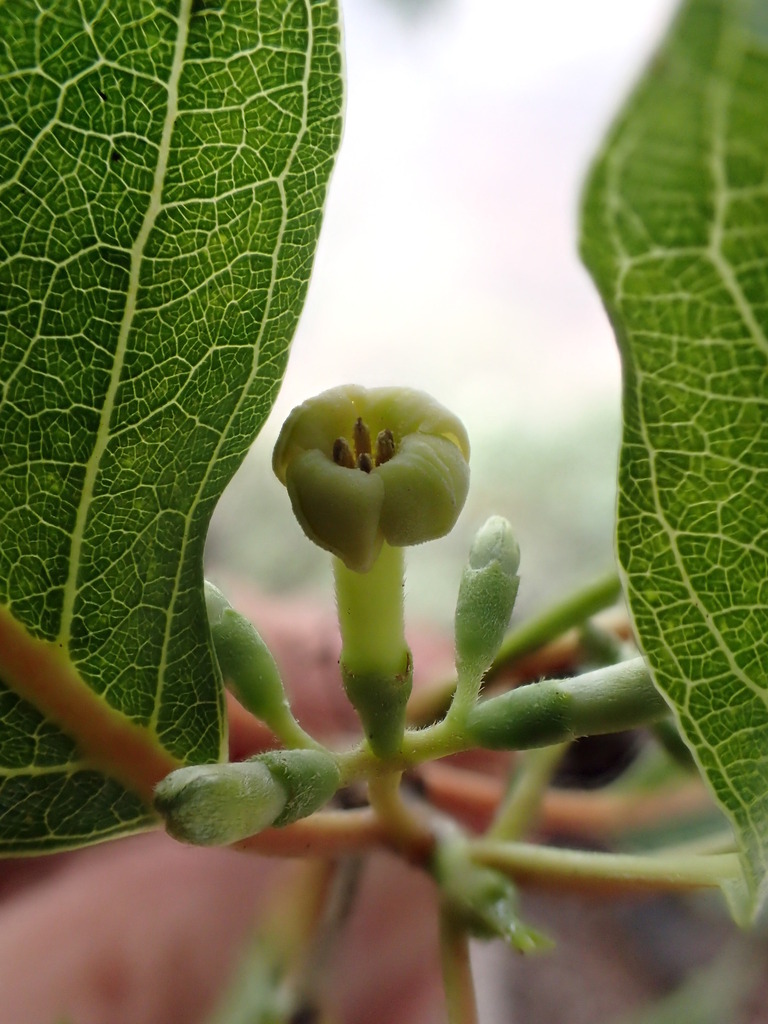
'Ahakea
Bobea timonioides
ʻAhakea (Bobea timonioides) is a species of flowering tree in the coffee family, Rubiaceae, that is endemic to Hawaiʻi. It inhabits dry, coastal mesic and mixed mesic forests at elevations of 250–580 metres (820–1,900 ft) on the islands of Hawaiʻi and Maui. It is threatened by habitat loss.
From the article Bobea timonioides on Wikipedia (CC BY-SA), quoted section by section
Description
It is a small to medium tree which can grow up to 30 feet (9 metres) tall. The bark is smooth and pale tan or nearly white. The shiny, leathery leaves are simple, arranged oppositely and reach 4 to 5 inches (10 to 12 centimetres) long, and bear conspicuous, sometimes reddish veins. The small flowers, which range in color from green to yellow to white, are trumpet shaped and slightly fragrant. ʻAhakea has been observed flowering year-round, although flower and bud production drops in June and August. The drupe fruits are oval-shaped, about half an inch long, and bear between two and seven seeds. Fruits are green when immature, and ripen to a purplish to black color when mature.
Range & habitat
ʻAhakea is endemic to the Hawaiian Islands, being found on the islands of Hawaiʻi, O'ahu, and Kaua'i. No specimens of B. timonioides have been collected from Maui, but collections made along the southern slopes of Haleakalā are believed to represent hybrids between B. timonioides and Bobea sandwicensis. It occurs in dry to mesic lowland forests between 820 and 1,900 feet (250 to 580 metres), and is best known from the districts of Puna and Kona on Hawaiʻi. Strands in the Nāulu forest area of the Hawaiʻi Volcanoes National Park (HVNP) have been found most often in closed tall ʻōhiʻa lehua (Metrosideros polymorpha) dry to mesic forests on the steep slopes of kīpuka, in substrates of pāhoehoe and ʻaʻā lava flows with little soil development.
Wikipedia: “Distribution and habitat”
Where it lives
Recorded sightings
—
geo-referenced records in GBIF, from museums, herbaria and field observers.
Drag the globe to turn it. Dots are where records exist, not a range map; darker means more records.
In the stacks
Searching the stacks…
Every page naming Bobea timonioides in the Biodiversity Heritage Library →
This page is assembled live from iNaturalist, GBIF, Wikipedia, the Source Library and the Internet Archive. It is not yet part of the hand-edited codex. iNaturalist taxon 159283.