- Plants
- ›Vascular Plants
- ›flowering plants
- ›Dicots
- ›Sunflowers, Bellflowers, Fanflowers, and Allies
- ›Sunflowers, Daisies, Asters, and Allies
- ›Vernonioideae
- ›Vernonieae
- ›Elephantopinae
- ›Elephantopus
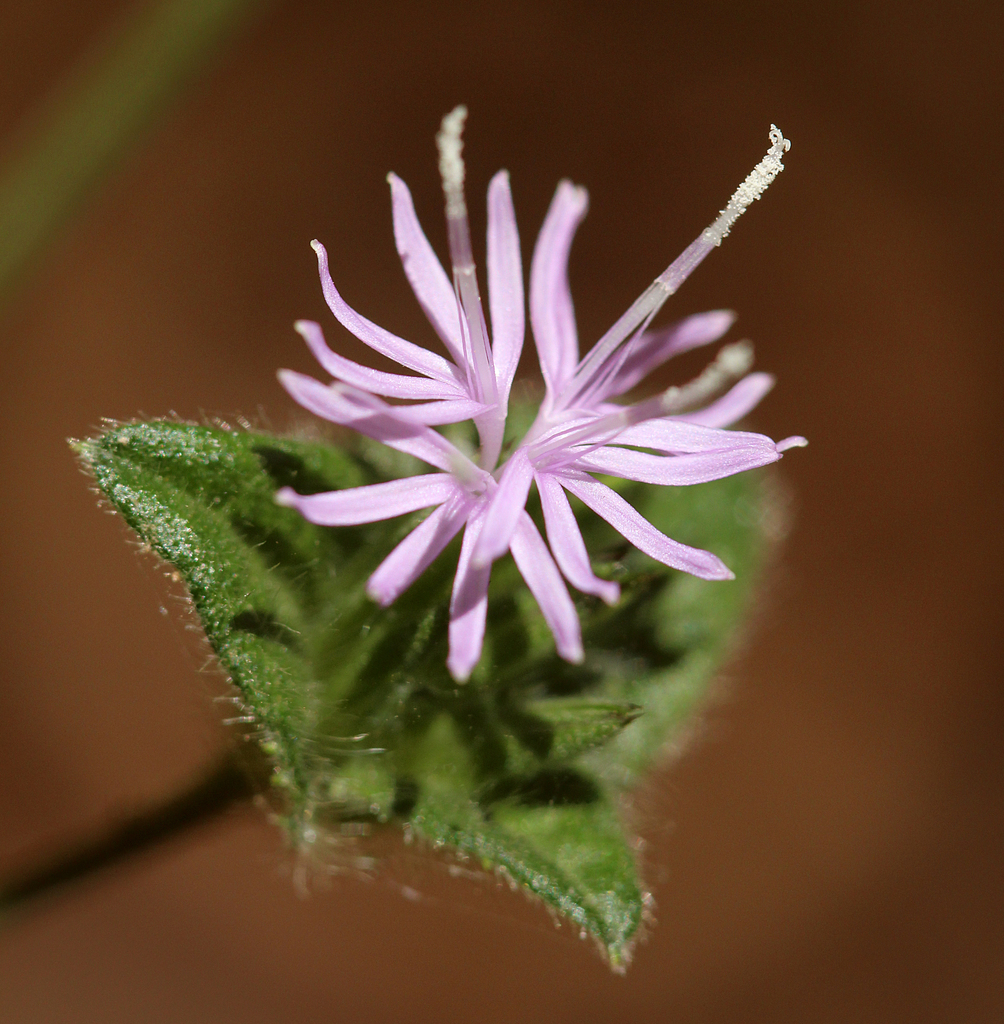
common elephant's-foot
Elephantopus tomentosus
Elephantopus tomentosus is a species of perennial flowering plant in the family Asteraceae. It is native to the southeastern United States. It blooms from July to September.
Common names include mammoth's foot, woolly elephant's foot, and devil's grandmother.
From the article Elephantopus tomentosus on Wikipedia (CC BY-SA), quoted section by section
Description
E. tomentosus reaches a height of about 2 feet (approximately 0.6 meters). It leaves are obovate to oblanceolate in shape, ranging from 3 to 8 centimeters in length and 4 to 12 millimeters in width. When it flowers, from August to November, inflorescence is most commonly pale pink or purple. Blooms are rarely white.
Range & habitat
This species is native to the southeastern United States' coastal plain, its range stretching from Maryland to Florida and westward to Texas and Arkansas. It is also native in areas south of the United States, to Chiapas, Mexico. E. tomentosus is commonly found in woodlands and along woodland borders. Individuals have also been observed in habitats such as mixed woodlands, upland pine woodlands, and along the edges of rivers. It is considered to be a facultative species.
Wikipedia: “Distribution and habitat”
What it does
This species has been observed to increase significantly within areas that have experienced prescribed fire. It has been found that E. tomentosus occurs in its highest frequency after spring and winter prescribed burns.
== References ==
Wikipedia: “Fire Ecology”
In human culture
The genus name Elephantopus comes from the Greek words "elephantos" (elephant) and "pous" (foot). The term likely refers to the large basal leaves of some members of the genus.
Wikipedia: “Etymology”
Where it lives
Recorded sightings
—
geo-referenced records in GBIF, from museums, herbaria and field observers.
Drag the globe to turn it. Dots are where records exist, not a range map; darker means more records.
In the stacks
Searching the stacks…
Every page naming Elephantopus tomentosus in the Biodiversity Heritage Library →
This page is assembled live from iNaturalist, GBIF, Wikipedia, the Source Library and the Internet Archive. It is not yet part of the hand-edited codex. iNaturalist taxon 152133.