- Animals
- ›Arthropods
- ›Hexapods
- ›Insects
- ›Winged and Once-winged Insects
- ›Butterflies and Moths
- ›Butterflies
- ›Gossamer-winged Butterflies
- ›Blues
- ›Typical Blues
- ›Scolitantidina
- ›Pseudophilotes
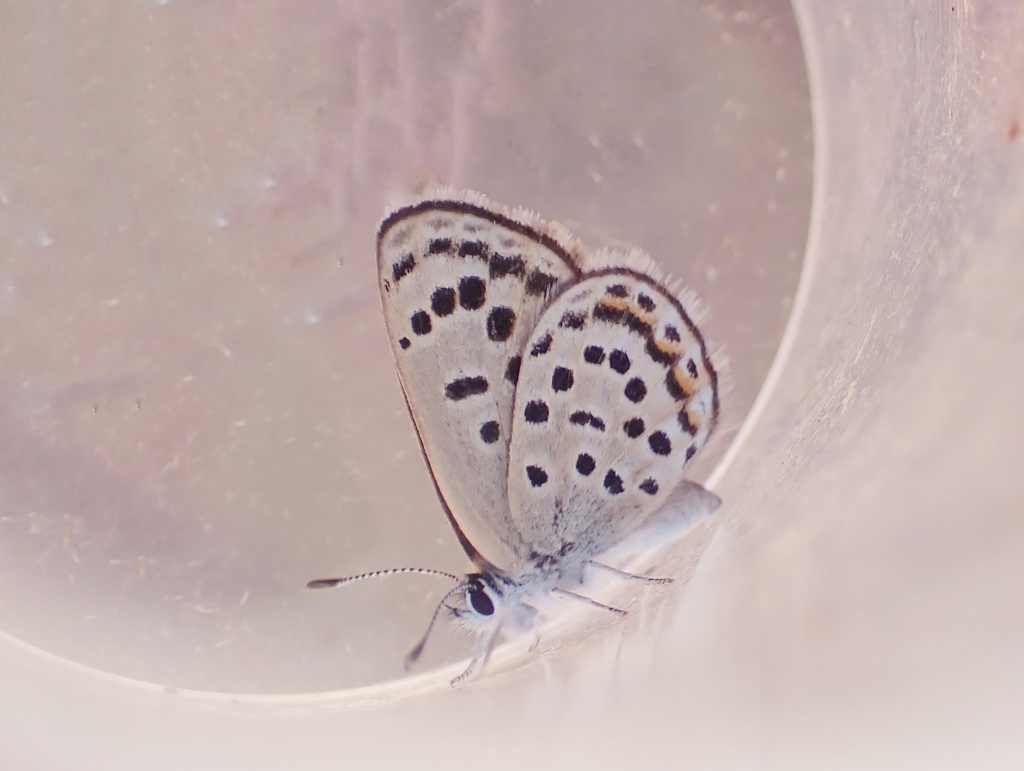
Sinai Baton Blue
Pseudophilotes sinaicus
Pseudophilotes sinaicus, the Sinai baton blue, one of the world's smallest butterflies, lives only on mountainside patches of Sinai thyme in an arid corner of the Sinai Peninsula in Egypt called Saint Katherine Protectorate.
From the article Pseudophilotes sinaicus on Wikipedia (CC BY-SA), quoted section by section
What it does
The female butterfly lays about 20–30 eggs in spring, a day after mating, on the young buds of its host plant, Sinai thyme (Thymus decussatus). After an incubation period of a few days, the eggs hatch into small larvae which feed on the buds and flowers of Sinai thyme. These larvae make an appeasement relationship with one type of ant (Lepisiota obtusa). The larva has two organs that it uses in its relationship with ants; the dorsal nectary organ (which secretes droplets of simple sugars and amino acids for this ant species) and the tentacular organ (which produces volatile secretions that attract and alert attendant ants if a caterpillar is alarmed). However, larvae are also heavily preyed upon by another species of ant, Crematogaster aegyptiaca. This ant is very influential to the local distribution of the butterfly because in areas where it is found, no butterflies survive. Larval development takes about 21 days. On reaching full size, larvae descend to the bottom of the thyme plant and pupate. The pupae spend the whole autumn and winter in their cocoons, and when the temperature rises in late spring (during April to June), the adults emerge and males begin searching for females. The whole life cycle of this butterfly depends upon the Sinai thyme. This plant is also rare and localized to this small area of the world. …
Wikipedia: “Life cycle”
Listen
Looking for field recordings…
Where it lives
Recorded sightings
—
geo-referenced records in GBIF, from museums, herbaria and field observers.
Drag the globe to turn it. Dots are where records exist, not a range map; darker means more records.
In the stacks
Searching the stacks…
Every page naming Pseudophilotes sinaicus in the Biodiversity Heritage Library →
This page is assembled live from iNaturalist, GBIF, Wikipedia, the Source Library and the Internet Archive. It is not yet part of the hand-edited codex. iNaturalist taxon 149688.