- Animals
- ›Arthropods
- ›Hexapods
- ›Insects
- ›Winged and Once-winged Insects
- ›Butterflies and Moths
- ›Flannel, Slug Caterpillar, Leaf Skeletonizer, and Allied Moths
- ›Burnet Moths
- ›Zygaeninae
- ›Zygaena
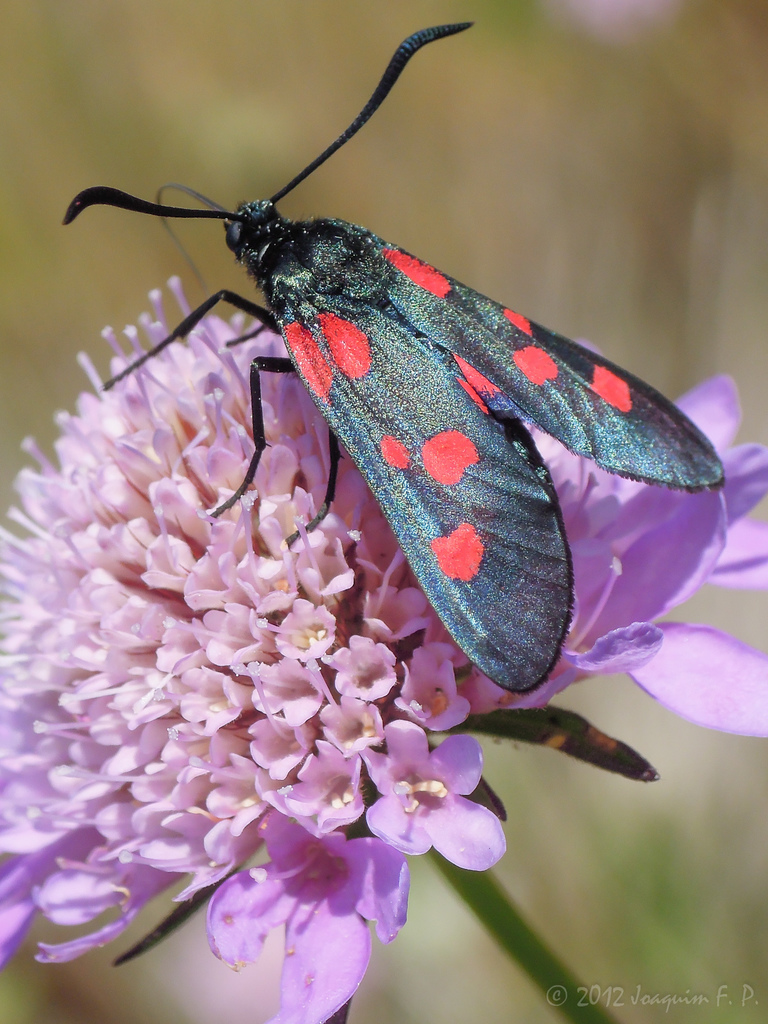
New Forest Burnet
Zygaena viciae
Zygaena viciae, the New Forest burnet moth, is a member of the Zygaenidae family, found in the northern hemisphere. Since 1927 it has been extinct in the New Forest, England, after which it is named. It is also known in Europe as the small five-spotted ram.
From the article Zygaena viciae on Wikipedia (CC BY-SA), quoted section by section
Range & habitat
The moth is found in southern and central Europe, and in Scotland (Z. v. argylliensis), where it survives in very small numbers. It is also found in southern Scandinavia. In the east, the range extends to Lake Baikal.
Wikipedia: “Distribution and habitat”
What it does
Pale green/yellow eggs are laid in clusters. The larvae feed on the leaves of clover and vetch species. Their appearance varies with region, but they are generally green, with yellow and black spots. They pupate within a cocoon attached to foliage. The adults' wingspan is 22–32 mm, they fly by day, and they are on wing in July.
Wikipedia: “Life cycle and behaviour”
Listen
Looking for field recordings…
Where it lives
Recorded sightings
—
geo-referenced records in GBIF, from museums, herbaria and field observers.
Drag the globe to turn it. Dots are where records exist, not a range map; darker means more records.
In the stacks
Searching the stacks…
Every page naming Zygaena viciae in the Biodiversity Heritage Library →
This page is assembled live from iNaturalist, GBIF, Wikipedia, the Source Library and the Internet Archive. It is not yet part of the hand-edited codex. iNaturalist taxon 147043.