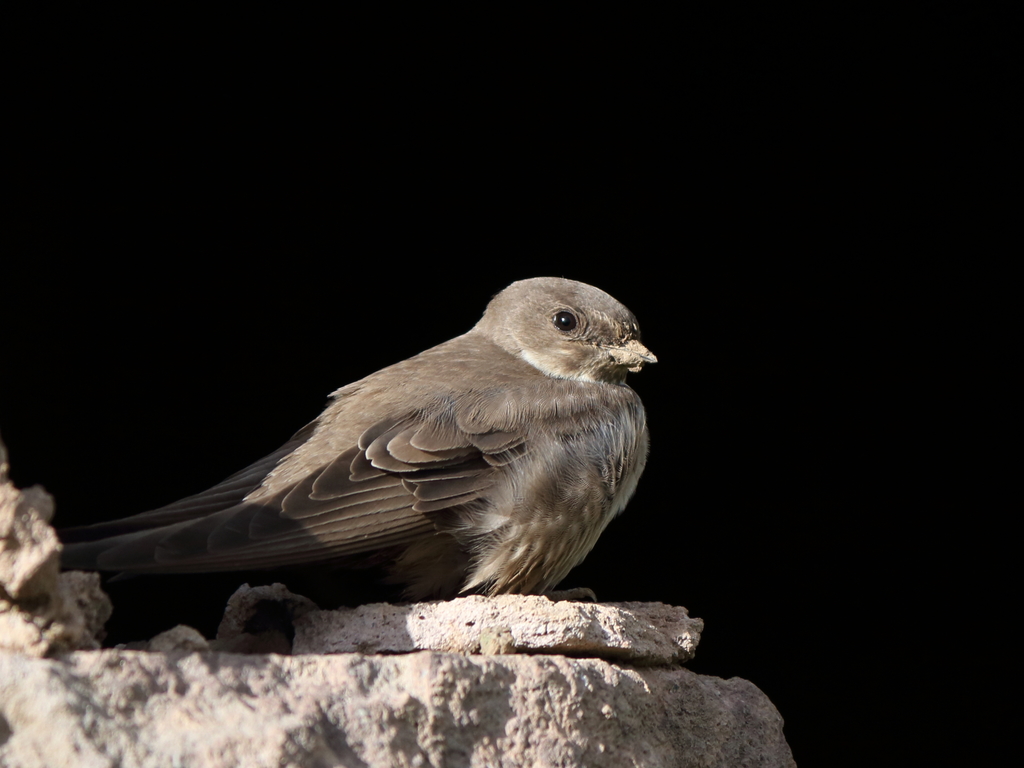
Crag-Martins
Ptyonoprogne
The crag martins are five species of small passerine birds in the genus Ptyonoprogne of the swallow family. They are the Eurasian crag martin (P. rupestris), the pale crag martin (P. obsoleta), the dusky crag martin (P. concolor), the large rock martin (P. fuligula) and the red-throated rock martin (P. rufigula). They are closely related to each other, and have formerly sometimes been considered to be one species. They are closely related to the Hirundo barn swallows and are placed in that genus by some authorities. These are small swallows with brown upperparts, paler underparts without a breast band, and a square tail with white patches. They can be distinguished from each other on size, the colour shade of the upperparts and underparts, and minor plumage details like throat colour. They resemble the sand martin, but are darker below, and lack a breast band.
These are species of craggy mountainous habitats, although all five will also frequent human habitation. The two African rock martins and the south Asian dusky crag martin are resident, but the Eurasian crag martin is a partial migrant; birds breeding in southern Europe are largely resident, but some northern breeders and most Asian birds are migratory, wintering in north Africa or India. They do not normally form large breeding colonies, but are more gregarious outside the breeding season. These martins build neat mud nests under cliff overhangs or in crevices in their mountain homes, and have readily adapted to the artificial cliffs provided by buildings and motorway bridges.
5 branches of this genus, most-observed first · about 5 known species
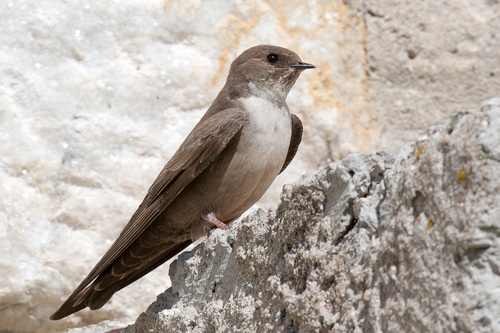
Eurasian Crag-Martin
speciesPtyonoprogne rupestris
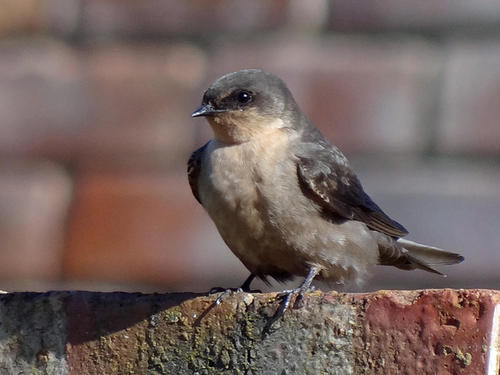
Southern Crag-Martin
speciesPtyonoprogne fuligula
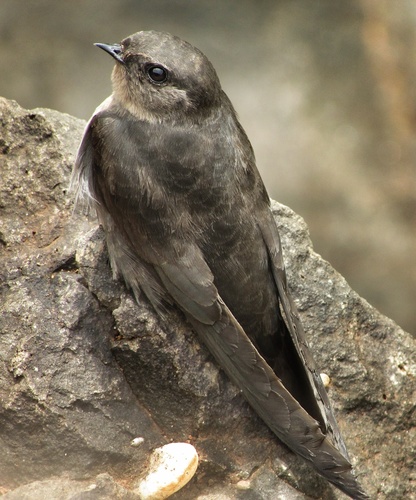
Dusky Crag-Martin
speciesPtyonoprogne concolor

Pale Crag-Martin
speciesPtyonoprogne obsoleta

Red-throated Crag-Martin
speciesPtyonoprogne rufigula
Where it lives
Recorded sightings
—
geo-referenced records in GBIF, from museums, herbaria and field observers.
Drag the globe to turn it. Dots are where records exist, not a range map; darker means more records.
In the stacks
Searching the stacks…
Every page naming Ptyonoprogne in the Biodiversity Heritage Library →
This page is assembled live from iNaturalist, GBIF, Wikipedia, the Source Library and the Internet Archive. It is not yet part of the hand-edited codex. iNaturalist taxon 144348.