- Plants
- ›Vascular Plants
- ›flowering plants
- ›Dicots
- ›Nances, Willows, and Allies
- ›Spurge Family
- ›Crotonoideae
- ›Crotoneae
- ›Croton
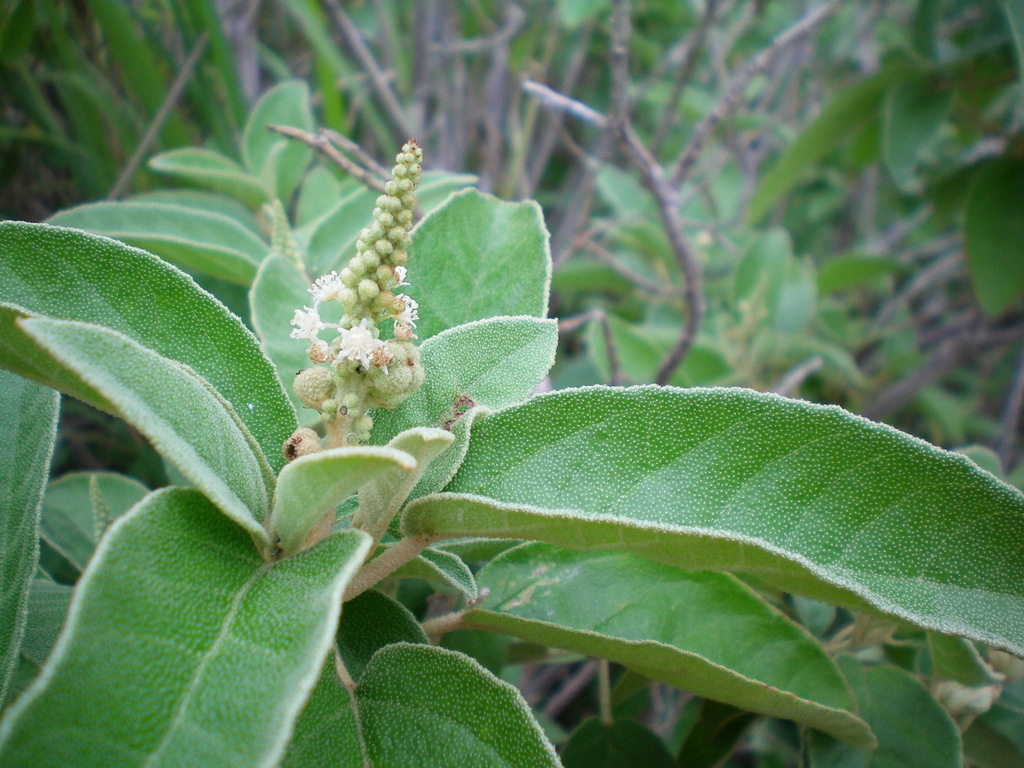
Yellow Balsam
Croton flavens
Croton flavens is a species of flowering plant in the genus Croton and the family Euphorbiaceae, native to southern Mexico, the Caribbean, and Venezuela. The plant is commonly found in dry locations. It has white flowers, golden sap, and is highly aromatic. It was described by Carl Linnaeus in 1759 in Systema Naturae. Its common names include yellow balsam, copaiba, maran, rock sage, ti baume, and welensali.
From the article Croton flavens on Wikipedia (CC BY-SA), quoted section by section
At the table
Croton flavens has many reported uses. Its aromatic sap has been distilled for scented toiletries, and its leaves used for scrubbing dishes to remove odors or crushed to use as an insect repellent. As traditional medicine, Croton flavens has been used to treat sore throat, earaches, leg aches, menstrual cramps, postpartum pain, pneumonia, and cholera. It has also been used to relieve pain and prevent swelling from wasp and bee stings, and to treat infected cuts and sores. Additionally, Croton flavens has been used as an herbal abortifacient. In Montserrat, locals have crushed and smoked Croton flavens to relieve congestion or like a tobacco product. In Curaçao, locals have crushed and chewed it like a tobacco product or used it to make tea. A research study in 1983 suggested that the chewing or drinking of the Croton flavens may be linked to increased rates of esophageal cancer in Curaçao. Local insects utilize Croton flavens as well. The plant provides pollen and nectar to bees and butterflies such as the tropical leafwing.
Wikipedia: “Uses”
Where it lives
Recorded sightings
—
geo-referenced records in GBIF, from museums, herbaria and field observers.
Drag the globe to turn it. Dots are where records exist, not a range map; darker means more records.
In the stacks
Searching the stacks…
Every page naming Croton flavens in the Biodiversity Heritage Library →
This page is assembled live from iNaturalist, GBIF, Wikipedia, the Source Library and the Internet Archive. It is not yet part of the hand-edited codex. iNaturalist taxon 132637.