- Plants
- ›Vascular Plants
- ›flowering plants
- ›Dicots
- ›geraniums, bridal wreaths, and allies
- ›Geranium family
- ›Geranium
- ›Geranium
- ›Geranium
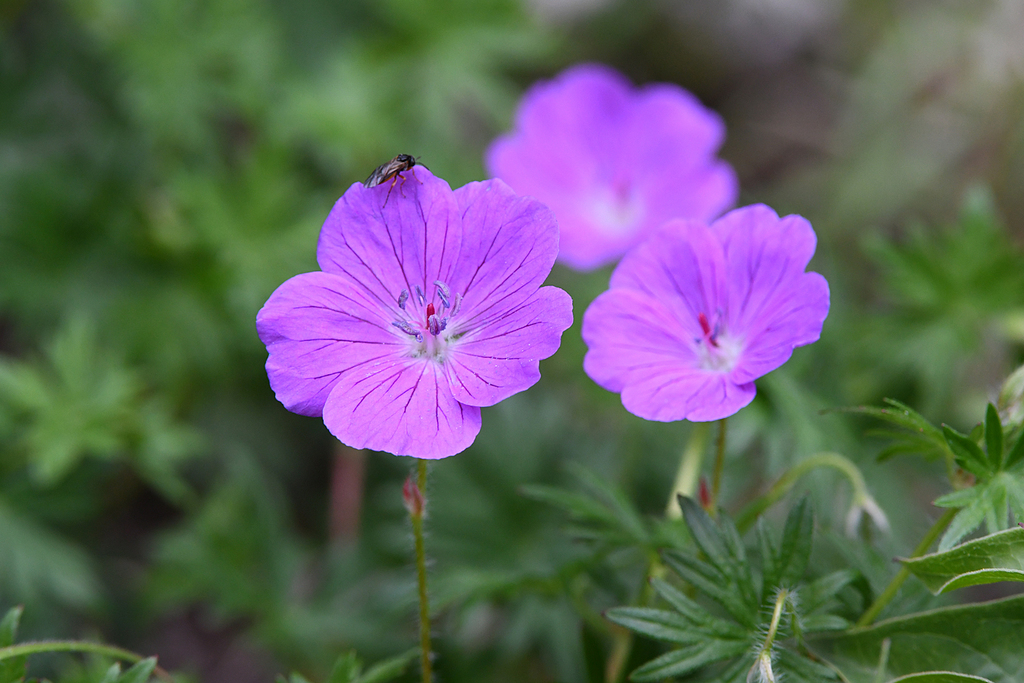
Bloody Crane's-bill
Geranium sanguineum
Geranium sanguineum, common names bloody crane's-bill or bloody geranium, is a species of hardy flowering herbaceous perennial plant in the cranesbill family Geraniaceae. It is also the county flower of Northumberland.
From the article Geranium sanguineum on Wikipedia (CC BY-SA), quoted section by section
Description
Geranium sanguineum has a hemicryptophyte plant life-form, with its overwintering buds situated just below the soil surface, and the floral axis more or less erect with a few leaves. It has a thick rhizome. The stems are prostrate to ascending, well developed, much branched, and hairy. It reaches on average 30–50 centimetres (12–20 in) in height. The petiolate leaves have five lobes (or segments), each segment is tripartite with large teeth. The flowers are produced singly (not in clusters, as in many other Geranium species), 2.5–4 cm diameter, with petals 12–18 mm wide, and are bright crimson. The flowering period extends from May to October. The flowers are hermaphrodite and pollinated by insects (entomophily). The most common flower visitors are Syrphidae and Hymenoptera, but also butterflies and Coleoptera. The fruit is a schizocarp that breaks up into five mericarps when ripe.
Range & habitat
Geranium sanguineum is native to most of temperate to subarctic Europe and western Asia. It is also frequent as a garden escape away from native sites.
Wikipedia: “Distribution”
How it is grown
It is cultivated as a garden subject, and a number of different cultivars exist. The following cultivars have gained the Royal Horticultural Society's Award of Garden Merit:
Wikipedia: “Cultivation”
In human culture
The genus name is derived from the Greek γέρανος ("géranos"), meaning crane, with reference to the fruit capsule resembling the bird's bill. The specific Latin name sanguineum means 'blood-red'; Linnaeus cites Gaspard Bauhin's 1623 book Pinax theatri botanici as his source for the name, which in turn refers ("sanguinaria radix") to a blood-red root.
Wikipedia: “Etymology”
Where it lives
Recorded sightings
—
geo-referenced records in GBIF, from museums, herbaria and field observers.
Drag the globe to turn it. Dots are where records exist, not a range map; darker means more records.
In the stacks
Searching the stacks…
Every page naming Geranium sanguineum in the Biodiversity Heritage Library →
This page is assembled live from iNaturalist, GBIF, Wikipedia, the Source Library and the Internet Archive. It is not yet part of the hand-edited codex. iNaturalist taxon 129853.