- Plants
- ›Vascular Plants
- ›flowering plants
- ›Dicots
- ›Legumes, Milkworts, and Allies
- ›Legumes
- ›Faboideae
- ›Robinieae
- ›Robinia
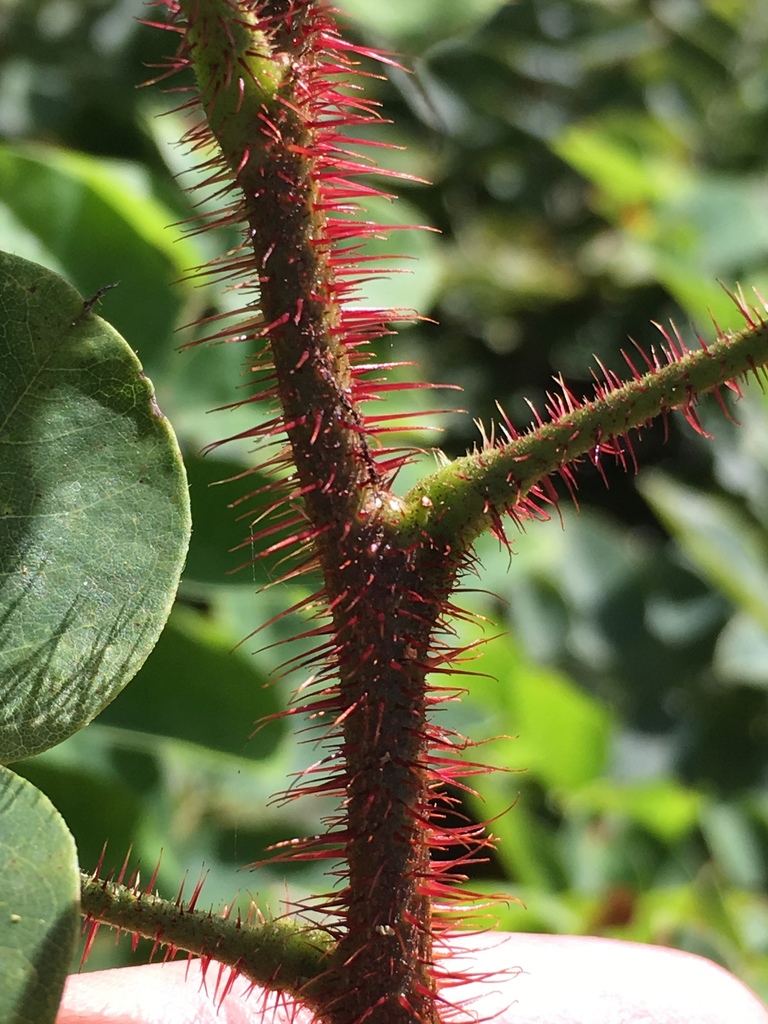
Bristly locust
Robinia hispida
Robinia hispida, known as the bristly locust, rose-acacia, or moss locust, is a shrub in the subfamily Faboideae of the pea family Fabaceae. It is native to the southeastern United States, and it is present in other areas, including other regions of North America, as an introduced species. It is grown as an ornamental and can escape cultivation and grow in the wild.
From the article Robinia hispida on Wikipedia (CC BY-SA), quoted section by section
Description
This deciduous shrub grows to 3 m (9.8 ft) tall, often with glandular, bristly (hispid) stems. The leaves are pinnate with up to 13 leaflets. The pink or purplish pealike flowers are borne in hanging racemes of up to five. The fruit is a flat pod. The variety of this species, called ambatch which is found in Cuba, has notably low density wood, about 40 kg/m3 (2.5 lb/cu ft); about one-third the density of balsa wood (Ochroma lagopus).
Where it lives
Recorded sightings
—
geo-referenced records in GBIF, from museums, herbaria and field observers.
Drag the globe to turn it. Dots are where records exist, not a range map; darker means more records.
In the stacks
Searching the stacks…
Every page naming Robinia hispida in the Biodiversity Heritage Library →
This page is assembled live from iNaturalist, GBIF, Wikipedia, the Source Library and the Internet Archive. It is not yet part of the hand-edited codex. iNaturalist taxon 129107.