- Plants
- ›Vascular Plants
- ›flowering plants
- ›monocots
- ›Agaves, Orchids, Irises, and Allies
- ›Orchids
- ›Orchidoid Orchids
- ›Cranichideae
- ›Ladies' Tresses Orchids
- ›Spiranthes
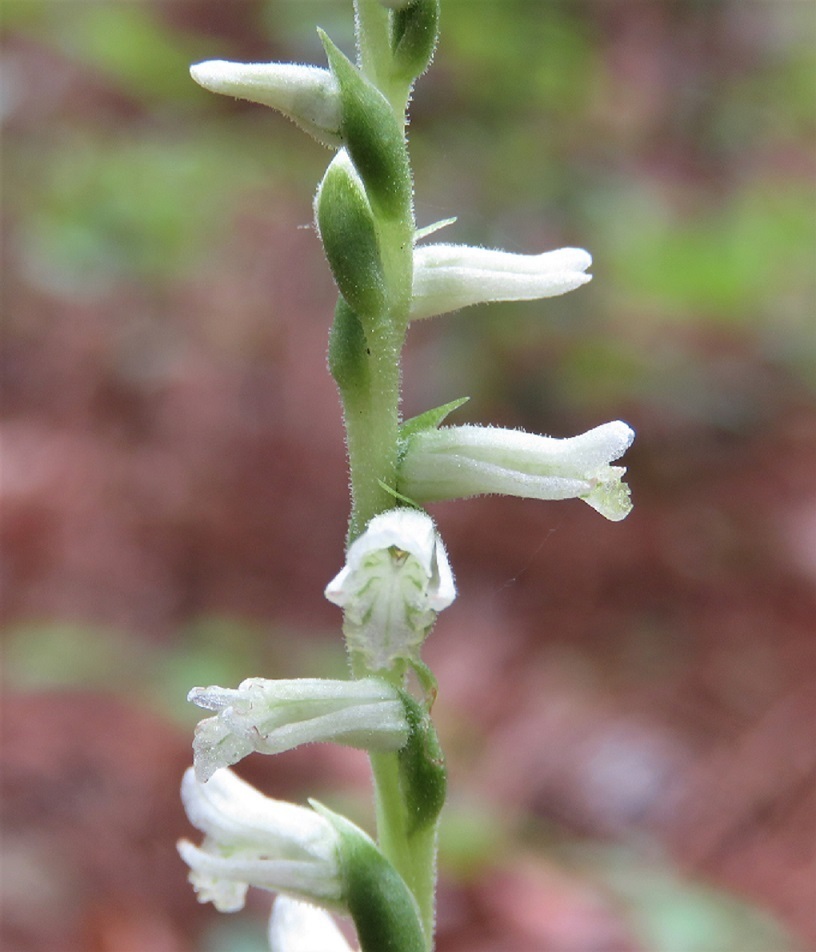
Grass-leaved Ladies' Tresses
Spiranthes praecox
Spiranthes praecox, the grass leaved ladies' tresses (sometimes spelled grassleaf ladies'-tresses), green-vein ladies'-tresses or sometimes giant ladies' tresses is a terrestrial orchid endemic to the United States, growing on the eastern coastal plains and around the Gulf Coast.
From the article Spiranthes praecox on Wikipedia (CC BY-SA), quoted section by section
Description
Spiranthes praecox is a herbaceous species growing 20–75 cm high, with up to 7 long basal leaves. There are up to 40 white flowers arranged in a spiral around the stem. The lip of each flower has prominent, branched green colored veins. Bloom time is mainly from February to June (or even later at the northern range extent). Form Spiranthes praecox forma albolabia has pure white lips with yellowish instead of green veins.
Range & habitat
Spiranthes praecox is native to Alabama, Arkansas, Delaware, Florida, Georgia, Louisiana, Maryland, Mississippi, Missouri, New Jersey, North Carolina, Oklahoma, South Carolina, Texas, Virginia. It grows in coastal planes in dry to moist prairies, meadows, pinelands, and bogs.
Wikipedia: “Distribution and habitat”
Where it lives
Recorded sightings
—
geo-referenced records in GBIF, from museums, herbaria and field observers.
Drag the globe to turn it. Dots are where records exist, not a range map; darker means more records.
In the stacks
Searching the stacks…
Every page naming Spiranthes praecox in the Biodiversity Heritage Library →
This page is assembled live from iNaturalist, GBIF, Wikipedia, the Source Library and the Internet Archive. It is not yet part of the hand-edited codex. iNaturalist taxon 128771.