- Animals
- ›Arthropods
- ›Hexapods
- ›Insects
- ›Winged and Once-winged Insects
- ›Ants, Bees, Wasps, and Sawflies
- ›Narrow-waisted Wasps, Ants, and Bees
- ›Ants, Bees, and Stinging Wasps
- ›Bees and Apoid Wasps
- ›Bees
- ›Honey Bees, Bumble Bees, and Allies
- ›Apine Bees
- ›Bombini
- ›Bombus
- ›Psithyrus
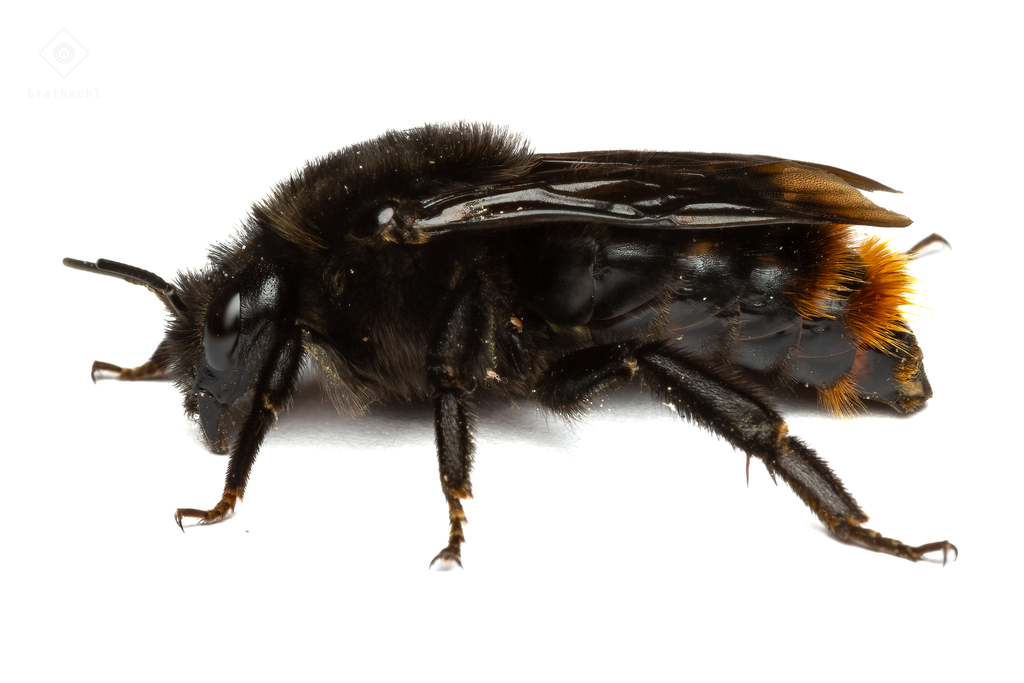
Hill Cuckoo Bumble bee
Bombus rupestris
Bombus rupestris is a species of cuckoo bumblebee present in most of Europe except Iceland. In the Balkans it is found in montane and alpine habitats northwards from Central Greece. It is also found in Turkey.
From the article Bombus rupestris on Wikipedia (CC BY-SA), quoted section by section
Description
The female is much larger than the male; she has a length of 20–25 mm (0.79–0.98 in), while the drone usually is not more than 16 mm (0.63 in). The bumblebee is black, with the last abdominal segments coloured orange-red. Due to its parasitic lifestyle, no workers exist.
What it does
Bombus rupestris is found in flower-rich habitats, such as meadows and along hedgerows. The bumblebee parasitizes the nests of the red-tailed bumblebee, B. lapidarius.
== References ==
Wikipedia: “Behaviour”
Listen
Looking for field recordings…
Where it lives
Recorded sightings
—
geo-referenced records in GBIF, from museums, herbaria and field observers.
Drag the globe to turn it. Dots are where records exist, not a range map; darker means more records.
In the stacks
Searching the stacks…
Every page naming Bombus rupestris in the Biodiversity Heritage Library →
This page is assembled live from iNaturalist, GBIF, Wikipedia, the Source Library and the Internet Archive. It is not yet part of the hand-edited codex. iNaturalist taxon 127735.