- Plants
- ›Vascular Plants
- ›flowering plants
- ›Dicots
- ›Sunflowers, Bellflowers, Fanflowers, and Allies
- ›Sunflowers, Daisies, Asters, and Allies
- ›chicories, dandelions, and allies
- ›Lettuce, Chicory, Dandelion and Salsify Tribe
- ›dandelions, hawksbeards, and rattlesnake roots
- ›Youngia
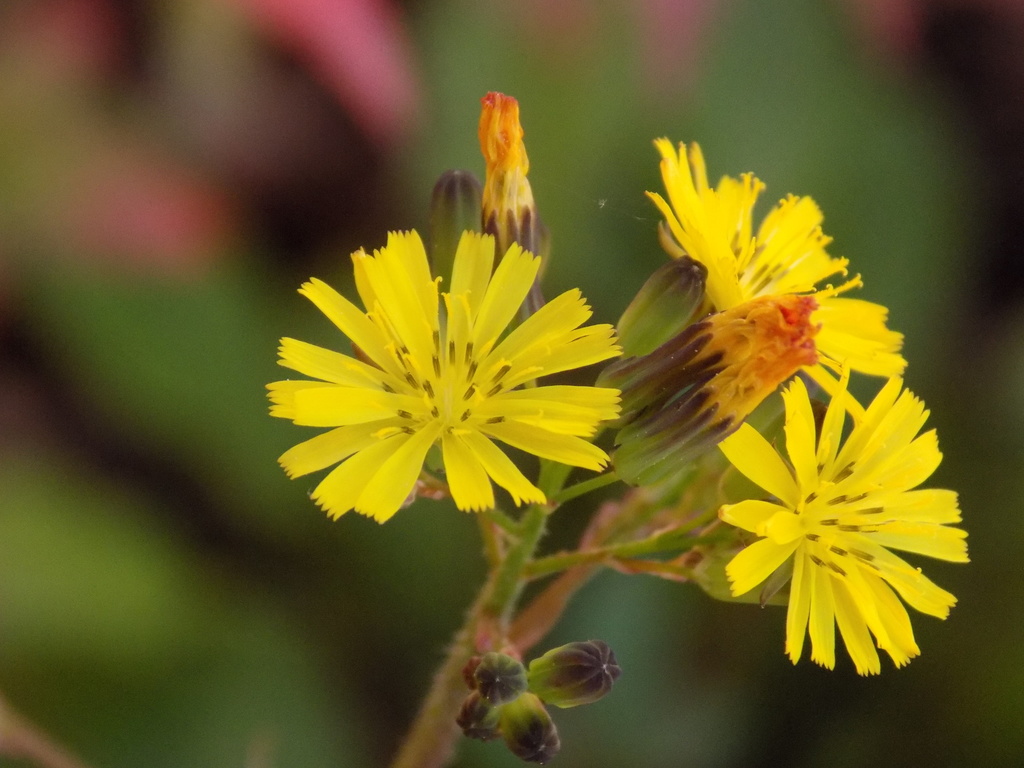
Oriental false hawksbeard
Youngia japonica
Youngia japonica, commonly called Oriental false hawksbeard, is a species of flowering plant in the family Asteraceae. Native to eastern Asia, it is now found as a weed nearly worldwide.
From the article Youngia japonica on Wikipedia (CC BY-SA), quoted section by section
Description
It is an annual that produces yellow flowers. In tropical areas, it can bloom year round, while in temperate areas it blooms in late spring and early summer. Plants are variable in height, ranging from 10 to 150 cm (4 to 59 in) depending on growing conditions. Stems are usually solitary and erect. Basal leaves are large and pinnately divided. Its fruits are wind dispersed.
Range & habitat
Youngia japonica is native to eastern Asia in China and Japan. However, it has been spread far from its initial range, and is now found as a non-native species nearly worldwide. It is present in Africa, Australia, Europe, North America, and South America. In the United States, it is spreading rapidly, although it is largely restricted to areas in the Southeast. It grows well in response to human disturbance, and is found in areas such as roadsides, cultivated fields and in lawns. In China, it is found in a variety of natural and disturbed habitats. It is known to penetrate into intact natural communities as an invasive species in the United States.
Wikipedia: “Distribution and habitat”
Where it lives
Recorded sightings
—
geo-referenced records in GBIF, from museums, herbaria and field observers.
Drag the globe to turn it. Dots are where records exist, not a range map; darker means more records.
In the old herbals & bestiaries


In the stacks
Searching the stacks…
Every page naming Youngia japonica in the Biodiversity Heritage Library →
This page is assembled live from iNaturalist, GBIF, Wikipedia, the Source Library and the Internet Archive. It is not yet part of the hand-edited codex. iNaturalist taxon 127066.