- Plants
- ›Vascular Plants
- ›flowering plants
- ›Dicots
- ›Nances, Willows, and Allies
- ›Violet Family
- ›Viola
- ›Viola
- ›Viola
- ›Rostratae
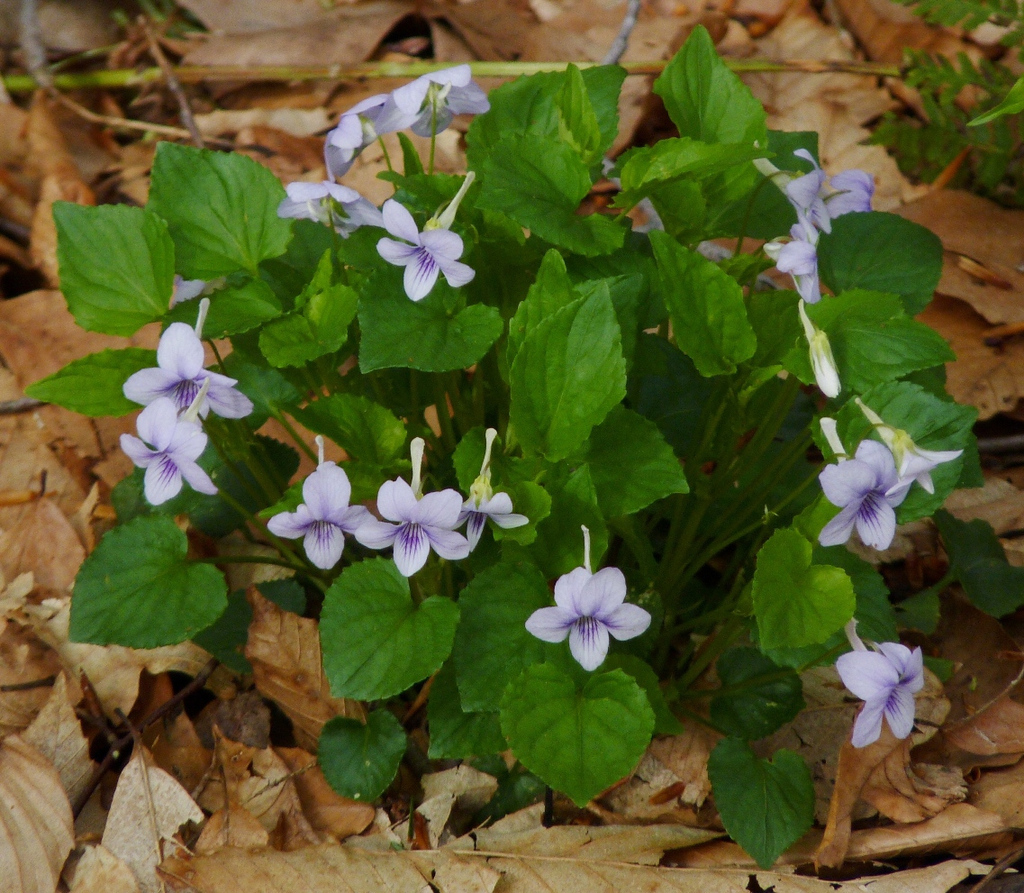
Long-spurred violet
Viola rostrata
Viola rostrata, commonly called the long-spurred violet, is an herbaceous plant in the violet family (Violaceae). It is native to eastern North America, where it is found in Canada and the United States, primarily in the Northeastern, Midwestern, and Appalachian regions. Its natural habitat is acidic mesic forests, often growing near Tsuga canadensis.
From the article Viola rostrata on Wikipedia (CC BY-SA), quoted section by section
Description
It is a stemmed perennial plant. The cauline leaves are simple, toothed, ovate and acute. Basal leaves are cordate and 2–4 cm. It produces flowers in the spring. The flowers are beardless, pale lilac with darker veins forming a darker centre eye. The spur is at least as long as the petal blades.
Where it lives
Recorded sightings
—
geo-referenced records in GBIF, from museums, herbaria and field observers.
Drag the globe to turn it. Dots are where records exist, not a range map; darker means more records.
In the stacks
Searching the stacks…
Every page naming Viola rostrata in the Biodiversity Heritage Library →
This page is assembled live from iNaturalist, GBIF, Wikipedia, the Source Library and the Internet Archive. It is not yet part of the hand-edited codex. iNaturalist taxon 126516.