- Animals
- ›Arthropods
- ›Hexapods
- ›Insects
- ›Winged and Once-winged Insects
- ›Beetles
- ›Water, Rove, Scarab, Long-horned, Leaf, and Snout Beetles
- ›Scarabaeiform Beetles
- ›Scarabs, Stag Beetles, and Allies
- ›Scarabs
Dung Beetles
Scarabaeinae
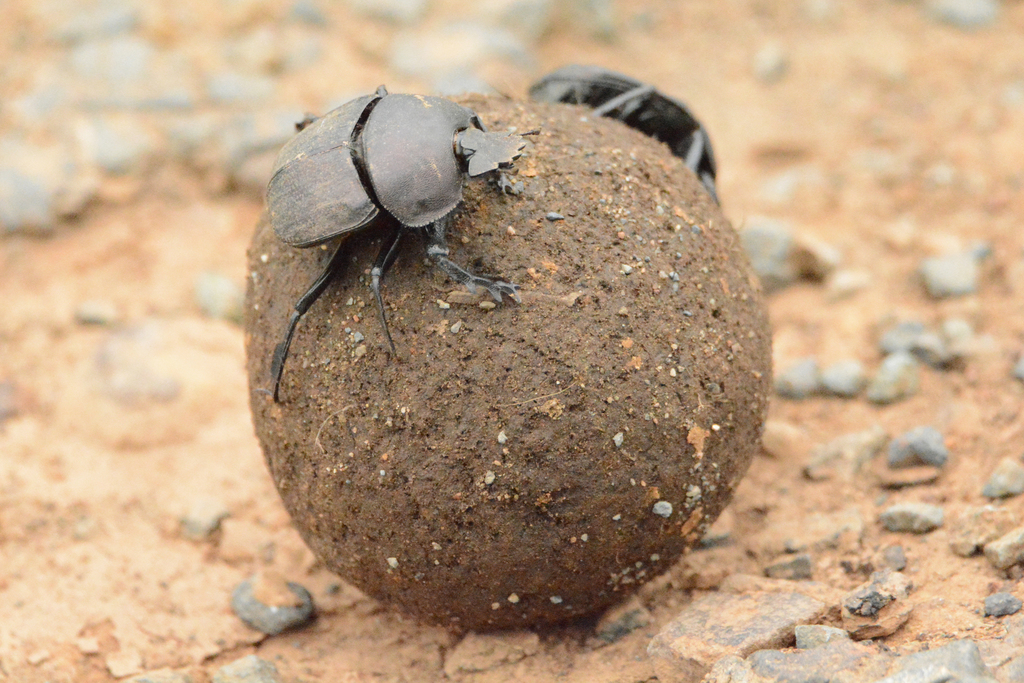
The scarab beetle subfamily Scarabaeinae consists of species collectively called true dung beetles (there are also dung beetles in other subfamilies and families). Most of the beetles of this subfamily feed exclusively on dung. However, some may feed on decomposing matter including carrion, decaying fruits and fungi. Dung beetles can be placed into three structural guilds based on their method of dung processing namely rollers (telecoprids), dwellers (endocoprids) and tunnelers (paracoprids). Dung removal and burial by dung beetles result in ecological benefits such as soil aeration and fertilization; improved nutrient cycling and uptake by plants, increase in pasture quality, biological control of pest flies and intestinal parasites and secondary seed dispersal. Well-known members include the genera Scarabaeus and Sisyphus, and Phanaeus vindex.
22 branches of this subfamily, most-observed first

Onthophagini
tribeOnthophagini

Deltochilini
tribeDeltochilini

Coprini
tribeCoprini

Phanaeini
tribePhanaeini

Scarabaeini
tribeScarabaeini

Dichotomiini
tribeDichotomiini

Gymnopleurini
tribeGymnopleurini

Spindly-leg Dung Beetles
tribeSisyphini

Ateuchini
tribeAteuchini

Onitini
tribeOnitini
Oniticellini
tribeOniticellini

Eucraniini
tribeEucraniini
Homocoprini
tribeHomocoprini
Epirinini
tribeEpirinini

Epilissini
tribeEpilissini

Ant-living Dung Beetles
genusHaroldius

Onychothecus
genusOnychothecus
Eurysternini
tribeEurysternini
Parachoriini
tribeParachoriini
Parateuchus
genusParateuchus
Endroedyolini
tribeEndroedyolini
Epactoides
genusEpactoides
Where it lives
Recorded sightings
—
geo-referenced records in GBIF, from museums, herbaria and field observers.
Drag the globe to turn it. Dots are where records exist, not a range map; darker means more records.
In the stacks
Searching the stacks…
Every page naming Scarabaeinae in the Biodiversity Heritage Library →
This page is assembled live from iNaturalist, GBIF, Wikipedia, the Source Library and the Internet Archive. It is not yet part of the hand-edited codex. iNaturalist taxon 125819.