- Animals
- ›Arthropods
- ›Hexapods
- ›Insects
- ›Winged and Once-winged Insects
- ›Ants, Bees, Wasps, and Sawflies
- ›Narrow-waisted Wasps, Ants, and Bees
- ›Ants, Bees, and Stinging Wasps
- ›Bees and Apoid Wasps
- ›Bees
- ›Honey Bees, Bumble Bees, and Allies
- ›Apine Bees
- ›Bombini
- ›Bombus
- ›Thoracobombus
- ›Bombus fervidus
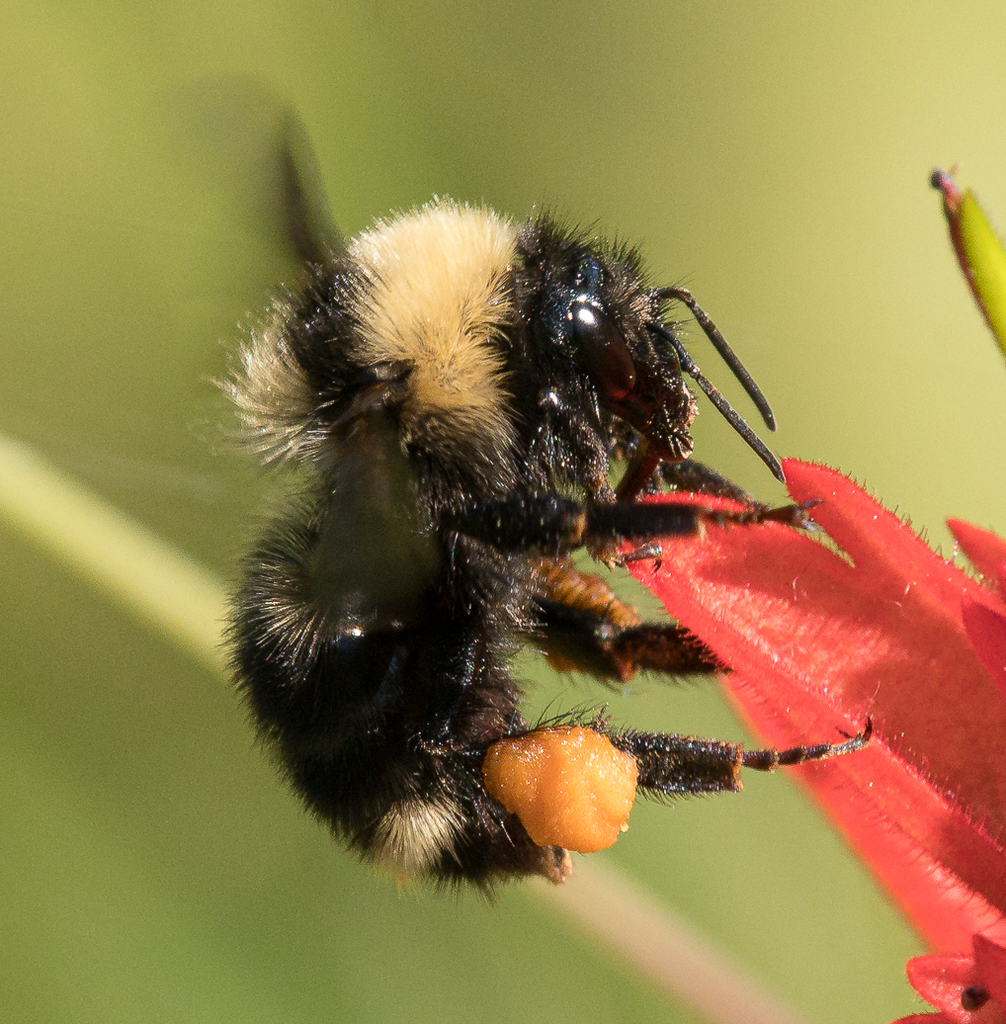
California Bumble Bee
Bombus californicus
Bombus californicus, the California bumble bee, is a species of bumble bee in the family Apidae. Bombus californicus is in the subgenus Thoracobombus. It is found in Central America and the western half of North America. Bombus californicus is classified as Vulnerable by the IUCN.
From the article Bombus californicus on Wikipedia (CC BY-SA), quoted section by section
Description
Bombus californicus can exhibit multiple possible color patterns of yellow and black, as in its sister species Bombus fervidus, and in many areas of geographic overlap, at least a small percentage of individuals of the two species cannot be recognized except by genetic analysis, as each species can sometimes display the color pattern typical of the other. The "typical" color pattern of female californicus is black with only a single strong yellow band anteriorly on the thorax, and another single yellow band near the apex of the abdomen; males exhibit considerably more variation. Bombus californicus nests in the ground, in wooded areas, and in urban areas. Queens emerge from April through the middle of July. Workers are present from April to September. Males (drones) are present late May through September. This type of bumblebee pollinates sage, blueberry bushes, red clover, California poppies, and many other species of flowers.
Wikipedia: “Characteristics”
Toxicity
In a 2015 study, Bombus californicus was found to be endangered in 62% of surveyed areas. In 2022, researchers also collected DNA samples from bumblebees across the state of California, reconfirming that the Bombus californicus population is still declining rapidly. Bombus californicus, which was typically found all over the state, is now being found less and less in southern California.
Wikipedia: “Endangerment”
Listen
Looking for field recordings…
Where it lives
Recorded sightings
—
geo-referenced records in GBIF, from museums, herbaria and field observers.
Drag the globe to turn it. Dots are where records exist, not a range map; darker means more records.
In the stacks
Searching the stacks…
Every page naming Bombus californicus in the Biodiversity Heritage Library →
This page is assembled live from iNaturalist, GBIF, Wikipedia, the Source Library and the Internet Archive. It is not yet part of the hand-edited codex. iNaturalist taxon 124420.