- Plants
- ›Vascular Plants
- ›flowering plants
- ›Dicots
- ›Roses, Elms, Figs, and Allies
- ›rose family
- ›Amygdaloideae
- ›Amygdaleae
- ›Prunus
- ›Prunus
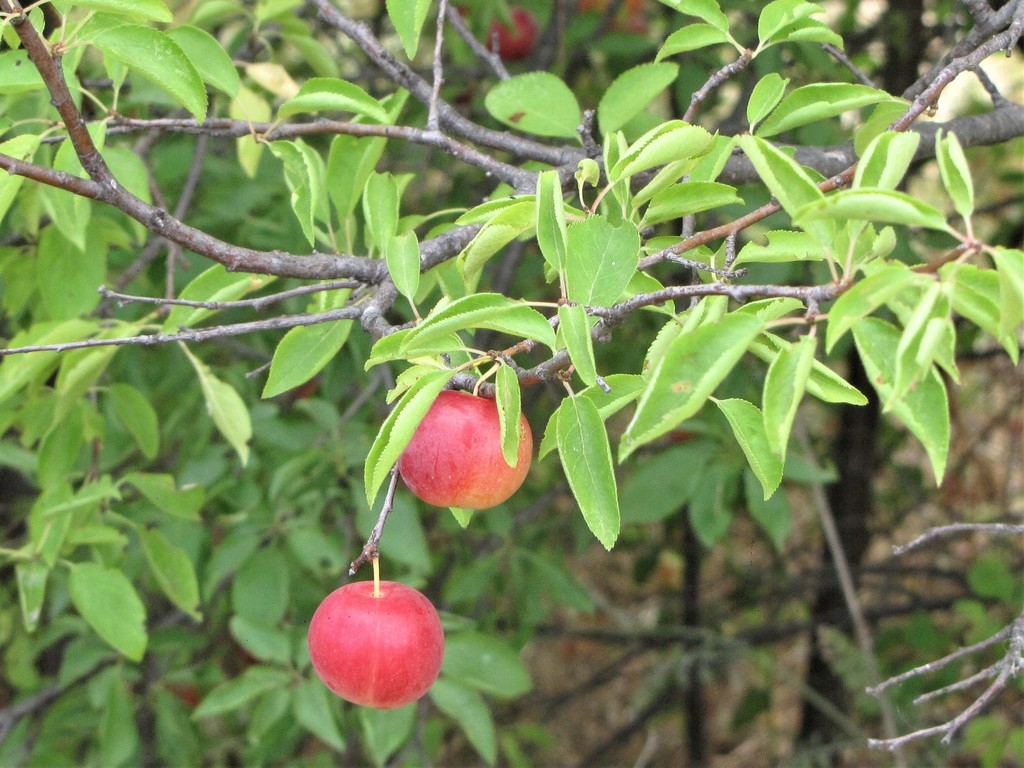
Old World Plums
Prunus
Prunus is a genus of flowering trees and shrubs from the rose family (Rosaceae) that produce stone fruits, or drupes. As of March 2024, the genus has about 340 accepted species, including almonds, apricots, cherries, peaches (and nectarines), and plums. It has a cosmopolitan distribution, being native to the temperate regions of North America, the neotropics of South America, and temperate and tropical regions of Eurasia and Africa.
Many Prunus species are widely cultivated for their sweet, fleshy fruit, as well as for decorative purposes due to the colorful seasonal blossom of their flowers. Many species are cyanogenic, making certain parts of the plant toxic. The fleshy outer portion of the fruit can be eaten fresh, while the pit is edible in some species but poisonous in many others. Most Prunus fruit are also made into processed foods and beverages such as canned and dried fruit, juices (e.g. cherry and prune juice), jam, gelatine desserts, and roasted seeds.
17 branches of this group, most-observed first
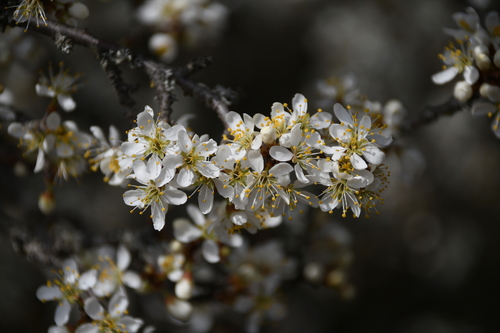
Blackthorn
speciesPrunus spinosa
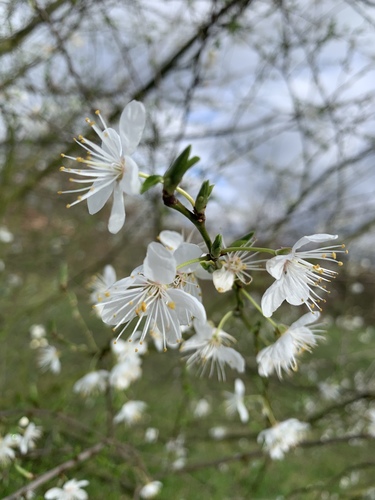
Cherry-plum
speciesPrunus cerasifera
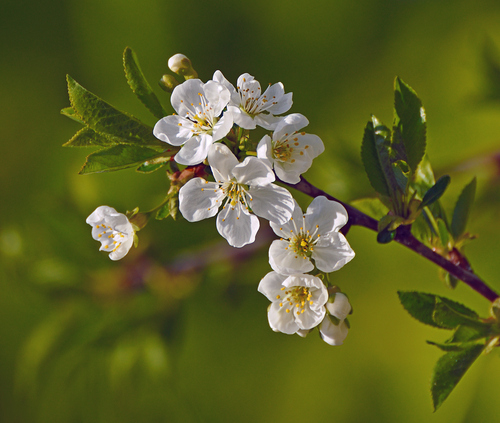
Plum
speciesPrunus domestica
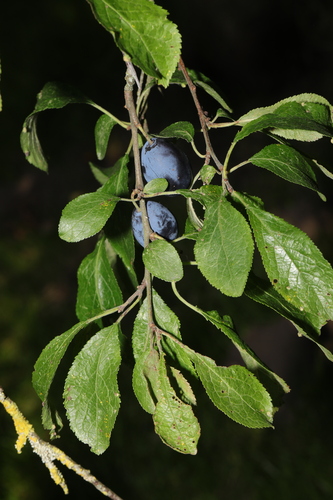
Damson
speciesPrunus insititia
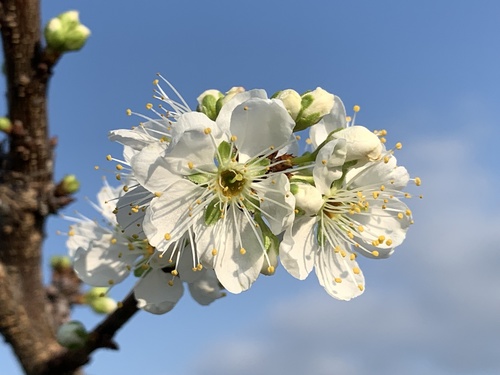
Chinese plum
speciesPrunus salicina

Prunus × syriaca
hybridPrunus × syriaca
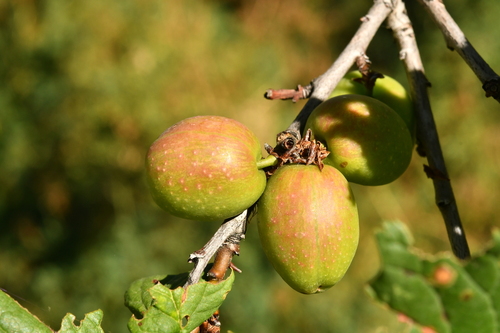
Briançon Apricot
speciesPrunus brigantina
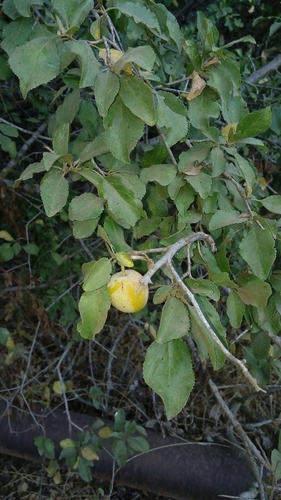
Bear's plum
speciesPrunus ursina
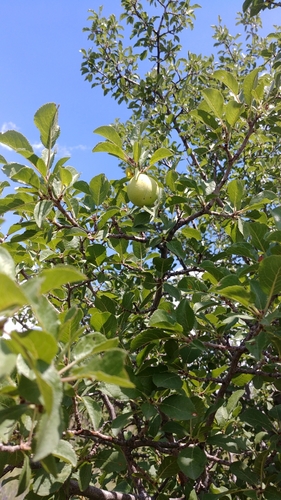
Italian plum
speciesPrunus cocomilia
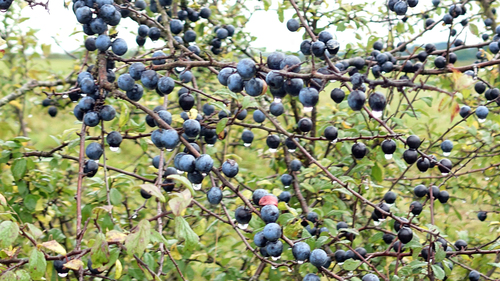
Prunus × fruticans
hybridPrunus × fruticans

Prunus ramburii
speciesPrunus ramburii

Prunus cerasifera × salicina
hybridPrunus cerasifera × salicina

Prunus × simmleri
hybridPrunus × simmleri
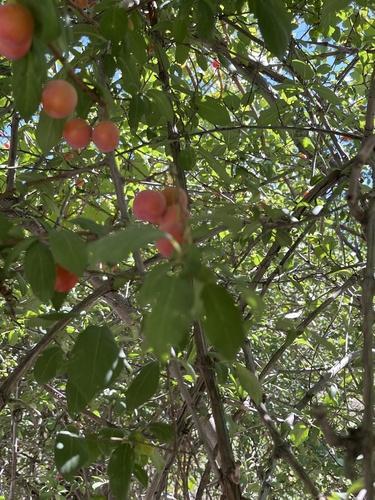
Sogdian plum
speciesPrunus sogdiana
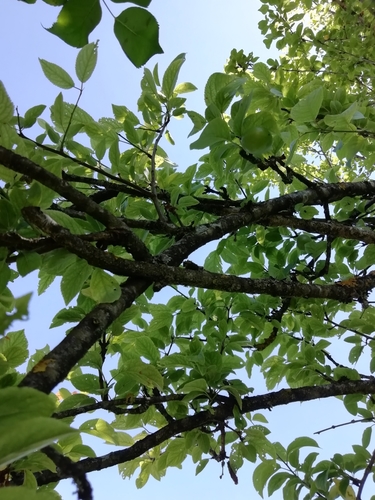
Alucha
speciesPrunus vachuschtii
Simon plum
speciesPrunus simonii
Tajik plum
speciesPrunus tadzhikistanica
Where it lives
Recorded sightings
—
geo-referenced records in GBIF, from museums, herbaria and field observers.
Drag the globe to turn it. Dots are where records exist, not a range map; darker means more records.
In the old herbals & bestiaries

The Natural History of Carolina, Florida and the Bahama Islands, Vol. 1
Mark Catesby · 1777 · p.242

Notable Commentaries on the History of Plants
Leonhart Fuchs · 1549 · p.435

Maria Sibylla Merian — Der rupsen begin, voedzel en wonderbaare verandering (1712)
Maria Sibylla Merian · 1717 · p.267

Ortus sanitatis
1491 · p.350

The Great Herbary with all the figures of the herbs
1532 · p.38

Notable Commentaries on the History of Plants
Leonhart Fuchs · 1542 · p.438

Notable Commentaries on the History of Plants
Leonhart Fuchs · 1549 · p.436

On Medical Materials in Six Books
Dioscorides · 1550 · p.165

De medicinali materia libri sex
Dioscorides · 1552 · p.171

On the Names of Plants
Hieronymus Bock (Tragus) · 1552 · p.1091

On the Names of Plants
Hieronymus Bock (Tragus) · 1552 · p.1088

Commentaries on the Six Books of Dioscorides
Pietro Andrea Mattioli · 1560 · p.278
In the stacks
Searching the stacks…
Every page naming Prunus in the Biodiversity Heritage Library →
This page is assembled live from iNaturalist, GBIF, Wikipedia, the Source Library and the Internet Archive. It is not yet part of the hand-edited codex. iNaturalist taxon 1205922.