- Plants
- ›Vascular Plants
- ›flowering plants
- ›Dicots
- ›Soapberries, Cashews, Mahoganies, and Allies
- ›citrus family
- ›Zanthoxyloideae
- ›Zanthoxylum
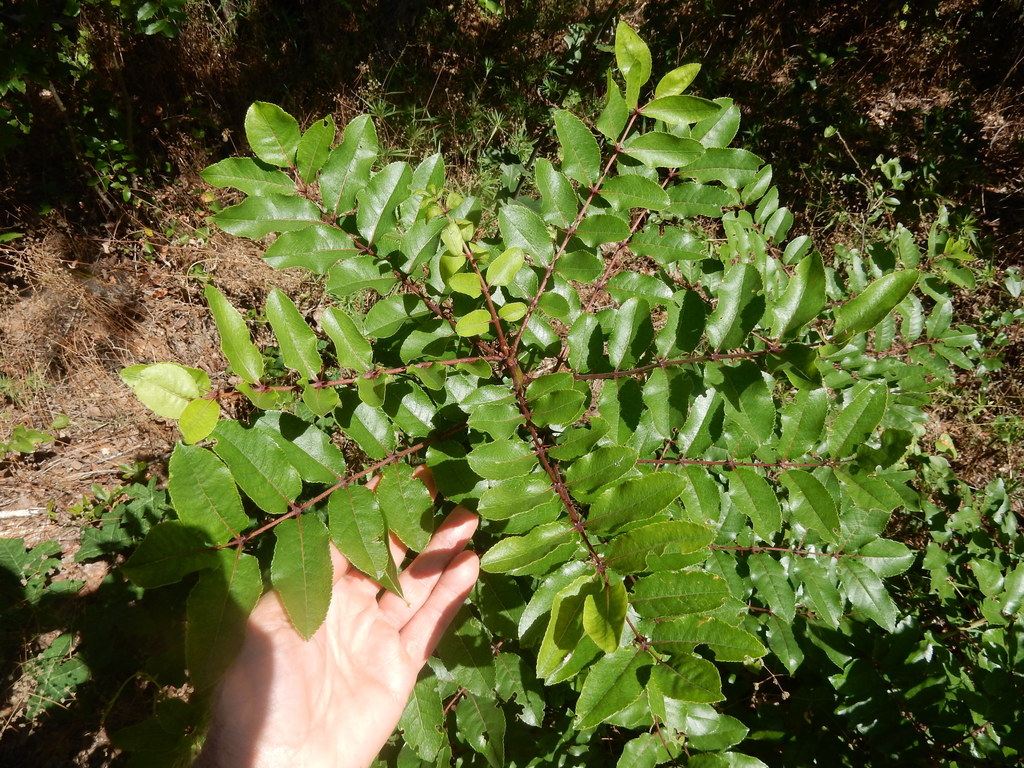
Hercules' club
Zanthoxylum clava-herculis
Zanthoxylum clava-herculis (Hercules' club, Hercules-club, pepperwood, or southern prickly ash) is a spiny tree or shrub native to the southeastern United States. It grows to 10–17 m tall and has distinctive spined thick, corky lumps 2–3 cm long on the bark. The leaves are glabrous and leathery, pinnately compound, 20–30 cm long with 7-19 leaflets, each leaflet 4–5 cm long. The flowers are dioecious, in panicles up to 20 cm long, each flower small, 6–8 mm diameter, with 3-5 white petals....
From the article Zanthoxylum clava-herculis on Wikipedia (CC BY-SA), quoted section by section
Description
The tree grows to 10–17 m tall and has distinctive spined thick, corky lumps 2–3 cm long on the bark. The leaves are glabrous and leathery, pinnately compound, 20–30 cm long with 7-19 leaflets, each leaflet 4–5 cm long. The flowers are dioecious, in panicles up to 20 cm long, each flower small, 6–8 mm in diameter, with 3-5 white petals. The fruit is a two-valved capsule 6 mm in diameter with a rough surface, and containing several small black seeds. The tree has also been called Z. macrophyllum. The genus name is sometimes spelled Xanthoxylum.
Range & habitat
The tree has a rounded crown and requires plentiful water and sunlight. Its leaves are browsed by deer and its fruit is eaten by birds. The fruit passes through birds, which helps the seeds to germinate. The new trees tend to sprout below the favorite resting places of the birds, along fence rows and the edge of woods. It is known to be host to a number of insect species, including the Giant Swallowtail (Papilio cresphontes) and the leaf beetle Derospidea brevicollis.
Wikipedia: “Habitats”
At the table
Along with the related Zanthoxylum americanum, it is sometimes called "toothache tree" or "tingle tongue" because chewing on the leaves, bark, or twigs causes a tingling numbness of the mouth, tongue, teeth and gums. It was used for such medicinal purposes by both Native Americans and early settlers to treat toothache because of this.
Wikipedia: “Common names and uses”
Where it lives
Recorded sightings
—
geo-referenced records in GBIF, from museums, herbaria and field observers.
Drag the globe to turn it. Dots are where records exist, not a range map; darker means more records.
In the stacks
Searching the stacks…
Every page naming Zanthoxylum clava-herculis in the Biodiversity Heritage Library →
This page is assembled live from iNaturalist, GBIF, Wikipedia, the Source Library and the Internet Archive. It is not yet part of the hand-edited codex. iNaturalist taxon 119986.