- Animals
- ›Chordates
- ›Vertebrates
- ›Birds
- ›Perching Birds
- ›Ovenbirds and Woodcreepers
- ›Typical Ovenbirds
- ›Cinclodes
On eBird ↗
Cordoba Cinclodes
Live sightings near you, the range map, bar charts of when it is seen, and Macaulay Library photos and recordings.
Córdoba Cinclodes
Cinclodes comechingonus
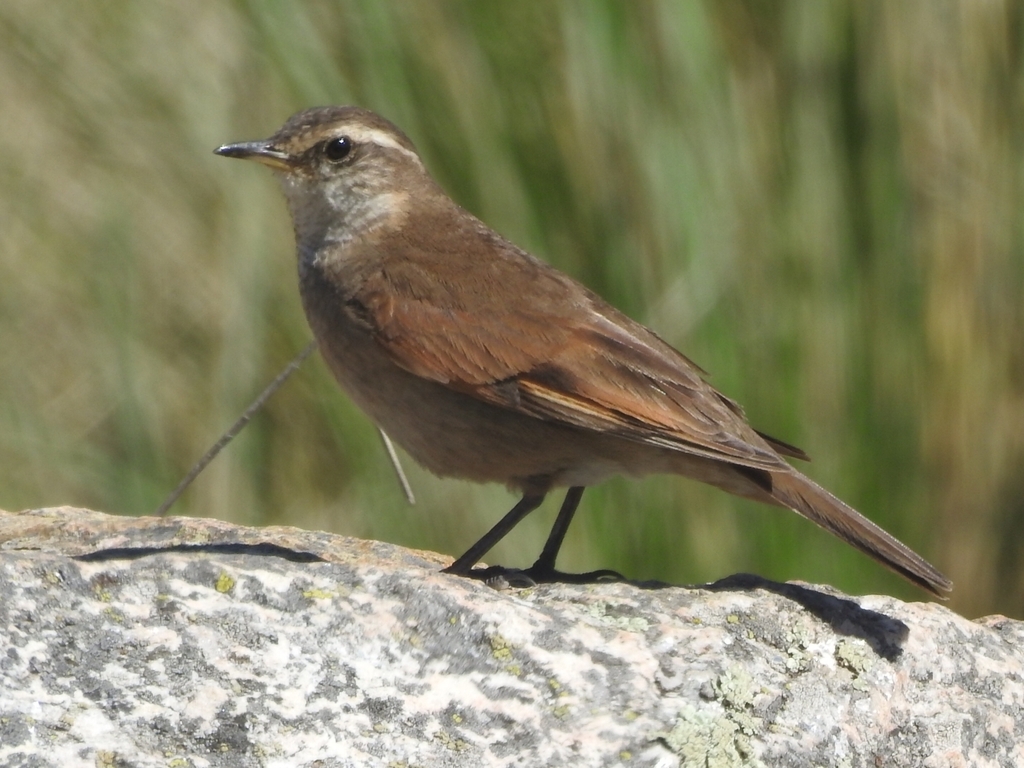
The Cordoba cinclodes or Comechingones cinclodes (Cinclodes comechingonus) is a species of bird in the Furnariinae subfamily of the ovenbird family Furnariidae. It is endemic to Argentina. (Major taxonomic systems spell the species' English name "Cordoba" rather than "Córdoba" so this article does so as well.)
From the article Córdoba cinclodes on Wikipedia (CC BY-SA), quoted section by section
Description
The Cordoba cinclodes is about 17 cm (6.7 in) long and weighs 25 to 32 g (0.88 to 1.1 oz). The sexes have the same plumage. Adults have a buff-white supercilium and a dark gray-brown band from the lores through the ear coverts. Their crown and upperparts are gray-brown. Their wings are gray-brown with a wide black-edged rufous band at the base of the flight feathers. (The band is the largest and brightest of all the cinclodes'.) Their tail is dark gray except the outer pair of feathers, which are blackish with pale rufous tips. Their throat and breast are white with dark scallops, their flanks light brown, and their belly and undertail coverts pale buff-white. Their iris is brown, their bill black with a yellow base on the mandible, and their legs and feet black.
Range & habitat
The Cordoba cinclodes is found in the Comechingónes Mountains of north-central Argentina from Córdoba Province north to Tucumán and Santiago del Estero provinces. It inhabits open grassy areas that are often rocky, and it associates with water less than other cinclodes. In elevation it mostly ranges between 1,600 and 2,800 m (5,200 and 9,200 ft) but has been observed as high as 3,300 m (10,800 ft) near Aconcagua.
Wikipedia: “Distribution and habitat”
What it does
The Cordoba cinclodes has been documented feeding on a variety of insects, other small invertebrates like snails and molluscs, and seeds. It usually forages in pairs, gleaning its food from the ground, grass, and rocks.
Wikipedia: “Feeding”
Listen
Looking for field recordings…
Where it lives
Recorded sightings
—
geo-referenced records in GBIF, from museums, herbaria and field observers.
Drag the globe to turn it. Dots are where records exist, not a range map; darker means more records.
In the stacks
Searching the stacks…
Every page naming Cinclodes comechingonus in the Biodiversity Heritage Library →
This page is assembled live from iNaturalist, GBIF, Wikipedia, the Source Library and the Internet Archive. It is not yet part of the hand-edited codex. iNaturalist taxon 11396.