- Animals
- ›Arthropods
- ›Hexapods
- ›Insects
- ›Winged and Once-winged Insects
- ›Dragonflies and Damselflies
- ›Dragonflies
- ›Libelluloidea
- ›Skimmers
- ›Libellula
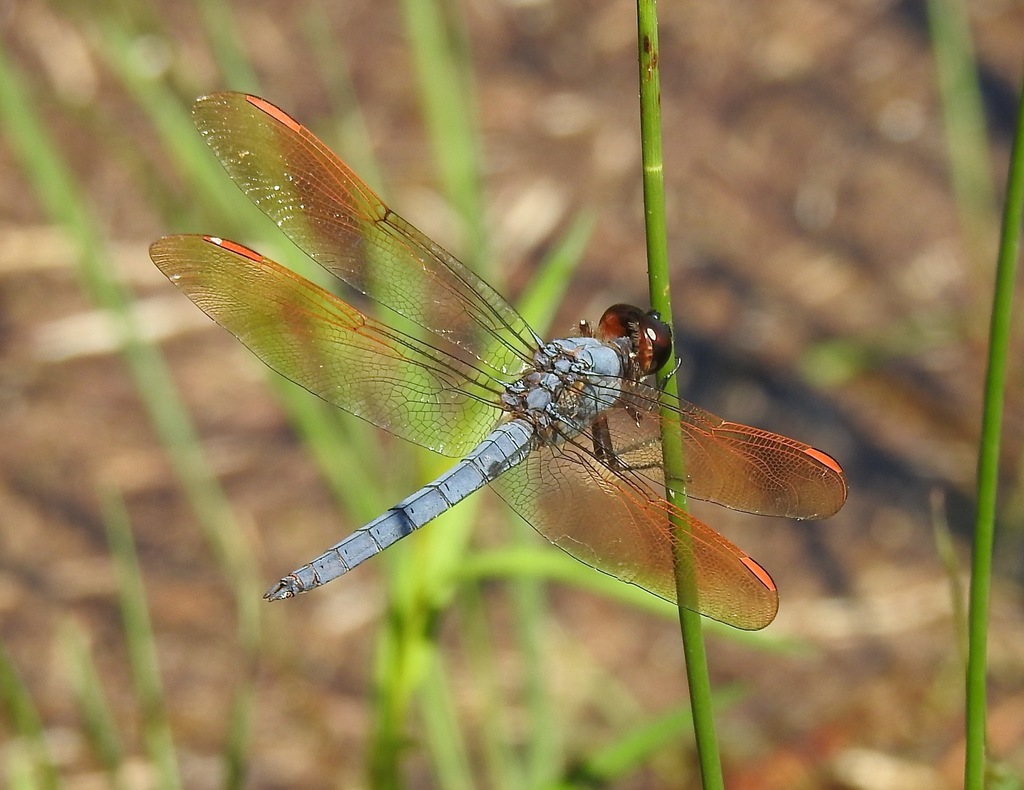
Purple Skimmer
Libellula jesseana
Libellula jesseana, the purple skimmer, is a threatened dragonfly in the skimmer family. It is endemic to Florida in the United States.
From the article Libellula jesseana on Wikipedia (CC BY-SA), quoted section by section
Description
Libellula jesseana adults are about 5 centimeters long. The male is pruinescent blue on the thorax and abdomen with orange wings. The female may have a similar coloration to the male, or have a golden hue overall identical to Libellula auripennis, the golden-winged skimmer.
Range & habitat
Libellula jesseana is limited to ten counties in the panhandle and northern peninsula of Florida. There is a protected population at Gold Head Branch State Park in Clay County. Most other populations receive no protection. L. jesseana occurs at infertile, clear, sandy-bottomed lakes with shoreline stands of maidencane (Panicum hemitomon) and sometimes sedges and St. John's worts. The adults require open woodland or shrub-land nearby for foraging.
Wikipedia: “Distribution and habitat”
What it does
Purple skimmer nymphs feed on nearly all small invertebrate organisms in their aquatic environment, and the adults catch insects that they locate visually.
Wikipedia: “Diet”
In human culture
Adult purple skimmers are diurnal. The life cycle last approximately one year, with nymphs over-wintering and adults flying from mid-April through mid-September.
Wikipedia: “Life history”
Listen
Looking for field recordings…
Where it lives
Recorded sightings
—
geo-referenced records in GBIF, from museums, herbaria and field observers.
Drag the globe to turn it. Dots are where records exist, not a range map; darker means more records.
In the stacks
Searching the stacks…
Every page naming Libellula jesseana in the Biodiversity Heritage Library →
This page is assembled live from iNaturalist, GBIF, Wikipedia, the Source Library and the Internet Archive. It is not yet part of the hand-edited codex. iNaturalist taxon 104581.