- Animals
- ›Chordates
- ›Vertebrates
- ›Mammals
- ›Therians
- ›Placental Mammals
- ›Primates, Rodents, and Allies
- ›Primates
- ›Monkeys, Apes, and Tarsiers
- ›Monkeys and Apes
- ›New World Monkeys
- ›Cebid Monkeys
- ›Capuchins
- ›Cebus
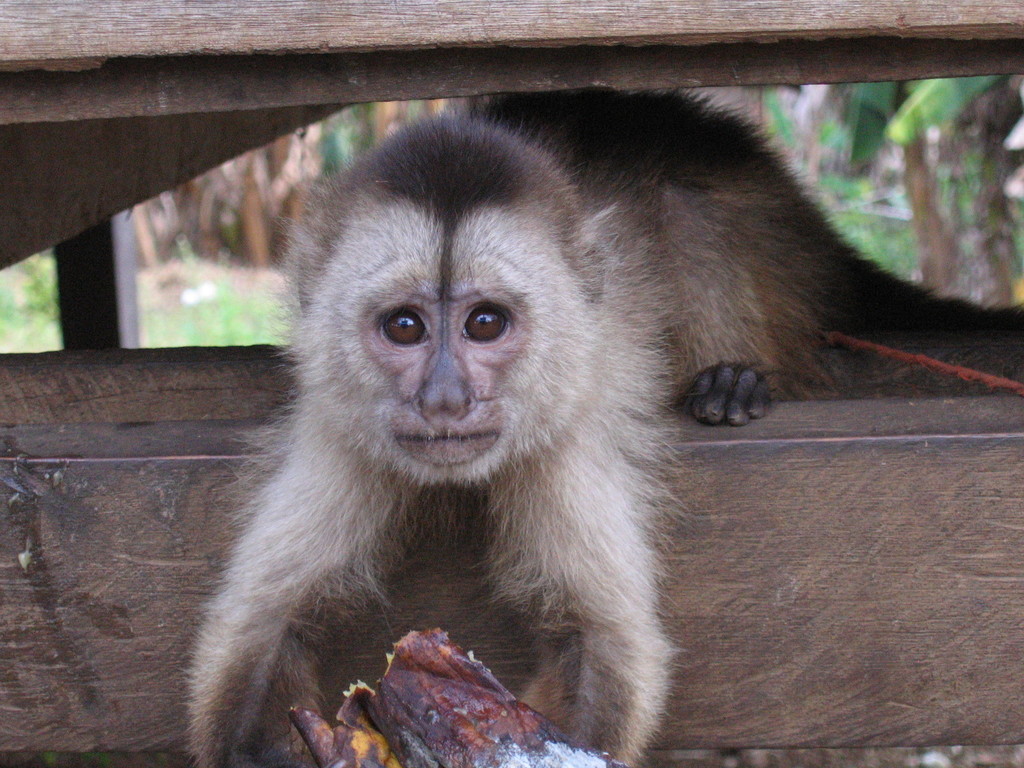
Weeper Capuchin
Cebus olivaceus
The wedge-capped capuchin or Guianan weeper capuchin (Cebus olivaceus) is a capuchin monkey from South America. It is found in northern Brazil, Guyana and Venezuela. Cebus olivaceus is known to dwell in tall, primary forest and travel over long distances during the day.
These primates are medium-sized monkeys with distinctive "wedge cap" markings on their head and slightly longer limbs than other capuchins for jumping through the forest canopy. Similar to other capuchin monkeys, the diet of wedge-capped capuchin primarily consists of fruits, invertebrates, other plant parts, and on rare occasions small vertebrates. They have also been known to rub millipedes against their fur, especially in the rainy seasons, as a potential means of mosquito repellent.
From the article Wedge-capped capuchin on Wikipedia (CC BY-SA), quoted section by section
Range & habitat
Wedge-capped capuchins prefer undisturbed primary forests in which they can move through the canopy (locomotion and limb morphology). They occupy the rainforests of northern Brazil and Venezuela, as well as the drier forests along riverbeds in Guyana. These habitats vary in terms of forest height, composition, and continuity. When wedge-capped capuchins have the option between dense high-canopy primary forests and more fragmented, lower forests, they generally inhabit the primary forests. They are found north of the Orinoco River, south of the Sierra de Perijá and Venezuelan Coastal Range, and east to the Essequibo River in western Guyana.
Wikipedia: “Habitat and range”
What it does
Wedge-capped capuchins are omnivorous and eat both animal and plant foods. Foraging behavior varies seasonally, as well as with age and sex. In general, these monkeys spend approximately equal amounts of time exploiting animal and plant resources. The exception to this are infants that spend far more time foraging for plants foods than animals. Most of the plant food consumed is ripe fruit, the majority of which are figs, but also palm nuts, seeds, berries, flowering buds, shoots, barks and gums. Their animal prey is almost exclusively invertebrates. Their prey consists of snails, arachnids, wasps, caterpillars, grasshoppers, ants, birds eggs, other small mammals and many insects that inhabit palm crowns. Some coastal populations may also include oysters, crabs, and other marine life in their diet. While males and females spend about the same amount of time foraging for insects, they exploit different types of resources. Males spend more time searching for insects on the surface of branches, while females search for most of their insects atop palm trees. There is little variation in plant material consumed between males and females. Also, adults and sub-adults eat more animal material than juveniles and infants.
Food washing. Food washing has been observed in non-human primates including macaques and capuchins. …
Wikipedia: “Diet”
Listen
Looking for field recordings…
Where it lives
Recorded sightings
—
geo-referenced records in GBIF, from museums, herbaria and field observers.
Drag the globe to turn it. Dots are where records exist, not a range map; darker means more records.
In the stacks
Searching the stacks…
Every page naming Cebus olivaceus in the Biodiversity Heritage Library →
This page is assembled live from iNaturalist, GBIF, Wikipedia, the Source Library and the Internet Archive. It is not yet part of the hand-edited codex. iNaturalist taxon 43430.