- Fungi Including Lichens
- ›Ascomycete Fungi
- ›Sac Fungi and Lichens
- ›Dothideomycetes
- ›Pleosporomycetidae
- ›Pleosporales
- ›Didymellaceae
- ›Epicoccum
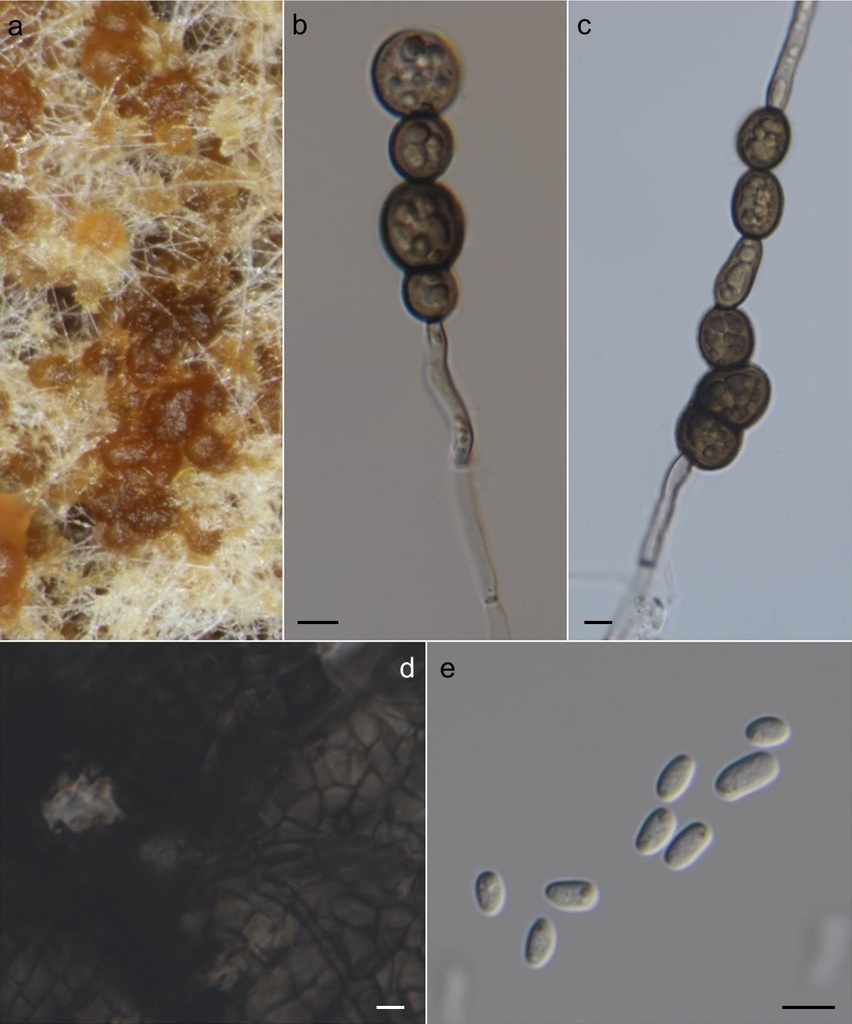
Epicoccum sorghinum
Epicoccum sorghinum (former Phoma sorghina) is an ascomycete fungus with known plant pathogenicity to sugarcane and rice, causing ring spot disease and leaf spot disease. This fungus is primarily known for its production of tenuazonic acid, which leads to complications with growth and causes the symptoms of leaf spot disease. Tenuazonic acid not only affects plant growth, but has recently been proven to impact human health due to its prevalence in food and beverages. It is
Where it lives
Recorded sightings
—
geo-referenced records in GBIF, from museums, herbaria and field observers.
Drag the globe to turn it. Dots are where records exist, not a range map; darker means more records.
In the stacks
Searching the stacks…
Every page naming Epicoccum sorghinum in the Biodiversity Heritage Library →
This page is assembled live from iNaturalist, GBIF, Wikipedia, the Source Library and the Internet Archive. It is not yet part of the hand-edited codex. iNaturalist taxon 976282.