- Animals
- ›Chordates
- ›Vertebrates
- ›Ray-finned Fishes
- ›Spiny-rayed fishes
- ›Needlefishes, Halfbeaks, and Allies
- ›Viviparous Halfbeaks
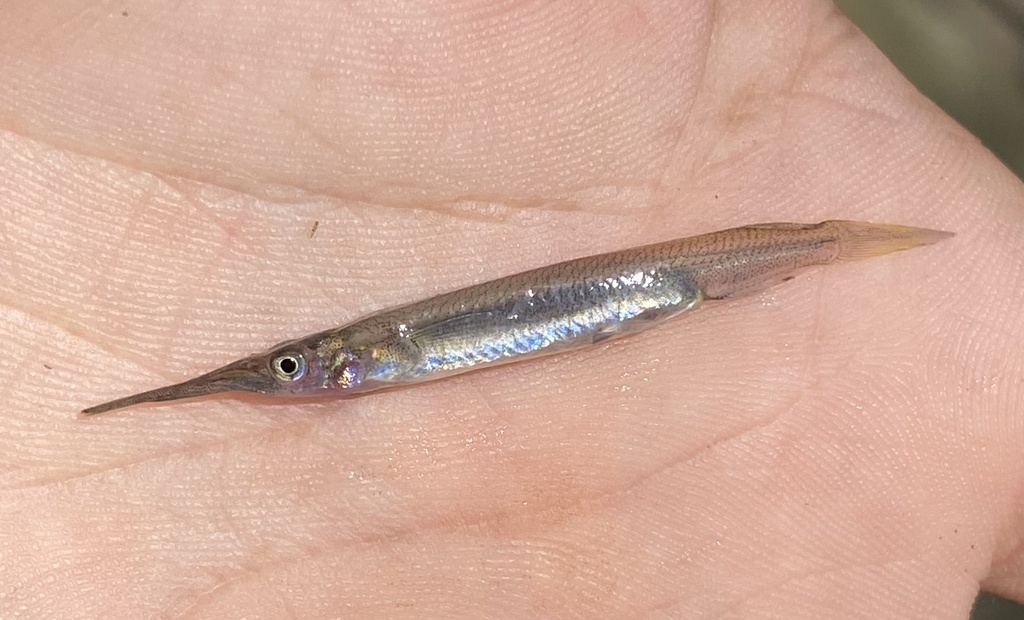
Dermogenys
Dermogenys is a genus of viviparous halfbeaks. They are widely distributed in fresh and brackish water in South and Southeast Asia, ranging from India to the Philippines and Greater Sundas. They are all viviparous, producing small clutches of up to 30 fry that closely resemble the adults, except they are much smaller, around 1–1.5 cm (0.4–0.6 in) in length. Adults are typically around 6–7 cm (2.4–2.8 in) in length, with females being slightly larger than males. Males tend to be more brightly coloured and are well known for being aggressive towards one another. The wrestling halfbeak, D. pusilla, is widely used in Asia as fighting animals upon which wagers are placed (see Siamese fighting fish). Both sexes have lower jaws (mandibles) that are much longer than the upper ones, and from this comes the "halfbeak" name.
Dermogenys feed extensively on small insects, either in the form of aquatic larvae or as flying insects that have fallen onto the surface of the water. They are important predators on insects such as mosquitoes, so play a role in controlling malaria.
12 branches of this genus, most-observed first · about 12 known species

Siamese Wrestling Halfbeak
speciesDermogenys siamensis
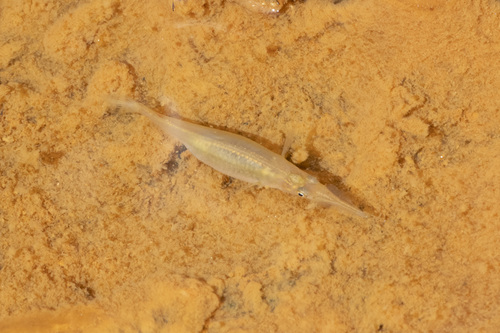
Pygmy Halfbeak
speciesDermogenys collettei

Silver halfbeak
speciesDermogenys pusilla
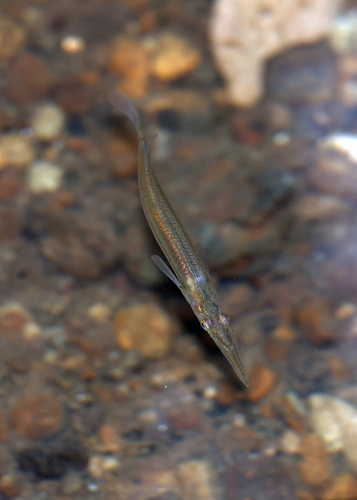
Dermogenys orientalis
speciesDermogenys orientalis

Sumatra Halfbeak
speciesDermogenys sumatrana

Dermogenys bispina
speciesDermogenys bispina
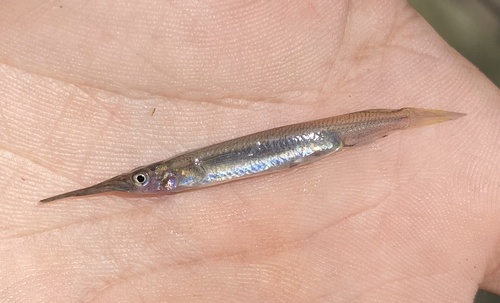
Dermogenys burmanica
speciesDermogenys burmanica
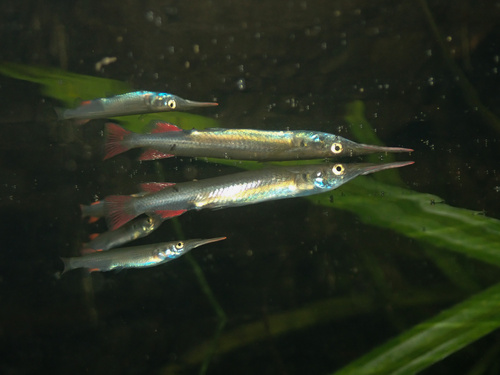
Dermogenys palawanensis
speciesDermogenys palawanensis
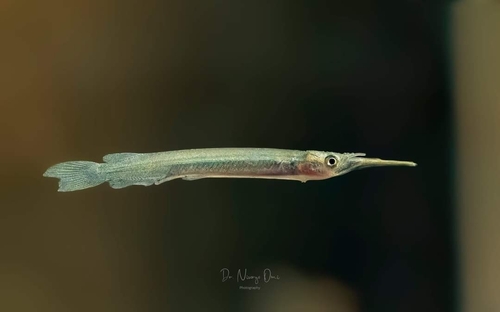
Dermogenys brachynotopterus
speciesDermogenys brachynotopterus
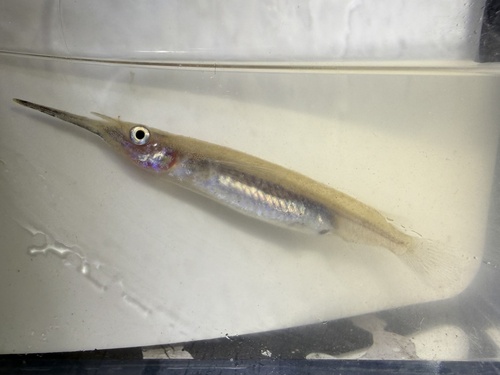
Dermogenys robertsi
speciesDermogenys robertsi
Dermogenys vogti
speciesDermogenys vogti
Dermogenys bruneiensis
speciesDermogenys bruneiensis
Where it lives
Recorded sightings
—
geo-referenced records in GBIF, from museums, herbaria and field observers.
Drag the globe to turn it. Dots are where records exist, not a range map; darker means more records.
In the stacks
Searching the stacks…
Every page naming Dermogenys in the Biodiversity Heritage Library →
This page is assembled live from iNaturalist, GBIF, Wikipedia, the Source Library and the Internet Archive. It is not yet part of the hand-edited codex. iNaturalist taxon 87901.