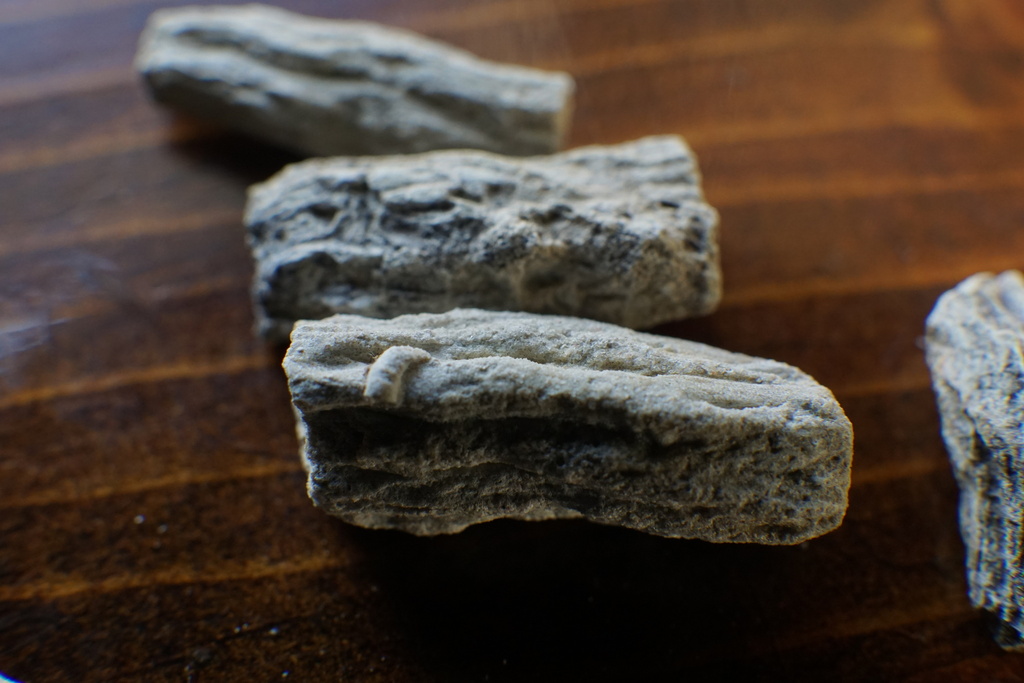
Prototaxites
Prototaxites is an extinct genus of large macroscopic eukaryote dating from the Late Silurian until the Late Devonian periods. Prototaxites formed large trunk-like structures up to 1 metre (3 ft) wide, reaching 8 metres (26 ft) in height, made up of tiny interwoven tubules around 50 micrometres (0.0020 in) in diameter, making it by far the largest land-dwelling organism of its time.
The taxonomy of Prototaxites has long been the subject of debate. It is widely considered a fungus, but the debate is ongoing. Its exact relationship with extant fungus lineages is uncertain. It was almost certainly a perennial organism that grew over multiple years. Several ecologies have been proposed, including that it was saprotrophic like many modern fungi, or that it was a lichenised autotroph.
1 branches of this genus, most-observed first
See this branch on the Wheel of Life →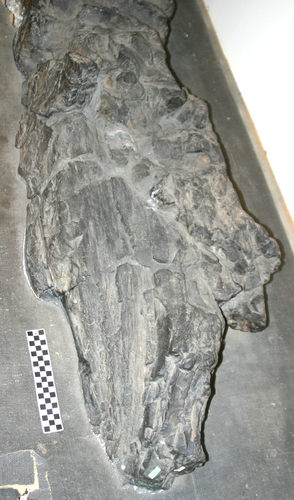
Where it lives
Recorded sightings
—
geo-referenced records in GBIF, from museums, herbaria and field observers.
Drag the globe to turn it. Dots are where records exist, not a range map; darker means more records.
In the stacks
Searching the stacks…
Every page naming Prototaxites in the Biodiversity Heritage Library →
This page is assembled live from iNaturalist, GBIF, Wikipedia, the Source Library and the Internet Archive. It is not yet part of the hand-edited codex. iNaturalist taxon 874471.