
Marsupials
Marsupialia
Marsupials are a diverse group of mammals belonging to the infraclass Marsupialia. They are natively found in Australasia, Wallacea, and the Americas. One of marsupials' unique features is their reproductive strategy: the young are born in a relatively undeveloped state and then nurtured within a pouch on their mother's abdomen. Extant marsupials encompass many species, including kangaroos, koalas, opossums, possums, Tasmanian devils, wombats, wallabies, and bandicoots.
Marsupials constitute a clade stemming from the last common ancestor of extant Metatheria, which encompasses all mammals more closely related to marsupials than to placentals. The evolutionary split between placentals and marsupials occurred 125–160 million years ago in the Middle Jurassic–Early Cretaceous period.
7 branches of this group, most-observed first · about 404 known species
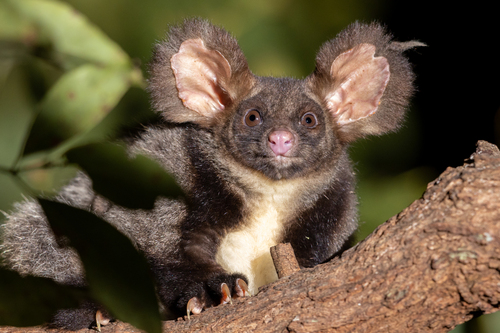
Kangaroos, Possums, Wombats, and Allies
orderDiprotodontia

Opossums
orderDidelphimorphia

Carnivorous Marsupials
orderDasyuromorphia

Bandicoots and Bilbies
orderPeramelemorphia
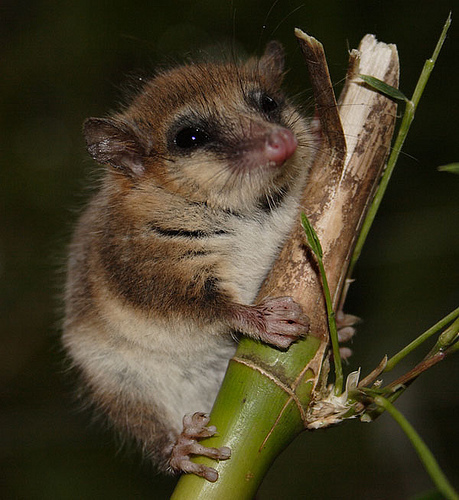
Microbiotheres
orderMicrobiotheria

Shrew Opossums
orderPaucituberculata

Marsupial Moles
orderNotoryctemorphia
Where it lives
Recorded sightings
—
geo-referenced records in GBIF, from museums, herbaria and field observers.
Drag the globe to turn it. Dots are where records exist, not a range map; darker means more records.
In the stacks
Searching the stacks…
Every page naming Marsupialia in the Biodiversity Heritage Library →
This page is assembled live from iNaturalist, GBIF, Wikipedia, the Source Library and the Internet Archive. It is not yet part of the hand-edited codex. iNaturalist taxon 848319.