- Animals
- ›Chordates
- ›Vertebrates
- ›Mammals
- ›Therians
- ›Placental Mammals
- ›Ungulates, Carnivorans, and Allies
- ›Even-toed Ungulates and Cetaceans
- ›Ruminants
- ›Bovids
- ›Antelopes, Goats, and Sheep
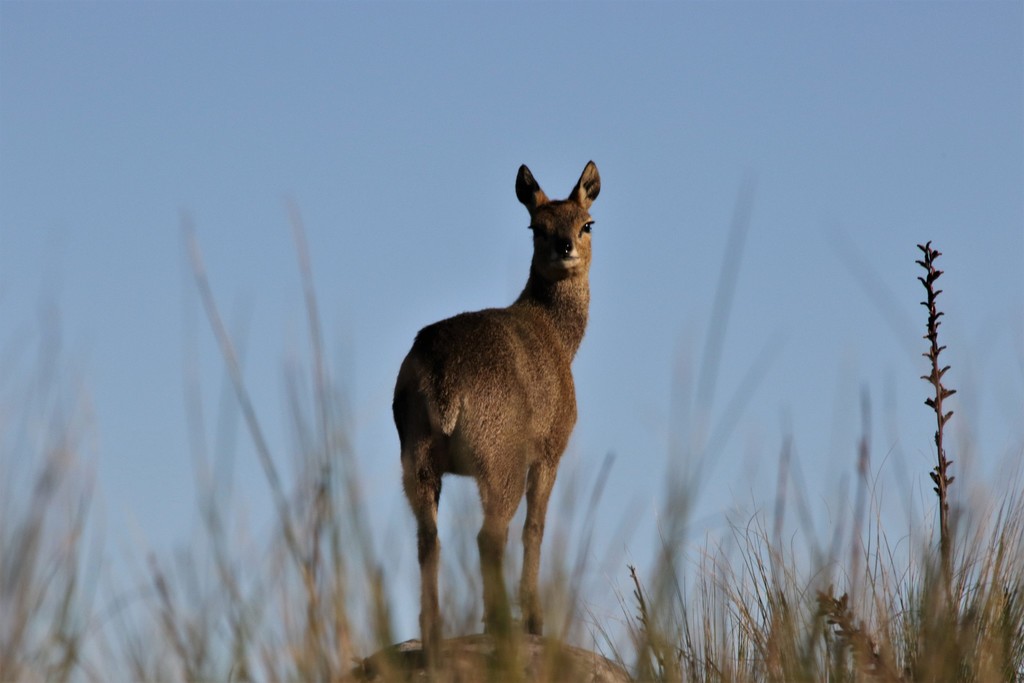
Klipspringers
Oreotragini
The klipspringer (; Oreotragus oreotragus) is a small antelope found in eastern and southern Africa. The sole member of its genus and subfamily/tribe, the klipspringer was first described by German zoologist Eberhard August Wilhelm von Zimmermann in 1783. The klipspringer is a small, sturdy antelope; it reaches 43–60 centimetres (17–23+1⁄2 inches) at the shoulder and weighs from 8 to 18 kilograms (18 to 40 pounds). The coat of the klipspringer, yellowish gray to reddish brown, acts as an efficient camouflage in its rocky habitat. Unlike most other antelopes, the klipspringer has a thick and coarse coat with hollow, brittle hairs. The horns, short and spiky, typically measure 7.5–9 cm (3–3+1⁄2 in).
Typically nocturnal, the klipspringer rests during the middle of the day and late at night. A gregarious animal, the klipspringer is monogamous to a much greater extent than other antelopes; individuals of opposite sexes exhibit long-term to lifelong pair bonding. The mates tend to stay as close as within 5 m (16 ft) of each other at most times. Males form territories, 7.5–49 hectares (18+1⁄2–121 acres), in which they stay with their partners and offspring. Primarily a browser, the klipspringer prefers young plants, fruits and flowers. Gestation lasts around six months, following which a single calf is born; births peak from spring to early summer. The calf leaves its mother when it turns a year old.
1 branches of this tribe, most-observed first · about 1 known species
See this branch on the Wheel of Life →
Where it lives
Recorded sightings
—
geo-referenced records in GBIF, from museums, herbaria and field observers.
Drag the globe to turn it. Dots are where records exist, not a range map; darker means more records.
In the stacks
Searching the stacks…
Every page naming Oreotragini in the Biodiversity Heritage Library →
This page is assembled live from iNaturalist, GBIF, Wikipedia, the Source Library and the Internet Archive. It is not yet part of the hand-edited codex. iNaturalist taxon 846381.