- Animals
- ›Chordates
- ›Vertebrates
- ›Ray-finned Fishes
- ›Carps, Characins, Catfishes and Allies
- ›Minnows, Suckers, Carps, and Loaches
- ›Suckers
- ›Suckers
- ›Typical Suckers
- ›Moxostoma
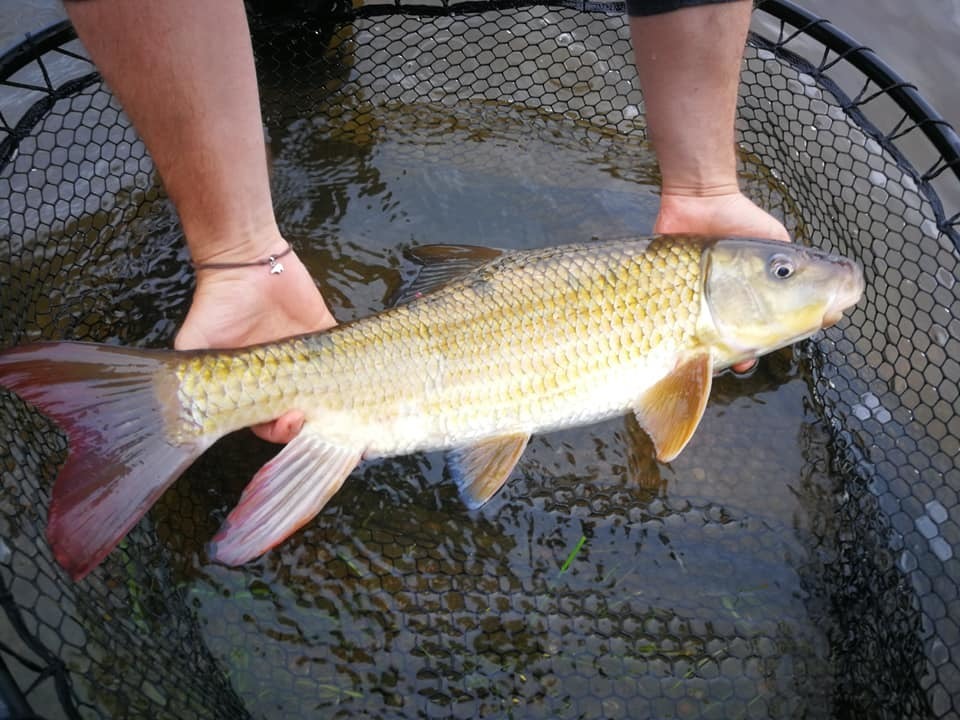
River Redhorse
Moxostoma carinatum
The river redhorse (Moxostoma carinatum) is a species of freshwater fish endemic to the eastern half of the United States and southeastern Canada. They can range from 10 to 30 inches in length and can potentially reach a weight of more than 10 pounds after maturity. It is typically found in clear, large creeks and rivers, though it is sometimes also found in lakes. They are sometimes speared or caught with hook and line using crayfish or worms as bait.
A bottom-feeder, it feeds on mussels, snails, crustaceans and immature aquatic insects. Its common names include big-sawed sucker, river mullet, greater redhorse, redfin redhorse and redhorse sucker. It has the following characteristics:
From the article River redhorse on Wikipedia (CC BY-SA), quoted section by section
Range & habitat
The river redhorse occurs throughout the central and eastern Mississippi River System and the Gulf Slope from Florida to Louisiana. In Canada, its distribution is characterized by disjunct populations in southern Ontario and Quebec as well as Alberta. This species has declined considerably over much of its range in the last 200 years. Populations still occur in the Grand, Trent, Thames, Mississippi, Gatineau and Richelieu rivers, and recent data suggest a wider distribution in the Ottawa River than previously documented. However, this fish appears to no longer exist in the Châteauguay and Yamaska watersheds and has declined dramatically in the St. Lawrence River.
Wikipedia: “Distribution”
Where it lives
Recorded sightings
—
geo-referenced records in GBIF, from museums, herbaria and field observers.
Drag the globe to turn it. Dots are where records exist, not a range map; darker means more records.
In the stacks
Searching the stacks…
Every page naming Moxostoma carinatum in the Biodiversity Heritage Library →
This page is assembled live from iNaturalist, GBIF, Wikipedia, the Source Library and the Internet Archive. It is not yet part of the hand-edited codex. iNaturalist taxon 81557.