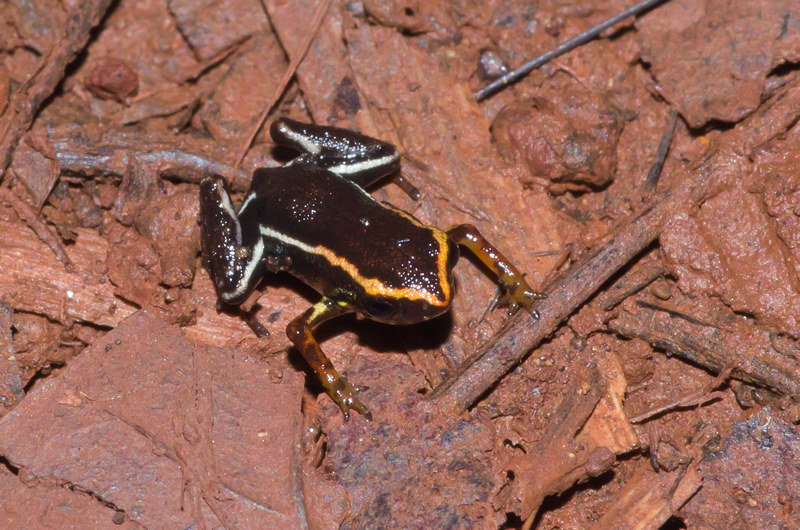
Eleutherodactylinae
The Eleutherodactylidae are a family of direct-developing frogs native to northern South America, the Caribbean, and southernmost North America. They are sometimes known under the common name rain frogs. Formerly the subfamily Eleutherodactylinae of the family Leptodactylidae, it was raised to the family status following a major revision of New World direct-developing frogs in 2008. As currently defined, the family has more than 200 species (as of 2014, 206 or 207 species).
Eleutherodactylid frogs vary considerably in size, from the minuscule Eleutherodactylus iberia (female snout–vent length 10.5 mm (0.41 in)) to the relative giant E. inoptatus (female snout–vent length 88 mm (3.5 in)). Except for the ovoviviparous E. jasperi, these frogs have direct development: no free-living tadpole stage exists; instead, eggs develop directly into small froglets.
2 branches of this subfamily, most-observed first · about 228 known species
See this branch on the Wheel of Life →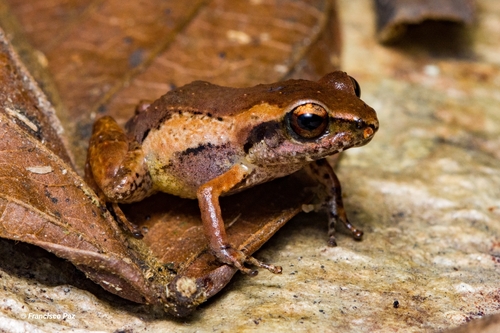

Where it lives
Recorded sightings
—
geo-referenced records in GBIF, from museums, herbaria and field observers.
Drag the globe to turn it. Dots are where records exist, not a range map; darker means more records.
In the stacks
Searching the stacks…
Every page naming Eleutherodactylinae in the Biodiversity Heritage Library →
This page is assembled live from iNaturalist, GBIF, Wikipedia, the Source Library and the Internet Archive. It is not yet part of the hand-edited codex. iNaturalist taxon 787585.