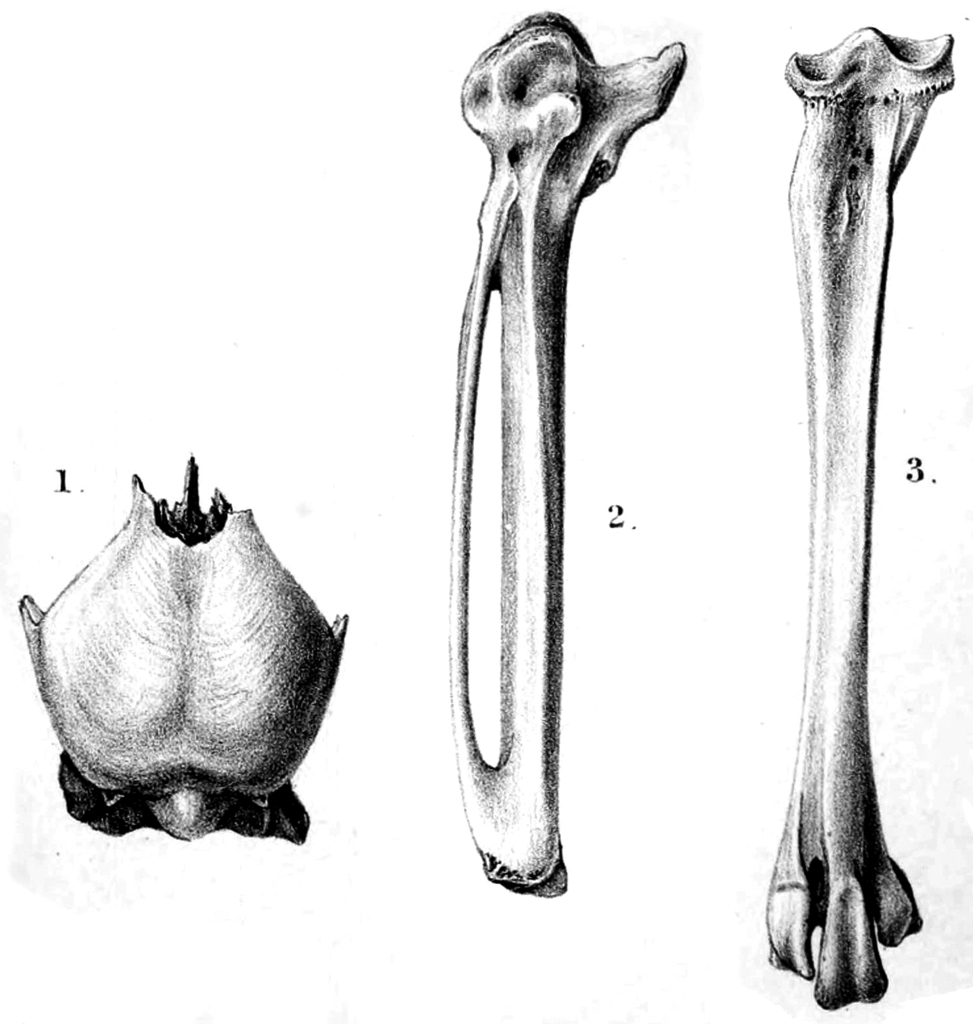
Antsirabe Sheldgoose
Alopochen sirabensis
The Malagasy shelduck (Alopochen sirabensis), also known as the Sirabe shelduck, is an extinct species of waterfowl in the shelduck subfamily, described from Late Pleistocene fossils found at Antsirabe in central Madagascar. It was related to the extant Egyptian goose, which is widespread in mainland Africa, and to the extinct Réunion and Mauritius shelducks from the Mascarene Islands.
The reason for the extinction of the Malagasy shelduck is unknown. Further findings in the Pleistocene sites of Ampasambazimba and Ampoza, and also in the Holocene site of Beloha (where remains were carbon dated to only 1380 ± 90 years BP, AD 480-660), show that the species was once widespread in Madagascar, inhabiting different biomes, and that it survived the arrival of humans to the island by about 500 years.
Listen
Looking for field recordings…
Where it lives
Recorded sightings
—
geo-referenced records in GBIF, from museums, herbaria and field observers.
Drag the globe to turn it. Dots are where records exist, not a range map; darker means more records.
In the stacks
Searching the stacks…
Every page naming Alopochen sirabensis in the Biodiversity Heritage Library →
This page is assembled live from iNaturalist, GBIF, Wikipedia, the Source Library and the Internet Archive. It is not yet part of the hand-edited codex. iNaturalist taxon 774497.