- Animals
- ›Chordates
- ›Vertebrates
- ›Mammals
- ›Therians
- ›Placental Mammals
- ›Ungulates, Carnivorans, and Allies
- ›Bats
- ›Yangochiroptera
- ›Vespertilionoid Bats
- ›Evening Bats
- ›Vesper Bats
- ›Vespertilionini
- ›Nyctophilus
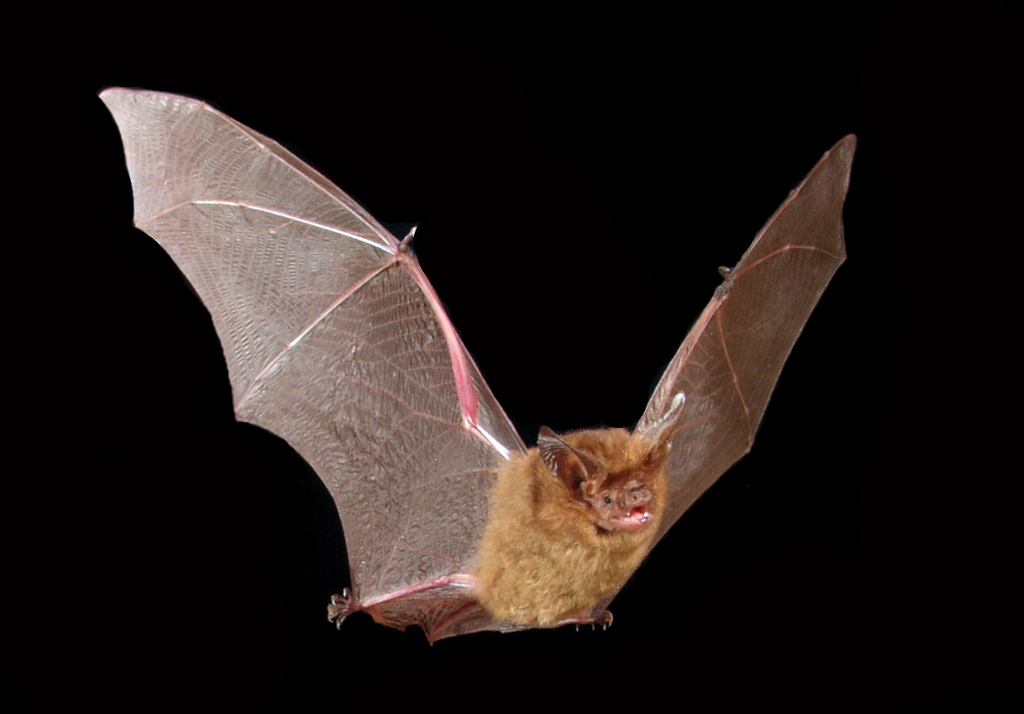
Eastern Long-eared Bat
Nyctophilus bifax
The eastern long-eared bat, (Nyctophilus bifax), is a species of vesper bat. It is found in Australia, Indonesia, and Papua New Guinea. In Australia, the range extends into subtropical regions. Outside Australia, it has only been recorded from a few widely scattered localities in New Guinea. This species is insectivorous and roosts in trees.
From the article Eastern long-eared bat on Wikipedia (CC BY-SA), quoted section by section
Description
A species of Nyctophilus, smaller insectivorous bats of the widespread and diverse family Vespertilionidae, the common evening bats. The flight of the species is sometimes in quick and straight directions, less usual in other nyctophilus species, but they are able to assume a typical slower fluttering hover to capture prey. The foraging methods includes gleaning, taking insects from foliage or bark of plants, and adopts a perching stratagem or takes to the ground.
Range & habitat
The species resides under the loose papery bark of melaleuca, amongst dense foliage, or in tree hollows. The distribution range is associated with wet forest habitat between Cape York and the north of New South Wales, rainforest and vegetation at permanent water are the typical environs. Drier areas nearby the wetter habitat is also used by the species, in woodland and forests that provide suitable food or refuge. They are often seen hunting at the edge of forests, using their characteristic foraging techniques; a well known population occurs at the Chillagoe-Mungana Caves National Park.
In Australia, the range extends into subtropical regions, and it has been recorded from a few widely scattered localities in New Guinea. The IUCN red list (2021) notes the species as least concern, widespread and not shown to be in decline. The assessment included the subspecies Nyctophilus bifax daedalus, but anticipated the elevation to full species.
== References ==
Wikipedia: “Distribution and habitat”
Listen
Looking for field recordings…
Where it lives
Recorded sightings
—
geo-referenced records in GBIF, from museums, herbaria and field observers.
Drag the globe to turn it. Dots are where records exist, not a range map; darker means more records.
In the stacks
Searching the stacks…
Every page naming Nyctophilus bifax in the Biodiversity Heritage Library →
This page is assembled live from iNaturalist, GBIF, Wikipedia, the Source Library and the Internet Archive. It is not yet part of the hand-edited codex. iNaturalist taxon 74798.