- Animals
- ›Chordates
- ›Vertebrates
- ›Mammals
- ›Therians
- ›Placental Mammals
- ›Primates, Rodents, and Allies
- ›Rodents
- ›Mice, Rats, and Hamsters
- ›Muroids
- ›Hamsters, Voles, Lemmings, and Allies
- ›South American Mice and Rats
- ›Pericotes
- ›Calomys
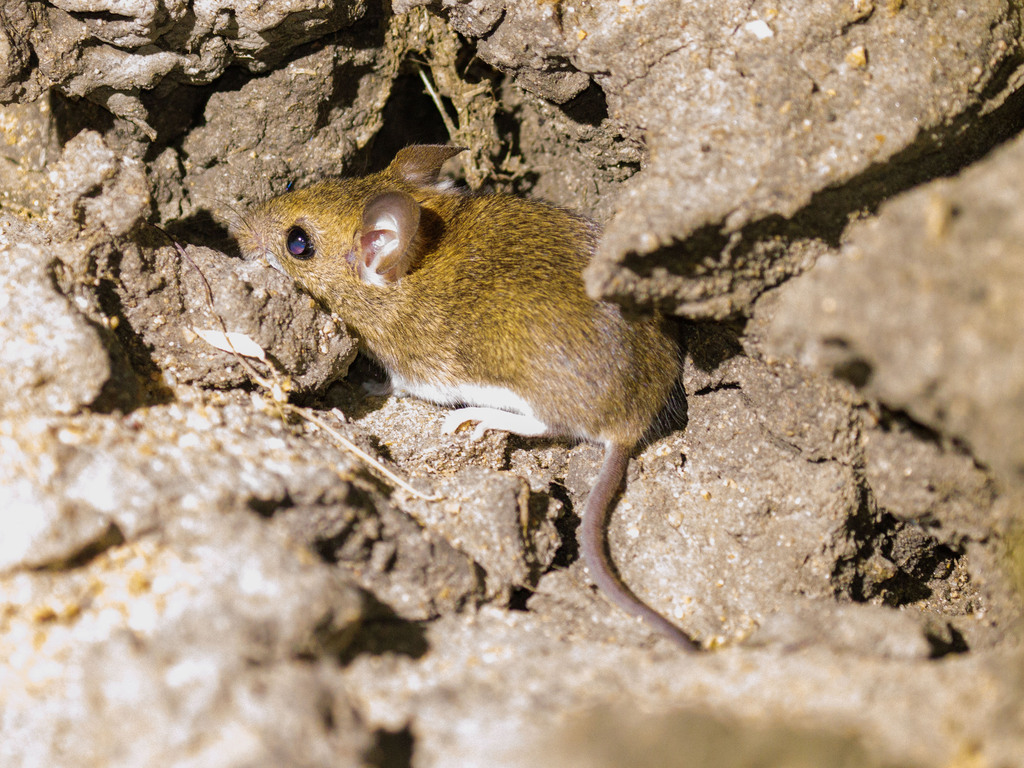
caatinga vesper mouse
Calomys expulsus
The caatinga vesper mouse (Calomys expulsus) (also known as the caatinga laucha or rejected vesper mouse) is a rodent species in the family Cricetidae from South America. It is endemic to eastern Brazil, where it is found in open savanna (cerrado) and thorny scrub (caatinga) habitats. Its karyotype has 2n = 66 and FN = 68. It was formerly synonymized with C. callosus, but the latter has 2n = 50 and FN = 66. Karyologic analysis of C. expulsus has shown that the X chromosome is large and submetacentric while the Y chromosome is either acrocentric or submetacentric. Predators include the barn owl . Sexual dimorphism in shape and size occurs; the former is present mainly before the age of 20 days. Males are smaller before age 50 days and larger thereafter, which becomes less prominent after 200 days.
== References ==
Listen
Looking for field recordings…
Where it lives
Recorded sightings
—
geo-referenced records in GBIF, from museums, herbaria and field observers.
Drag the globe to turn it. Dots are where records exist, not a range map; darker means more records.
In the stacks
Searching the stacks…
Every page naming Calomys expulsus in the Biodiversity Heritage Library →
This page is assembled live from iNaturalist, GBIF, Wikipedia, the Source Library and the Internet Archive. It is not yet part of the hand-edited codex. iNaturalist taxon 74132.