- Animals
- ›Chordates
- ›Vertebrates
- ›Reptiles
- ›Snakes and Lizards
- ›Lizards
- ›Iguanas and Allies
- ›Dragons and Chameleons
- ›Dragons
- ›Bearded Dragons, Water Dragons, and Allies
- ›Tympanocryptis
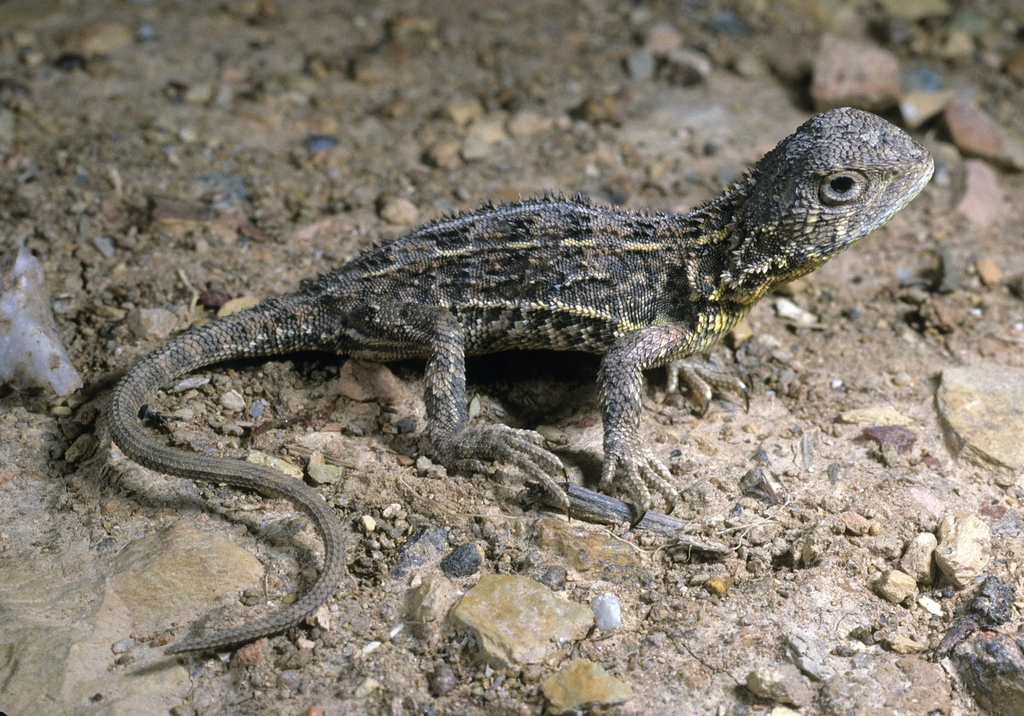
Victorian Grassland Earless Dragon
Tympanocryptis pinguicolla
Tympanocryptis pinguicolla, also known as Victorian grassland earless dragon, is a critically endangered species of lizard in the family Agamidae. It is one of a documented species of a relatively small dragon belonging to the genus Tympanocryptis.
From the article Tympanocryptis pinguicolla on Wikipedia (CC BY-SA), quoted section by section
Description
The species lacks an external ear opening and functional eardrum, hence its description as "earless". Adults are about 15 centimetres (5.9 in) in length. The body is covered in large, spiky scales. The animal seeks cover in small holes or beneath rocks, and the diet consists of invertebrates.
Range & habitat
T. pinguicolla is endemic to the state of Victoria in southeastern Australia. As with the other grassland earless dragons, it is restricted to areas of temperate grassland with tussock and smaller grasses. Very little of this habitat remains in Victoria due to the heavy degradation and conversion of this habitat in the past, which has contributed to the species' endangerment and assumed extinction.
Wikipedia: “Distribution”
Where it lives
Recorded sightings
—
geo-referenced records in GBIF, from museums, herbaria and field observers.
Drag the globe to turn it. Dots are where records exist, not a range map; darker means more records.
In the stacks
Searching the stacks…
Every page naming Tympanocryptis pinguicolla in the Biodiversity Heritage Library →
This page is assembled live from iNaturalist, GBIF, Wikipedia, the Source Library and the Internet Archive. It is not yet part of the hand-edited codex. iNaturalist taxon 73985.