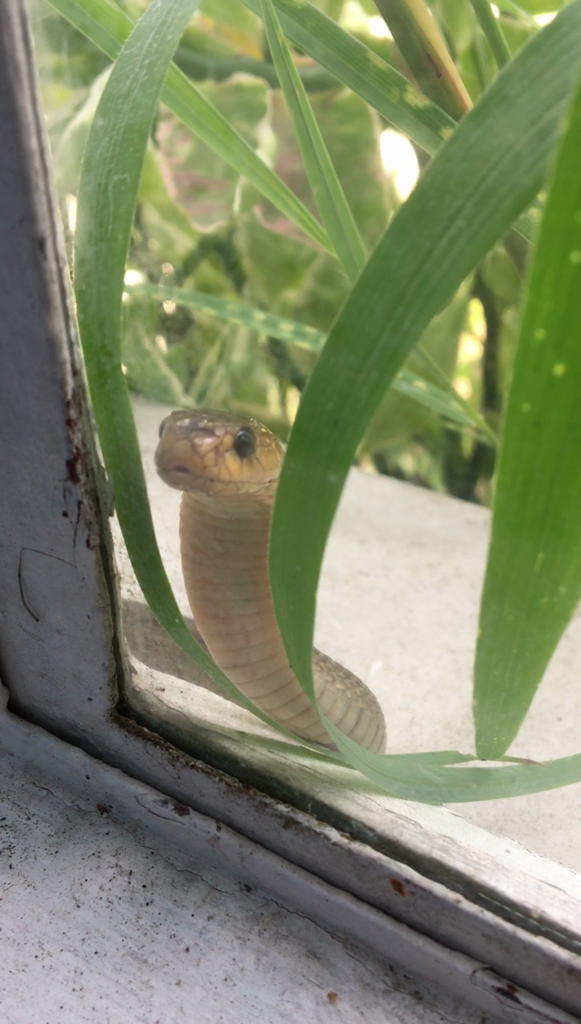
Philippine Common Cobra
Naja philippinensis
The Philippine cobra (Naja philippinensis) also called northern Philippine cobra, is a stocky, highly venomous species of spitting cobra native to the northern regions of the Philippines. The Philippine cobra is called ulupong in Tagalog, carasaen in Ilocano and agawason in Cebuano-Bisaya.
From the article Philippine cobra on Wikipedia (CC BY-SA), quoted section by section
Description
The Philippine cobra is a stocky snake of medium length with long cervical ribs capable of expanding, so when threatened, a hood can be formed. Only the female specimens have been reported to spit, this with up to 3m away. The average length of this species is 1.0 metre (3.3 ft). The species can grow to lengths of 1.6 metres (5.2 ft) However, subpopulations of the species, particularly specimens from Mindoro Island, are said to attain lengths of 2 metres (6.6 ft), but these are unconfirmed claims. If true, however, 2 m would be very rare and would be considered the absolute maximum for this species. The head is elliptical, depressed, slightly distinct from neck with a short, rounded snout and large nostrils. The eyes are moderate in size with dark brown and round pupils, typical of other cobra species and similar to other elapids in general. It has a fairly stocky build for an elapid, and adult snakes are uniformly light to medium brown, while the juveniles tend to be a darker brown in color. They have 23-27 scale rows around the neck and 21 just above the middle part of the body; 182-193 ventrals, 36-49 subcaudals, and basal pairs are sometimes undivided.
Scalation. There are 23-27 (usually 25) scale rows around neck, 21 (rarely 23) just ahead of mid-body; 182-193 ventrals, 36-49 subcaudals, basal pairs sometimes undivided.
Range & habitat
The Philippine cobra occurs mostly in the northern regions of the Philippines. They can be found on the islands of Luzon, Mindoro, Catanduanes, and Masbate. This species likely may occur in other neighboring islands, but this remains unconfirmed. Records from the Calamianes group and Palawan require confirmation. The Philippine cobra's habitat include low-lying plains and forested regions, along with open fields, grasslands, dense jungle, agricultural fields, and human settlements. This species of cobra is particularly fond of water, so it can be found very close to ponds, rivers, or large puddles of water.
Wikipedia: “Distribution and habitat”
What it does
This species feeds predominantly on small mammals, frogs, and even other snakes. Small rodents such as mice and small rats are their preferred prey and make up the majority of their diets. However, they will also eat other sizable snakes, small lizards, frogs, eggs, and when the opportunity arises, small birds.
Wikipedia: “Diet”
Toxicity
Although venom toxicity values can vary greatly even among specimens of the same species, the Philippine cobra is considered to possess one of the more toxic venoms among the Naja (cobra) species. According to Tan et al., the murine LD50 via the IV route for this species is 0.18 mg/kg (0.11-0.3 mg/kg). Data on venom yield of 150 milked N. philippinensis specimens (69 males; 81 females) gave an overall average venom yield per cobra per extraction of 0.33 ml (wet) or 70.1 mg (dried). The venom of the Philippine cobra is a potent postsynaptic neurotoxin which affects respiratory function and can cause neurotoxicity and respiratory paralysis, as the neurotoxins interrupt the transmission of nerve signals by binding to the neuromuscular junctions near the muscles. Research has shown its venom is purely a neurotoxin, with no apparent necrotizing components and no cardiotoxins. These snakes are capable of accurately spitting their venom at a target up to 3 metres (9.8 ft) away. The symptoms of a bite might include headache, nausea, vomiting, abdominal pain, diarrhea, dizziness, and difficulty breathing. Bites by the Philippine cobra produce prominent neurotoxicity with minimal to no local signs. A study of 39 patients envenomed by the Philippine cobra was conducted in 1988. Neurotoxicity occurred in 38 cases and was the predominant clinical feature. …
Wikipedia: “Venom”
Where it lives
Recorded sightings
—
geo-referenced records in GBIF, from museums, herbaria and field observers.
Drag the globe to turn it. Dots are where records exist, not a range map; darker means more records.
In the stacks
Searching the stacks…
Every page naming Naja philippinensis in the Biodiversity Heritage Library →
This page is assembled live from iNaturalist, GBIF, Wikipedia, the Source Library and the Internet Archive. It is not yet part of the hand-edited codex. iNaturalist taxon 73875.