- Animals
- ›Molluscs
- ›Gastropods
- ›Caenogastropods
- ›Neogastropods
- ›True Whelks and Allies
- ›Nassa Mudsnails
- ›Nassariinae
- ›Demoulia
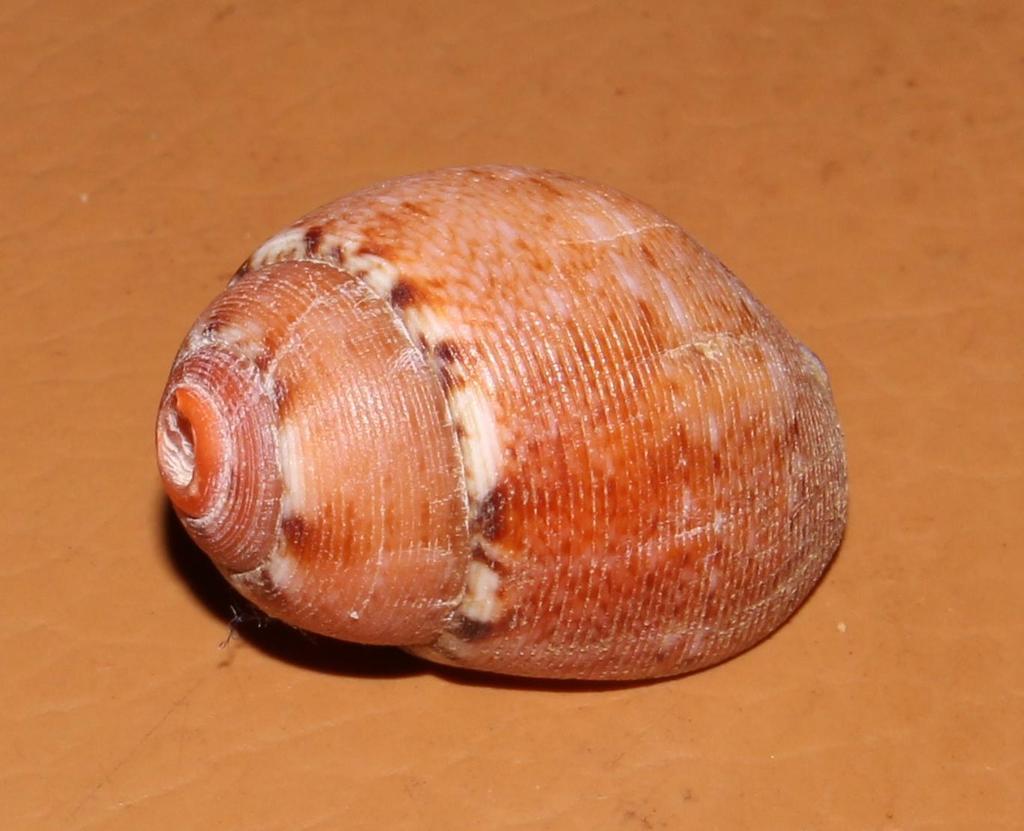
Ventricose Demoulia
Demoulia ventricosa
Demoulia ventricosa, common name : the blunt demoulia, is a species of sea snail, a marine gastropod mollusk in the family Nassariidae, the Nassa mud snails or dog whelks.
There is one subspecies: Demoulia ventricosa nataliae Kilburn, 1972
From the article Demoulia ventricosa on Wikipedia (CC BY-SA), quoted section by section
Description
The shell size varies between 17 mm and 27 mm. The ovate shell is slightly cylindrical and is blunted at its summit. The short spire is flattened. It is composed of five whorls. The two last whorls are much more swollen, and covered upon their whole surface with very fine and very close transverse striae. The suture is very apparent, and a little canaliculated. The white aperture is ovate, narrowed at its upper part and dilated inferiorly. The outer lip is thin and is ornamented interiorly with numerous transverse striae. The smooth columella is arcuated at its base and is covered throughout its whole length with the inner lip, the base of which is a little thicker. The surface of this shell is reddish or violet-colored, with wide, reddish spots. It is ornamented at the upper part of the whorls, and along the suture, with a white band, alternating with irregular deeper spots.
Where it lives
Recorded sightings
—
geo-referenced records in GBIF, from museums, herbaria and field observers.
Drag the globe to turn it. Dots are where records exist, not a range map; darker means more records.
In the stacks
Searching the stacks…
Every page naming Demoulia ventricosa in the Biodiversity Heritage Library →
This page is assembled live from iNaturalist, GBIF, Wikipedia, the Source Library and the Internet Archive. It is not yet part of the hand-edited codex. iNaturalist taxon 735504.