- Animals
- ›Chordates
- ›Vertebrates
- ›Amphibians
- ›Frogs and Toads
- ›Southern Frogs
- ›Leptodactylinae
- ›Leptodactylus
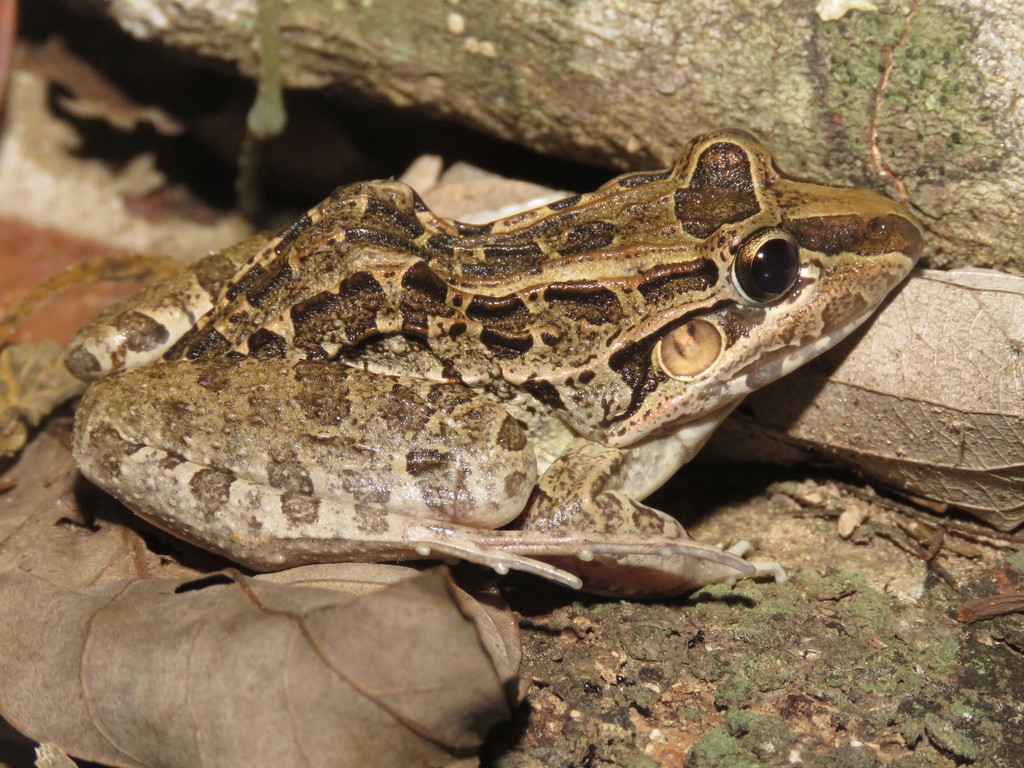
Miranda's White-lipped Frog
Leptodactylus macrosternum
Leptodactylus latrans is a species of frog in the family Leptodactylidae. It is native to much of South America east of the Andes, and Trinidad and Tobago. It has many common names, including rana criolla, sapo-rana llanero, butter frog, argus frog, and lesser foam frog.
From the article Leptodactylus latrans on Wikipedia (CC BY-SA), quoted section by section
Description
The adult male frog measures 90-120 mm in snout-vent length and the adult female frog is 80-110 mm. The skin of the dorsum is dark gray or red-brown in color with folded skin. There are dark ocelli spots with white around the edges, resembling eyes. The male frog has robust front legs. This frog has only fringed skin on its feet rather than full webbing, so it can swim well but also jump and move effectively on land. The adult frog can alter the length of its gut. The male frogs have longer guts during the warm part of the year when food is most abundant, and female frogs have longer guts during the cold part of the year when they develop eggs.
Range & habitat
This is a common species in many parts of its range. It can be found in a variety of habitat types, including swamps, savannah, grasslands, and tropical forest ecosystems. It tolerates disturbed habitat and can be seen in gardens and urban areas. It breeds in temporary water bodies, such as ponds and floodplains, where it creates a foam nest for its eggs. In some cases, one parent, usually a female, guards the tadpoles and attacks potential predators. This frog has been observed between 0 and 900 meters above sea level, and in many protected areas throughout its range.
Wikipedia: “Habitat and ecology”
What it does
The male frog hides in aquatic plants and calls to the female frogs. The female frogs usually lay eggs in temporary ponds. She lays the eggs in a foam nest that the male frog makes while still in amplexus. The bubble nest and the eggs inside it float on top of the water. Each nest is 12-25 cm long and has thousands to eggs in it. It has a hole in the middle that is 4-8 cm long. The female frog sometimes sits in the hole in the nest so she can scare away animals that want to eat the eggs, for example birds. Sometimes the adult frogs lay eggs on dry land before the rain. Then the rain turns the land into a pond. The tadpoles leave the nest and swim in the pond. Because they hatch before the pond is there, these tadpoles are bigger and stronger than the tadpoles of frog species that lay eggs after it rains. The tadpoles exhibit school ing behavior.
Wikipedia: “Reproduction”
Listen
Looking for field recordings…
Where it lives
Recorded sightings
—
geo-referenced records in GBIF, from museums, herbaria and field observers.
Drag the globe to turn it. Dots are where records exist, not a range map; darker means more records.
In the stacks
Searching the stacks…
Every page naming Leptodactylus macrosternum in the Biodiversity Heritage Library →
This page is assembled live from iNaturalist, GBIF, Wikipedia, the Source Library and the Internet Archive. It is not yet part of the hand-edited codex. iNaturalist taxon 70711.