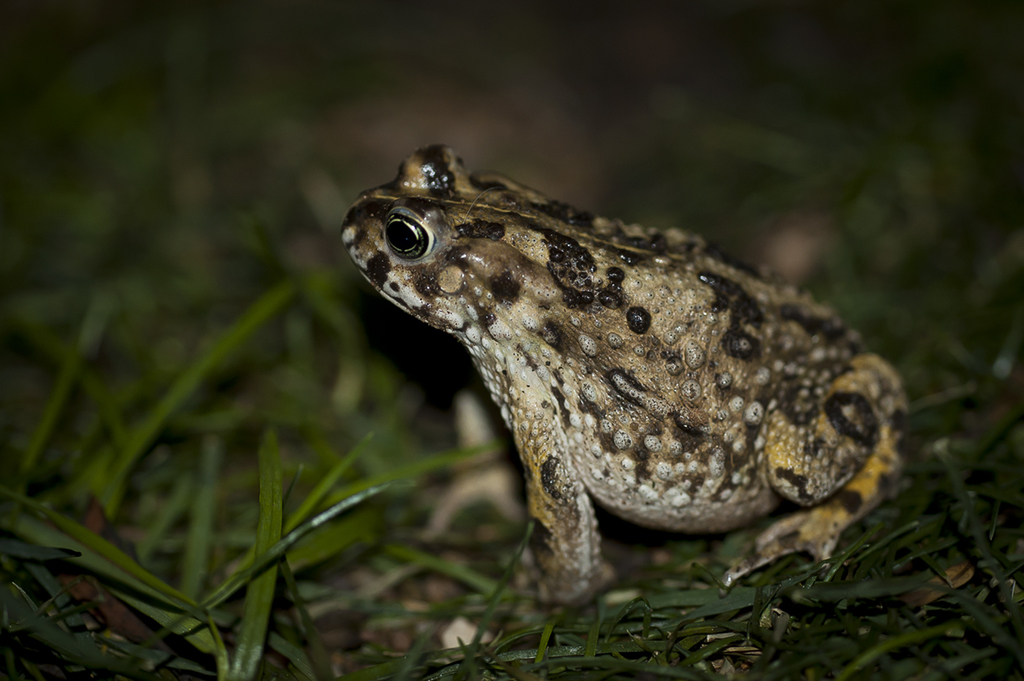
Sand Toad
Vandijkophrynus angusticeps
The sand toad, Cape sand toad, common Cape toad, or narrow-headed toad (Vandijkophrynus angusticeps) is a species of toad in the family Bufonidae (true toads). It is endemic to South Africa and found in southwestern and southern part of Western Cape Province to extreme southwestern Eastern Cape Province, from Nieuwoudtville in the west to Humansdorp in the east, along the coastal flats and Cape Fold Mountains from the sea level to 1,500 m (4,900 ft) asl.
From the article Sand toad on Wikipedia (CC BY-SA), quoted section by section
Description
Sand toads are morphologically similar to other Vandijkophrynus species, but can usually be distinguished by their unspotted white ventrum and bright yellow flush over the dorsal surfaces of their feet.
Range & habitat
Sand toads inhabit fynbos heathland. They can sometimes also survive in agricultural areas. The species is threatened by habitat loss and deterioration caused by coastal development, alien plants, and wetland drainage for urbanization and agriculture. It has disappeared from some areas, but is believed to be stable and common through most of its range.
== References ==
Wikipedia: “Habitat and conservation”
What it does
Sand toads may emerge from their refuges to breed in winter, May–September, when heavy rains have saturated the soil and created pools lasting for many weeks. They breed in temporary depressions in sandy areas, and also in clay soils. Males call on exposed sites near the water's edge. Testes are unusually large, suggesting intense male-male competition.
Wikipedia: “Reproduction”
Listen
Looking for field recordings…
Where it lives
Recorded sightings
—
geo-referenced records in GBIF, from museums, herbaria and field observers.
Drag the globe to turn it. Dots are where records exist, not a range map; darker means more records.
In the stacks
Searching the stacks…
Every page naming Vandijkophrynus angusticeps in the Biodiversity Heritage Library →
This page is assembled live from iNaturalist, GBIF, Wikipedia, the Source Library and the Internet Archive. It is not yet part of the hand-edited codex. iNaturalist taxon 67258.