- Animals
- ›Molluscs
- ›Cephalopods
- ›Octopuses, Squids, and Cuttlefishes
- ›Octopuses and Vampire Squids
- ›Octopuses
- ›Incirrate Octopuses
- ›Typical Octopuses, Giant Octopuses, and Allies
- ›Giant, Muse, and Rough Octopuses
- ›Enteroctopus
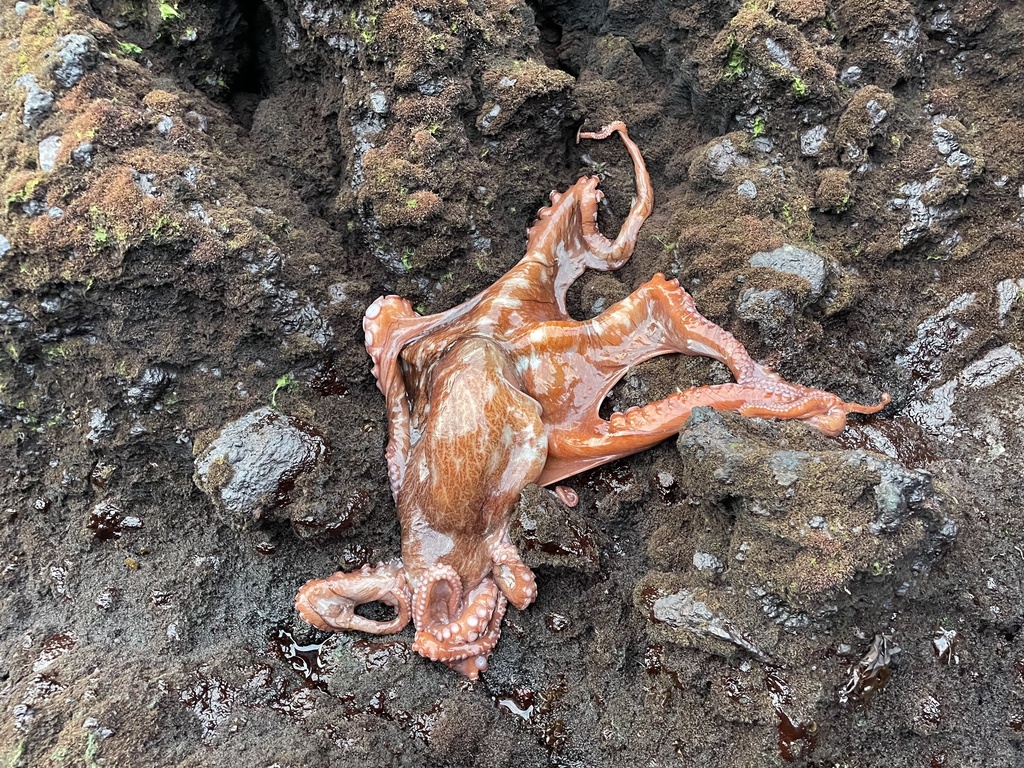
Cape Giant Octopus
Enteroctopus magnificus
Enteroctopus magnificus, also known as the southern giant octopus, is a large octopus in the genus Enteroctopus. It is native to the waters off Namibia and South Africa.
From the article Enteroctopus magnificus on Wikipedia (CC BY-SA), quoted section by section
Description
E. magnificus bears the distinctive characteristics of the genus Enteroctopus, including longitudinal folds on the body and large, paddle-like papillae. E. magnificus is a large octopus, reaching total lengths of up to 1.8 metres (5 ft 11 in) and a mass of 11.4 kilograms (25 lb).
Range & habitat
E. magnificus occurs from Namibia to Port Elizabeth, South Africa. It is found primarily on sand and mud flats from shallow subtidal areas to about 1,000 metres (3,300 ft) depth.
Wikipedia: “Range and habitat”
What it does
Like many octopuses, E. magnificus is a generalist predator. The chief food source for this octopus is the deep-sea portunid crab Bathynectes piperitus. Other major prey items include the Cape hagfish (Myxine capensis), the crab species Pontophilus gracilis, and hermit crabs in the genus Parapagurus.
Wikipedia: “Diet”
Where it lives
Recorded sightings
—
geo-referenced records in GBIF, from museums, herbaria and field observers.
Drag the globe to turn it. Dots are where records exist, not a range map; darker means more records.
In the stacks
Searching the stacks…
Every page naming Enteroctopus magnificus in the Biodiversity Heritage Library →
This page is assembled live from iNaturalist, GBIF, Wikipedia, the Source Library and the Internet Archive. It is not yet part of the hand-edited codex. iNaturalist taxon 664263.