- Fungi Including Lichens
- ›Ascomycete Fungi
- ›Sac Fungi and Lichens
- ›Leotiomycetes
- ›Helotiales
- ›Cyttariaceae
- ›Cyttaria
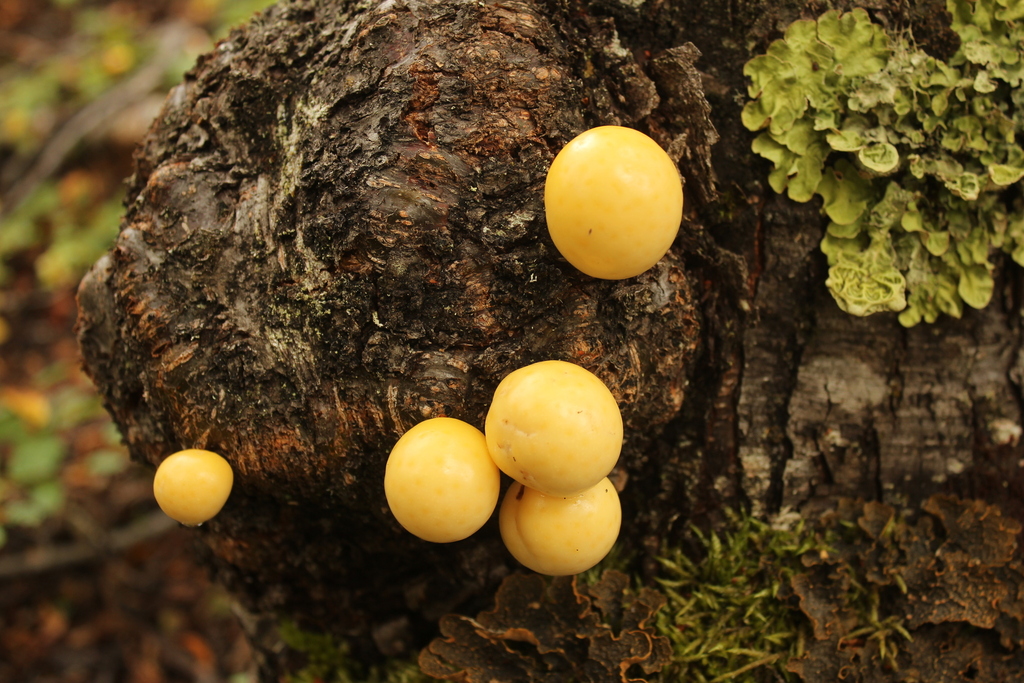
Darwin's fungus
Cyttaria darwinii
Cyttaria is a genus of ascomycete fungi. About 10 species belong to Cyttaria, found in South America and Australia associated with or growing on southern beech trees from the genus Nothofagus. The "llao llao" fungus Cyttaria hariotii, one of the most common fungi in Andean-Patagonian forests, has been shown to harbor the yeast Saccharomyces eubayanus, which may be source of the lager yeast S. pastorianus cold-tolerance. Cyttaria was originally described by mycologist Miles Joseph Berkeley in 1842.
From the article Cyttaria on Wikipedia (CC BY-SA), quoted section by section
Description
Cyttaria was originally described by mycologist Miles Joseph Berkeley in 1842. The ascomata of Cyttaria species are porous with an orange color. Each ascomata consists of multiple apothecia immersed in a gelatinous stroma. Asci are 8 spored, inoperculate and amyloid.
Wikipedia: “Morphology”
Range & habitat
Cyttaria is found exclusively on the southern hemisphere, being commonly found in southern Chile, Argentina, New Zealand and Australia. Its distruibution mirrors the one of Nothofagus.
Wikipedia: “Distribution”
Where it lives
Recorded sightings
—
geo-referenced records in GBIF, from museums, herbaria and field observers.
Drag the globe to turn it. Dots are where records exist, not a range map; darker means more records.
In the stacks
Searching the stacks…
Every page naming Cyttaria darwinii in the Biodiversity Heritage Library →
This page is assembled live from iNaturalist, GBIF, Wikipedia, the Source Library and the Internet Archive. It is not yet part of the hand-edited codex. iNaturalist taxon 64583.