- Animals
- ›Chordates
- ›Vertebrates
- ›Ray-finned Fishes
- ›Carps, Characins, Catfishes and Allies
- ›Characins
- ›Characoidei
- ›Piranhas, Pacus, and Silver Dollars
- ›Serrasalminae
- ›Pygocentrus
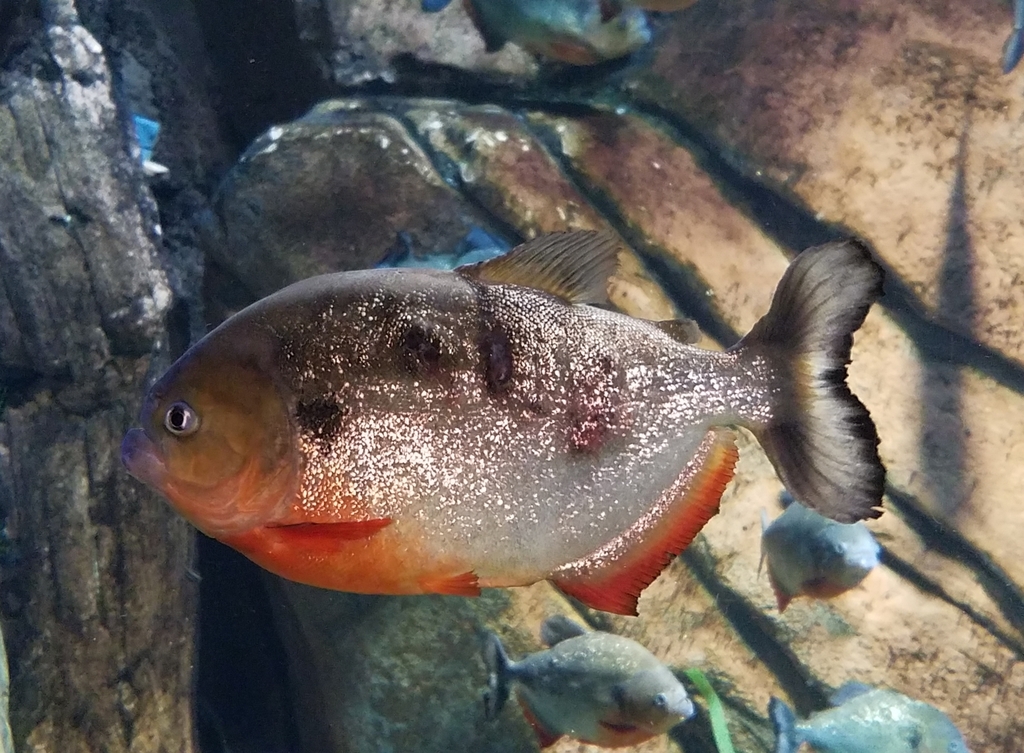
Black Spot Piranha
Pygocentrus cariba
Pygocentrus cariba, or black spot piranha, is a species of freshwater ray-finned fish belonging to the family Serrasalmidae, which includes freshwater fish native to South America. Like others in its family, the pygocentrus cariba is native to South America, and is most commonly found in the Orinoco River Basin lowlands of Venezuela. The black spot piranha has been identified as a key stone species in many areas due to its control over the populations of its prey and is currently not facing any threat of extinction
From the article Pygocentrus cariba on Wikipedia (CC BY-SA), quoted section by section
Description
The black spot piranha can reach a total length of 27.9 centimeters (11.0 in). The largest recorded weight of a black spot piranha was 560g. This species is known for its powerful bite that can inflict serious damage on both humans and other fish. In the Colombian regions this species is typically around 40cm, while the ones living in Venezuela are commonly bigger weighing up to 1kg and averaging around 48cm in length. Many larger adults form spots on the dorsal and side regions of the body that are often silver in color and the underside of the fish is bright orange. These fish also display a prominent dark blotch and have four supraneurals. In terms of piranhas as a whole species, pygocentrus cariba was the first to split from its close relatives. When differentiation between species occurred pygocentrus cariba was the first to diverge from the others while pygocentrus nattereri and pygocentrus piraya remained more closely related.
Wikipedia: “Anatomy and Morphology”
Range & habitat
This species is most commonly found in the Orinoco River between the Orinoco and Delta regions, additionally, they can also be found in areas of Colombia, but they are less common there. In the lower regions of the great rivers and flood plains, this species is particularly abundant. The black spot piranha is mostly restricted to Venezuela and Colombia, however, the species is sometimes traded in the United States. Many states have restrictions on its trade, but it can still occur with a permit. Adult pygocentrus cariba mainly live in large rivers or lagoons while juveniles often reside in sediment filled shallow water, also known as shoals, or flooded regions. They are a freshwater species and prefer wetlands and inland waters. They typically live in waters ranging from 20-28°C with a Ph between 4.0 and 7.0.
Wikipedia: “Distribution and Habitat”
What it does
Black spot piranhas are primarily a carnivorous species that feed on a wide variety of fish, carrion, invertebrates, and other aquatic animals. Adults tend to eat smaller fish and vertebrates, while the juveniles eat shrimp, insects, and zooplankton. Some may even eat seeds, fruits, and leaves. Due to it's control over the population of its prey, the pygocentrus cariba has been identified as a keystone species and plays a large role in the balance of the surrounding ecosystem.
Wikipedia: “Diet”
Where it lives
Recorded sightings
—
geo-referenced records in GBIF, from museums, herbaria and field observers.
Drag the globe to turn it. Dots are where records exist, not a range map; darker means more records.
In the stacks
Searching the stacks…
Every page naming Pygocentrus cariba in the Biodiversity Heritage Library →
This page is assembled live from iNaturalist, GBIF, Wikipedia, the Source Library and the Internet Archive. It is not yet part of the hand-edited codex. iNaturalist taxon 620752.