- Animals
- ›Chordates
- ›Vertebrates
- ›Ray-finned Fishes
- ›Carps, Characins, Catfishes and Allies
- ›Characins
- ›Characoidei
- ›Piranhas, Pacus, and Silver Dollars
- ›Lowland Pacus
- ›Mylossoma
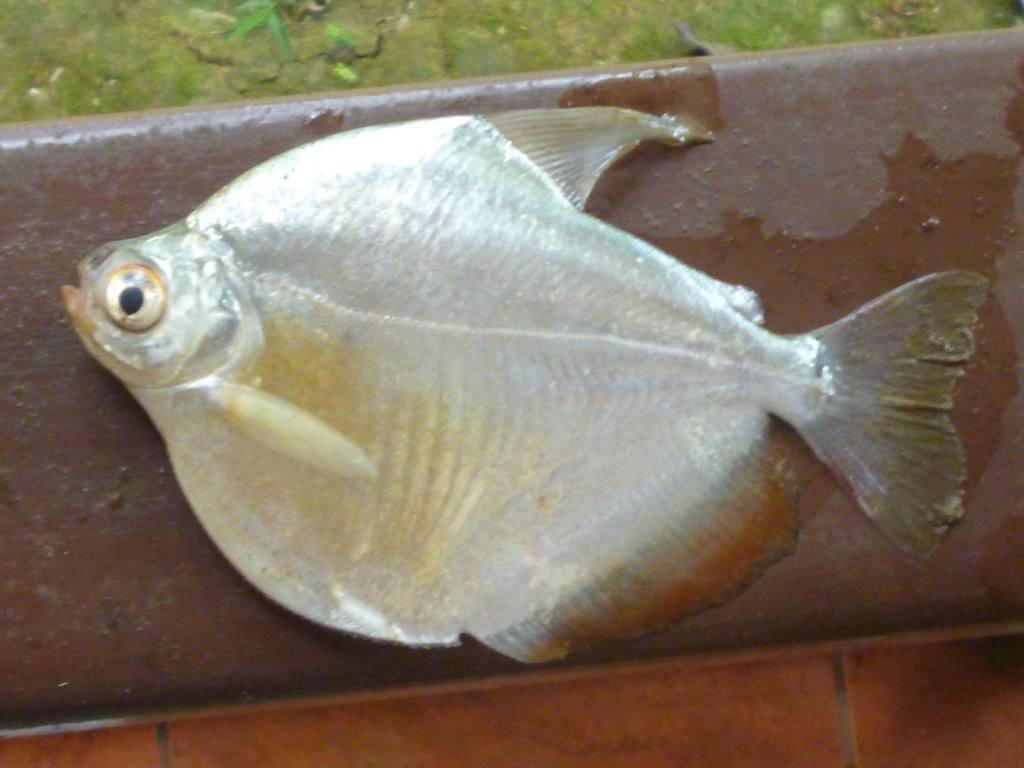
Mylossoma aureum
Mylossoma aureum is a species of serrasalmid native to the Amazon and Orinoco Basins in South America. This species grows to a total length of 20 cm (7.9 in). This species is of some importance to local commercial fisheries, but less so than the closely related M. albiscopum of the same region. It is a fast breeder and rapidly reaches adulthood. It breeds in whiterwater rivers and associated wetlands. It is omnivorous, but mostly feed on plant material.
From the article Mylossoma aureum on Wikipedia (CC BY-SA), quoted section by section
Description
Mylossoma aureum diifers from other species in its genus by having a vertebrate count of 38 or 39 and in the last spine on the abodomen being obviously separate from the origin of the anal fin. This species grows to a total length of 20 cm (7.9 in).
Range & habitat
Mylossoma aureum is found in the Amazon and Orinoco River basins and in the Japurá River, its range includes parts of Bolivia, Brazil, Colombia, Ecuador, Peru and Venezuela. Its occurrence in Gutyana is yet to be confirmed. This is a migratory, benthopelagic fish which migrates along whitewater rivers and into their associated wetlands.
Wikipedia: “Distribution and habitat”
In human culture
Mylossoma aureum belongs to the genus Mylossoma, this name combines the Greek words mýlos, meaning "mill" or "millstone", with soma, which means "body". This is an allusion to disc-like body shape. The specific name, aureum, means "golden", alluding to the colour of this fish.
Wikipedia: “Etymology”
Where it lives
Recorded sightings
—
geo-referenced records in GBIF, from museums, herbaria and field observers.
Drag the globe to turn it. Dots are where records exist, not a range map; darker means more records.
In the stacks
Searching the stacks…
Every page naming Mylossoma aureum in the Biodiversity Heritage Library →
This page is assembled live from iNaturalist, GBIF, Wikipedia, the Source Library and the Internet Archive. It is not yet part of the hand-edited codex. iNaturalist taxon 620747.