- Animals
- ›Arthropods
- ›Crustaceans
- ›Branchiopods
- ›Tadpole Shrimps, Clam Shrimps and Water Fleas
- ›Tadpole Shrimps
- ›Tadpole Shrimps
- ›Tadpole Shrimps
- ›Triops
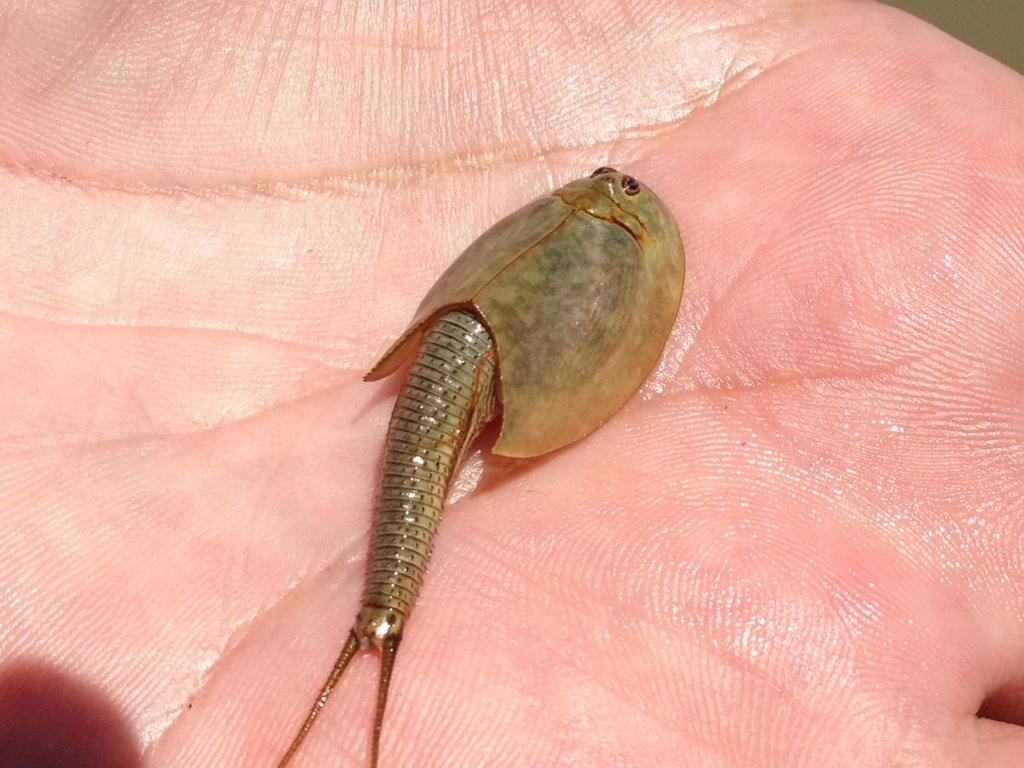
Longtail Tadpole Shrimp
Triops longicaudatus
Triops longicaudatus (commonly called longtail tadpole shrimp, American tadpole shrimp, or rice tadpole shrimp) is a freshwater crustacean of the order Notostraca, resembling a miniature horseshoe crab. It is characterized by an elongated, segmented body, a flattened shield-like brownish carapace covering two thirds of the thorax, and two long filaments on the abdomen. Triops refers to its three eyes, and longicaudatus refers to the elongated tail structures. Triops longicaudatus is found in freshwater ponds and pools,...
From the article Triops longicaudatus on Wikipedia (CC BY-SA), quoted section by section
Range & habitat
T. longicaudatus is the most widespread notostracan species, and may be found in western North America, South America, Japan, South Korea, and several Pacific Islands. It is most active at a temperature of approximately 20 °C (68 °F), and is usually found scratching the mud at the bottom of pools, searching for benthic food. Triops collect food particles by straining the water with hairs on their limbs. Loose food particles are collected in a groove running down the underside of the body lengthwise, and held together by a sticky secretion until they are swallowed by their very small (2 mm wide) mouth. The tiny mouth is deep in its underbelly, and while the animal is capable of breaking up plant roots or dead fish, it is incapable of chasing down and eating prey larger than it is.
Diet. Tadpole shrimps are omnivorous and may eat algae, insects, and other organic debris; they are known to chase very small fry, tadpoles, and oligochaete worms. In general, they eat anything organic that is smaller than they are, which even may include their siblings (they are cannibalistic). In turn, Triops longicaudatus are eaten by frogs and birds.
Interaction with humans. The species is considered a human ally against the West Nile virus, as the individuals consume Culex mosquito larvae. They also are used as a biological pest control agent in Japan, eating weeds in rice paddies. …
Wikipedia: “Distribution and Ecology”
What it does
The feeding method of tadpole shrimps is similar to that proposed for the ancestral crustacean. The anterior appendages (second pair to tenth pair) stir sediments and swirl muddy water into the wide, midventral food groove. The gnathobases (inward-facing lobes at the base of the leg) guide food anteriorly to the mouth. The large flat exopods (outward-facing lobes at the end of the leg) stir and lift the sediments. Fine silt particles and water escape easily, but large, coarse food particles are torn into smaller pieces by the blade-like, inward-facing lobes called endopods at the end of the leg.
Wikipedia: “Feeding behaviour”
In human culture
The genus name Triops comes from Ancient Greek τρία (tría), meaning "three", and ὄψ (óps), meaning "face" or "eye". The specific name longicaudatus comes from Latin longus, meaning "long", and caudatus, meaning "tailed", referring to its long tail structures.
Wikipedia: “Etymology”
Where it lives
Recorded sightings
—
geo-referenced records in GBIF, from museums, herbaria and field observers.
Drag the globe to turn it. Dots are where records exist, not a range map; darker means more records.
In the stacks
Searching the stacks…
Every page naming Triops longicaudatus in the Biodiversity Heritage Library →
This page is assembled live from iNaturalist, GBIF, Wikipedia, the Source Library and the Internet Archive. It is not yet part of the hand-edited codex. iNaturalist taxon 60399.